





What Is Walking Yoga, Really?
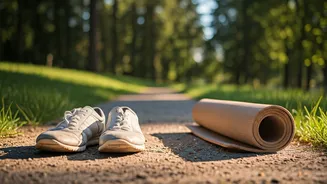
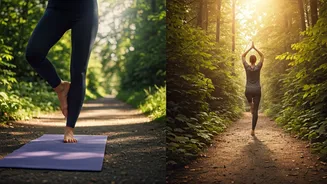
First, let’s clear up a common misconception: walking yoga doesn’t mean you have to strike a tree pose in the middle of a busy sidewalk. Instead, it’s a mindful practice that infuses the simple act of walking with the core principles of yoga. Think of it as
a moving meditation that combines gentle, dynamic movement with synchronized breath and heightened awareness. It’s less about achieving perfect postures and more about connecting with your body and your surroundings. At its heart, walking yoga is about transforming a mundane daily activity into an opportunity for physical and mental wellness. You’re not just going from point A to point B; you’re paying attention to the rhythm of your steps, the sensation of your feet on the ground, and the flow of your breath. This shifts the focus from performance to presence, which is the key to its accessibility.
The 'Less Intimidating' Factor
The headline’s claim is the practice’s greatest strength. So why does walking yoga feel so much more approachable than other forms of exercise? For starters, it meets you where you are. The only prerequisite is the ability to walk. There’s no expensive gear, no special studio, and no fear of being the least flexible person in the room. You can do it alone, in whatever clothes are comfortable, and at your own pace. This privacy and autonomy remove the social pressure and comparison that can make traditional fitness environments feel daunting. Furthermore, there is no “wrong” way to do it. While there are techniques you can learn, the practice is fundamentally about your personal experience. If your mind wanders, you gently bring it back. If you lose count of your breaths, you simply start again. This built-in forgiveness makes it a sustainable habit for people who have felt discouraged by the rigid, all-or-nothing mentality of other fitness programs.
More Than Just a Walk
While its gentleness is a major draw, walking yoga offers a surprising number of benefits. By coordinating your breath with your steps (a practice known as pranayama in yoga), you can calm your nervous system, reduce stress, and improve focus. This rhythmic breathing increases oxygen flow to the brain and muscles, which can leave you feeling energized rather than depleted. On a physical level, the mindful element encourages better posture and alignment. As you become more aware of how you carry yourself, you might notice and correct slouching shoulders or an uneven gait. This can help alleviate chronic aches in the back, neck, and hips. It’s also an excellent low-impact cardiovascular activity that supports heart health without putting undue strain on your joints, making it ideal for beginners, older adults, or those recovering from injury. Finally, by tuning into your senses—the feeling of the breeze, the sounds of nature, the changing light—you cultivate a deeper sense of connection to the world around you, which is a powerful antidote to a screen-saturated life.
Your First Mindful Walk: A Simple Guide
Ready to try it? You don't need a plan, but a little structure can help you get started. 1. **Find Your Space:** Choose a quiet, safe place where you can walk without too many distractions. A park path, a quiet neighborhood street, or even a backyard will do. 2. **Warm-Up (2 Minutes):** Stand still for a moment. Take a few deep breaths. Gently roll your shoulders back and down. Slowly roll your neck from side to side. Do a few ankle circles. The goal is simply to check in with your body. 3. **Sync Breath to Steps:** As you begin walking at a comfortable pace, start coordinating your breath. A simple pattern is to inhale for four steps and then exhale for four steps. Don’t force it; find a rhythm that feels natural and sustainable for you. 4. **Practice Mindful Awareness:** Place your attention on the physical sensations of walking. Feel the soles of your feet connecting with and rolling off the ground. Notice the subtle swing of your arms. If your mind drifts to your to-do list (and it will), gently guide your focus back to the rhythm of your breathing and walking. 5. **Cool-Down (2 Minutes):** Toward the end of your walk, slow your pace and let your breathing return to normal. Find a spot to stand and notice how your body feels. Take one final, deep breath before continuing with your day.