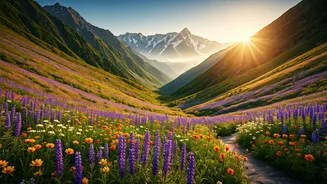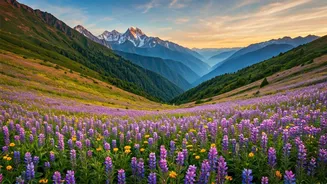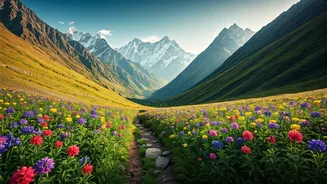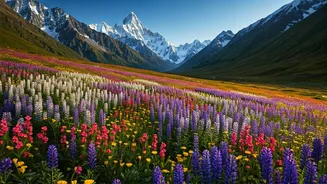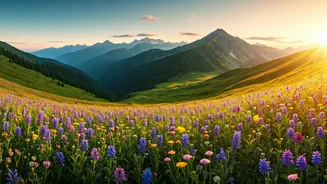


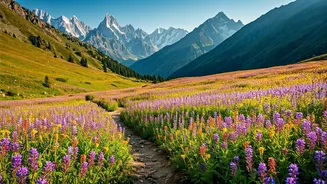
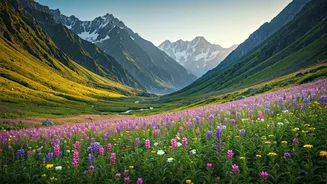
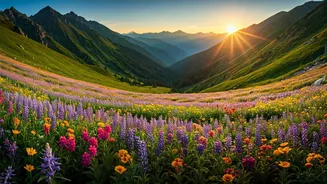


An Alpine Meadow in the Himalayas
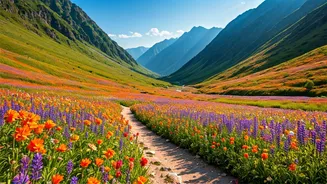
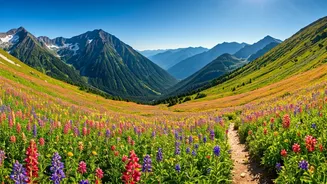
Tucked away in the Garhwal Himalayas of northern India lies a place that seems borrowed from a fairy tale: the Valley of Flowers National Park. A designated UNESCO World Heritage Site, this breathtaking expanse is not your typical high-altitude landscape
of rock and ice. Instead, for a few precious months each year, it becomes a vibrant tapestry of alpine flowers, creating a scene of almost unbelievable beauty. For most American travelers, Uttarakhand is an unfamiliar name, but for those willing to venture off the beaten path, it holds one of the world’s most spectacular botanical wonders. The valley is part of the larger Nanda Devi Biosphere Reserve, a protected area that safeguards a unique ecosystem where an explosion of life occurs against a backdrop of snow-dusted peaks.
The Monsoon's Painted Canvas
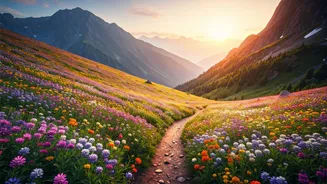
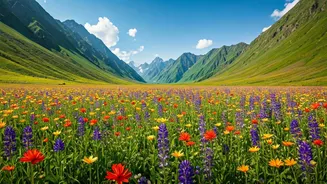
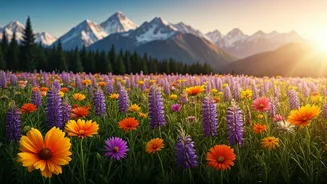
The “flower power” that makes this region so magical is a fleeting phenomenon, perfectly timed with the annual monsoon season. From late June through early September, as the rains sweep across India, the valley floor awakens. Over 600 species of wildflowers burst into bloom, blanketing the meadows in carpets of purple, yellow, red, and blue. This is not a manicured garden; it's a wild, untamed expression of nature. Trekkers can find themselves wading through fields of Himalayan blue poppies, elegant cobra lilies, fragrant geraniums, and the elusive Brahmakamal, a sacred flower that blooms only at night at these altitudes. The air grows thick with the sweet, earthy scent of blossoms mingling with the cool mountain mist, creating a sensory experience that’s as powerful as the visual one. This seasonal bloom is the valley’s secret, a reward reserved for those who arrive at just the right time.
The Journey Is the Destination
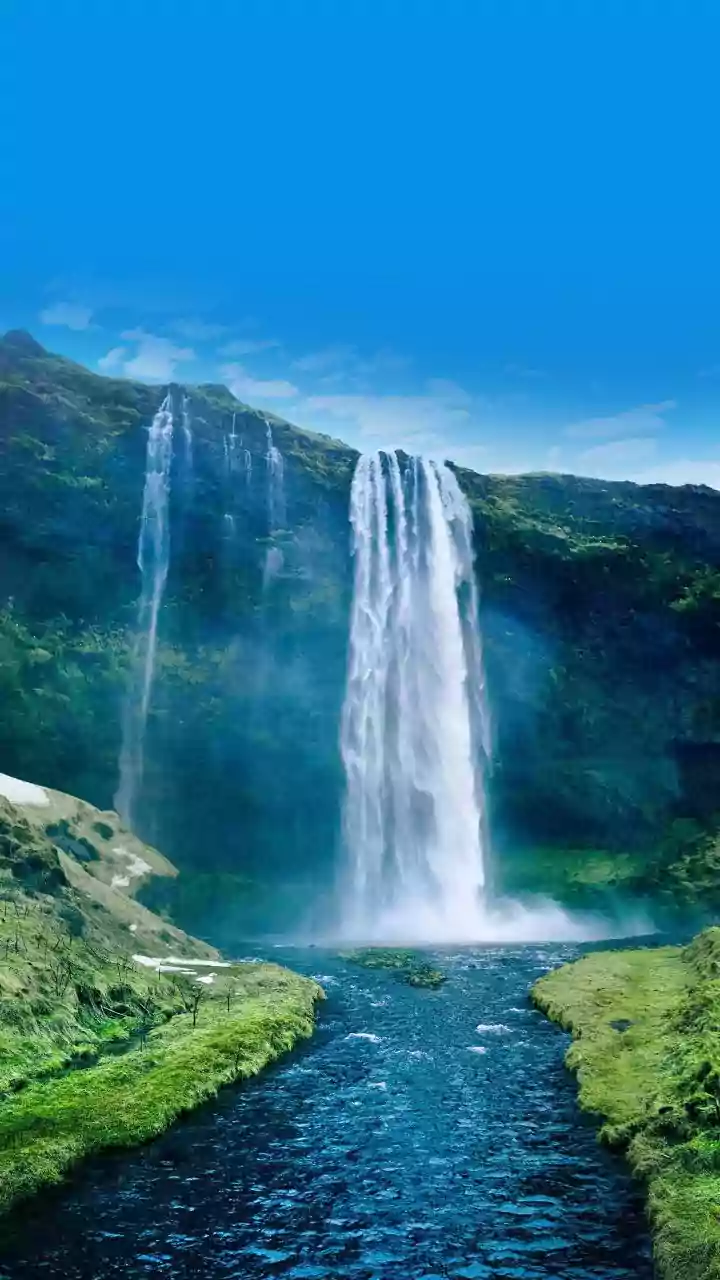
Reaching this floral paradise is an adventure in itself. The journey begins with a drive to a trailhead like Pulna, followed by a multi-day trek. The main trail follows the Pushpawati River, leading to the small village of Ghangaria, which serves as the base camp for explorations into the valley. The trek is considered moderate, but the altitude—the valley itself sits at over 11,000 feet—adds a significant challenge that requires proper acclimatization. But every step is part of the experience. The path winds through dense forests, across sturdy bridges spanning rushing rivers, and past cascading waterfalls. The effort makes the final arrival all the more rewarding. After passing the final checkpoint and entering the valley proper, the landscape opens up into a 5-mile-long, 1-mile-wide floral amphitheater, framed by dramatic, cloud-wreathed cliffs. It’s a moment of pure awe, where the physical exertion of the trek gives way to profound wonder.
More Than Just Flowers
While the flowers are the main draw, the experience is enriched by the surrounding environment. The valley is a living ecosystem, home to rare and endangered wildlife, including the Asiatic black bear, snow leopard, and blue sheep, though sightings are rare and require a good dose of luck. The soundscape is one of gurgling streams, distant waterfalls, and the hum of insects pollinating the blooms. For many, the journey is also a spiritual one. The base camp at Ghangaria is also the starting point for a steep, separate trek to Hemkund Sahib, a revered Sikh pilgrimage site surrounding a glacial lake at an elevation of over 15,000 feet. Many travelers combine a visit to the Valley of Flowers with this pilgrimage, creating a trip that blends natural beauty with deep cultural and spiritual significance. It's this combination of raw adventure, delicate flora, and profound spirituality that truly defines the magic of the region.