




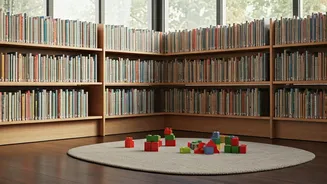
An Escape for the Senses, Not Just the Eyes
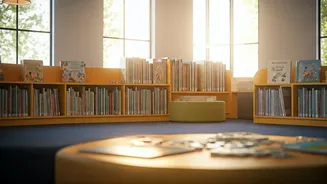
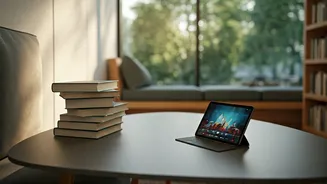
A tablet offers one primary sensory input: a bright, flat rectangle of light. Every app, book, and video is delivered through the same sterile portal. A library, by contrast, is a full-body experience. It begins with the physical act of walking through the doors,
leaving the summer heat behind for the cool, quiet air within. There’s the unique, comforting smell—a blend of old paper, binding glue, and floor wax. There's the satisfying heft of a hardcover in your hands, the rustle of turning pages, and the ambient sound of a community at peace: a distant cough, the quiet tapping of a keyboard, the soft roll of a book cart. This rich sensory environment grounds you in the present moment in a way a glowing screen, designed to make you forget where you are, simply cannot. It’s a retreat, not a distraction.
Serendipity Over Algorithms
Your tablet knows you. Its algorithms are precision-engineered to serve you more of what you already like, creating a comfortable but constricting feedback loop. It's a digital echo chamber designed for consumption. A library, however, is built for discovery. When you wander through the stacks, you are guided by curiosity, not code. You might be looking for a new thriller but find yourself drawn to a photography book on the next shelf, or a biography across the aisle. This is serendipity—the act of finding something wonderful without looking for it. A library encourages intellectual roaming. You follow your own whims, make unexpected connections, and broaden your horizons organically. You are an explorer, not just a user being served targeted content. This freedom from the algorithm is one of the most profound forms of mental escape available today.
A Place of 'Public Solitude'
Being on a tablet, even in a crowded place, is an act of isolation. You are walled off by your screen, existing in a private digital bubble. A library offers a precious and increasingly rare alternative: public solitude. It’s a space where you can be alone, together. You can read, work, or simply think, surrounded by the quiet, anonymous company of your neighbors. This shared experience creates a subtle sense of community and belonging without demanding social interaction. You are part of something larger than yourself, a civic tradition of learning and quiet contemplation. Unlike a coffee shop, there is no commercial pressure to buy something else to justify your existence. The library is a “third place”—a vital anchor of community life between home and work—that asks for nothing but your presence.
More Than Just Books
The modern library has evolved far beyond being a simple book warehouse. While the tablet offers siloed digital services, the library integrates them into a community hub. Libraries are one of the last truly democratic public spaces in America, offering free access to Wi-Fi, computers, and digital literacy training—often helping bridge the very digital divide that tablets can exacerbate. They host author talks, kids’ story hours, ESL classes, and workshops on everything from filing taxes to using a 3D printer. These programs foster connection and provide tangible skills. They transform the library from a place of passive consumption into a platform for active creation and engagement. It’s an interactive, civic-minded escape that enriches both the individual and the community.