





First, A Quick Reality Check
Let’s get one crucial fact straight: NASA has not officially announced the four astronauts who will fly on Artemis III. The mission, slated for no earlier than September 2026, will be the first to land humans on the Moon since Apollo 17 in 1972. The crew
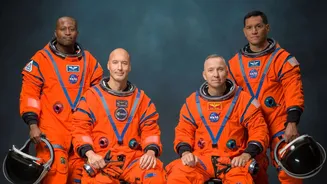
selection is one of the most anticipated announcements in modern spaceflight. So, while we can't 'meet' the final crew today, we can meet the remarkable pool of astronauts from which they will be chosen. This isn't just a list of candidates; it's a snapshot of what a 21st-century astronaut looks like and a preview of the individuals who will carry the hopes of a new generation to another world.
The Mission: A New Era of Lunar Exploration
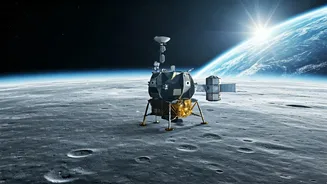
Artemis III isn't just about planting a flag and collecting rocks. This mission is designed to be the start of a long-term human presence on and around the Moon. The crew will target the lunar South Pole, a region believed to contain water ice in its permanently shadowed craters. Finding and utilizing this ice is a game-changer, as it could potentially be converted into breathable air, drinking water, and even rocket fuel. More importantly, NASA has pledged that the Artemis III crew will include the first woman and the first person of color to walk on the Moon, turning the old black-and-white footage of Apollo-era explorers into a full-color reflection of humanity today. Every astronaut in the current corps knows these are the stakes.
The 'Artemis Generation' Candidates
The crew will be selected from NASA's active astronaut corps, a group of fewer than 50 elite individuals. While any of them are technically eligible, the focus is on those who are part of the 'Artemis Generation'—astronauts who joined the corps with the Moon missions in mind. They are scientists, doctors, engineers, and decorated military pilots who have undergone years of rigorous training. They’ve practiced spacewalks in giant pools, learned to fly supersonic jets, and endured grueling survival simulations. The selection process will weigh experience, specific skill sets needed for the mission, and the complex calculus of crew chemistry for a high-stakes journey far from home.
Example Profile: The Veteran (Christina Koch)
While Christina Koch is already assigned to fly on Artemis II—the lunar flyby mission preceding the landing—her profile is a perfect example of the caliber of astronaut in contention. An electrical engineer and physicist, Koch holds the record for the longest single spaceflight by a woman (328 days) and was part of the first all-female spacewalk. Her extensive experience on the International Space Station (ISS) with long-duration missions makes her a prototype for the kind of resilient, multi-skilled individual needed for the harsh lunar environment. Her selection for Artemis II proves she’s at the top of the list for critical flight assignments.
Example Profile: The Trailblazer (Victor Glover)
Also a member of the Artemis II crew, Navy Captain Victor Glover demonstrates the pioneering spirit NASA is looking for. A decorated F/A-18 pilot and test pilot, Glover served as the pilot for SpaceX's Crew-1 mission, becoming the first African American to live on the ISS as a long-duration crew member. His experience piloting a cutting-edge commercial spacecraft and his extensive time in orbit make him an ideal candidate for future complex missions. His journey embodies the agency's commitment to ensuring the pioneers of this new era reflect all of the society they represent.
Example Profile: The New Wave (Jessica Wittner)
To understand the future of the corps, look to someone like Jessica Wittner, a member of NASA's 2021 astronaut class. A Lieutenant Commander in the U.S. Navy, she is a distinguished naval aviator and test pilot with a background in engineering and biology. She and her classmates are the first to be dubbed the 'Artemis Generation' from day one of their training. While a rookie astronaut is less likely to command a historic mission like Artemis III, their presence in the corps shows the depth of the talent pipeline. Astronauts like Wittner are training to be the commanders and specialists for Artemis IV, V, and beyond, building the permanent lunar presence that Artemis III will initiate.