






The Soul of the Haveli
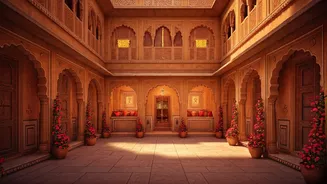
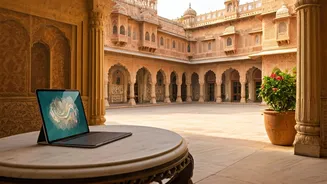
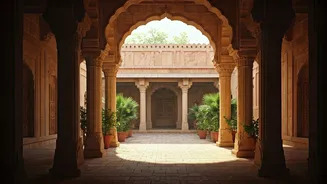
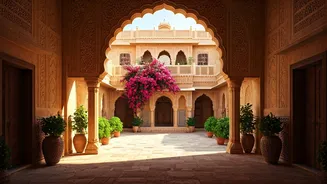
In Jaipur, the grand traditional mansions known as *havelis* were built from the inside out. At their center was always the *chowk*, or courtyard. This wasn't just an architectural feature; it was the home's lungs, its social hub, and its spiritual core.
For American travelers accustomed to front lawns and backyards, the concept is a powerful shift in perspective. Here, life doesn't face the street; it turns inward, creating a private universe shielded from the desert heat and the city's chaos. The courtyard was where business was discussed, festivals were celebrated, and daily life unfolded under a patch of open sky, creating a semi-public stage within the private sanctuary of the home.
An Oasis of Ingenious Design
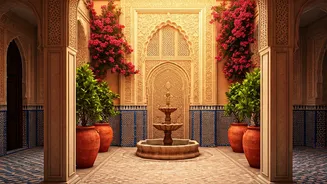
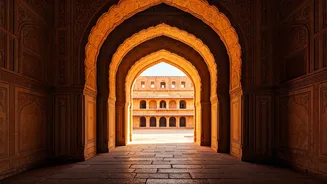
Long before modern air conditioning, Rajasthani architects perfected the art of passive cooling, and the courtyard was their masterpiece. These spaces function as natural thermostats. As the sun beats down, the shaded courtyard remains significantly cooler than its surroundings. This temperature difference creates a convection current, pulling hot air up and out while drawing cooler air through the building's corridors and rooms. This phenomenon, known as the Venturi effect, creates a constant, gentle breeze. Often, a small fountain or water channel at the center of the *chowk* would further cool the air through evaporation. It’s a centuries-old, sustainable design solution that feels remarkably relevant today.
Where Public Met Private
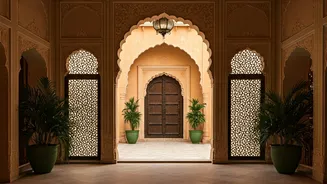
The courtyard also served as a brilliant social filter. A typical grand *haveli* might have multiple courtyards, each with a specific purpose. The outer courtyard was more public, a place where male family members could meet with merchants, officials, and visitors. Deeper within the home, a second, more private courtyard formed the heart of the *zenana*, or women’s quarters. This inner sanctum was exclusively for the women of the household and their attendants, a world hidden from public view. Ornate latticed screens, called *jalis*, allowed the women to observe the happenings in the outer courtyards without being seen, giving them a connection to the outside world while maintaining cultural norms of privacy and modesty.
A Canvas for Royal Artistry
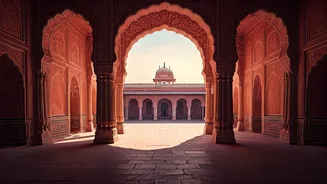
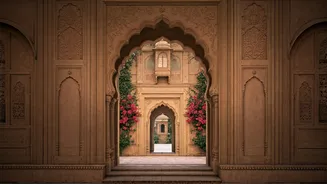
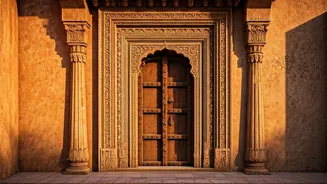
Functionality was always paired with breathtaking beauty. Jaipur’s most coveted courtyards are living galleries of Rajput and Mughal artistry. Consider the Pritam Niwas Chowk, the “Courtyard of the Beloved,” inside Jaipur’s City Palace. It features four magnificent gates, each representing a different season and dedicated to a Hindu deity, adorned with vibrant frescoes and peacock motifs. Walls are often covered in intricate mirror work (*sheesh mahal*), floral paintings, or carved stone panels. Elaborate balconies, known as *jharokhas*, overhang the courtyard, providing shade and a perch from which to survey the scene below. Every surface was an opportunity for expression, turning these spaces into dazzling showcases of the wealth, piety, and artistic patronage of the families who built them.
Experiencing the Magic Today
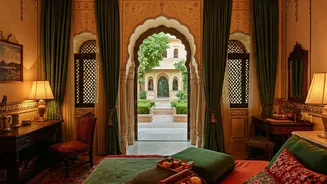
While many historic *havelis* remain private residences, their magic is not entirely inaccessible. The grand courtyards of the City Palace and other monuments are open to the public, offering a direct glimpse into royal history. More intimately, many of Jaipur's most spectacular *havelis* have been converted into heritage hotels. Staying in one—like the Samode Haveli or Alsisar Haveli—is a transportive experience. You can sip chai in a courtyard that has hosted generations, sleep in rooms adorned with original frescoes, and feel the history embedded in the cool marble floors. It transforms a simple vacation into a journey through time, allowing you to inhabit the very spaces that have defined Jaipur's architectural soul for centuries.