





A Cosmic Coincidence
In a remarkable piece of celestial detective work, scientists at the Physical Research Laboratory (PRL) in Ahmedabad, India, have made a groundbreaking connection. They analyzed a lunar meteorite—a genuine piece of the Moon found here on Earth—and discovered
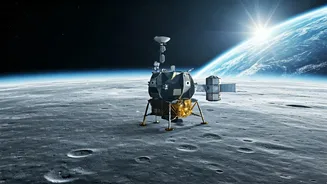
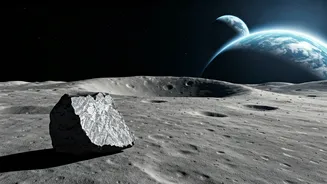
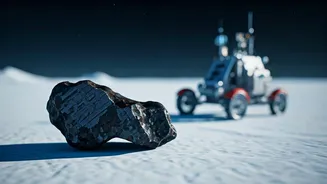
its chemical and mineralogical makeup is a near-perfect match for the soil analyzed by India's Chandrayaan-3 rover. The rover famously made history in August 2023 by becoming the first spacecraft to soft-land near the Moon's south pole. This means that we likely have a physical sample from the Moon’s most prized real estate, without ever having to send a mission to bring one back. The meteorite, named Asuka-12209, is essentially a free preview of a region that space agencies, including NASA, are desperate to explore.
From the Moon to Antarctica
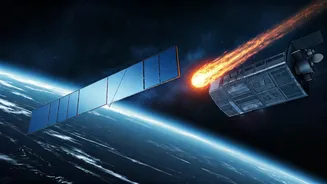
So, how does a rock from the Moon end up in a lab in India by way of Antarctica? The process is as violent as it is incredible. Millions of years ago, an asteroid or comet likely slammed into the Moon with tremendous force. The impact would have been powerful enough to eject chunks of lunar crust into space, launching them at speeds high enough to escape the Moon's gravity. For millennia, this particular rock drifted through the solar system until it was captured by Earth's gravity and fell to the surface. It landed in Antarctica, where the pristine, icy landscape is an ideal place to preserve and later find meteorites. Discovered by a Japanese expedition, the 7-pound rock was eventually made available to scientists for study, setting the stage for the recent discovery. It’s a journey of hundreds of thousands of miles and millions of years, culminating in a lab analysis that connected it back to its specific lunar home.
The Scientific Detective Work
Making this link wasn't guesswork; it was a meticulous comparison of data. When the Chandrayaan-3 rover’s Pragyan instrument analyzed the soil at its landing site, it sent back detailed information about the elements present, like calcium, aluminum, silica, and iron. The PRL scientists had already been studying the Asuka-12209 meteorite. When they compared the rover's data from the lunar surface with their own lab analysis of the meteorite, they found a striking similarity. The composition of the rock—specifically its unique mixture of minerals like anorthosite—was a strong match for the anorthositic highlands where Chandrayaan-3 landed. While it’s not a 100% DNA-style confirmation, the evidence strongly suggests the meteorite was ejected from the same geological region. This makes it an invaluable “proxy sample” for the south polar terrain.
Why the South Pole Is a Big Deal
The intense global interest in the Moon's south pole isn't just for bragging rights; it's about resources. The region is home to permanently shadowed craters where temperatures are cold enough to have trapped water ice for billions of years. For future lunar missions, like NASA's Artemis program which aims to establish a sustainable human presence on the Moon, this ice is a potential goldmine. It could be harvested for drinking water, breathable oxygen, and, most importantly, rocket propellant. Having a physical piece of this region to study on Earth—even one that arrived by chance—gives scientists a huge head start. They can analyze the meteorite in ways a rover can't, learning about its properties, its history, and how it might have interacted with water ice, all of which provides crucial intelligence for planning future human and robotic missions.