




The Greenery-Safety Dilemma
Bringing nature indoors can transform a sterile apartment into a vibrant sanctuary. This desire for lush, living decor resonates deeply, particularly for those with cultural roots in green, tropical climates like India, where foliage is an integral part of
the landscape. Yet, the urban pet owner faces a constant tension. Many popular houseplants—like lilies, monsteras, and pothos—are beautiful but contain toxins that can be harmful, even fatal, to curious pets who might nibble on a leaf. This reality forces a difficult choice: sacrifice the dream of a leafy interior or risk the health of a beloved animal. The search for a plant that is both gorgeous and guaranteed to be non-toxic can feel exhausting, leading many to give up and settle for artificial plants. But there’s a whole family of plants that elegantly solves this problem.
The Fern Solution
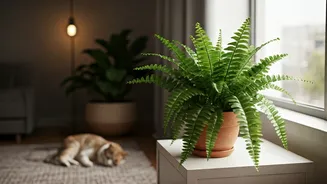
Enter the humble fern. With their feathery fronds, intricate patterns, and ancient lineage, ferns offer a perfect compromise. The vast majority of true fern varieties are non-toxic to cats and dogs, a fact confirmed by the ASPCA. This single attribute makes them a superstar category for pet-owning households. But their benefits don't stop there. Ferns thrive in the exact conditions common to many apartments: lower light and higher humidity. They are masters of creating a lush, jungle-like atmosphere without needing a sun-drenched, south-facing window. Furthermore, many ferns are excellent air purifiers, quietly working to filter common indoor pollutants. Their versatile aesthetic, ranging from delicate and wispy to bold and architectural, means there’s a fern for every style of decor.
The Go-To Choice: Boston Fern
If there’s one fern that defines the category, it’s the Boston Fern (Nephrolepis exaltata). Its arching, sword-shaped fronds create an immediate sense of fullness and classic beauty. It’s the quintessential hanging plant, perfect for drawing the eye upward and adding vertical dimension to a small space, keeping it well out of a puppy’s reach while still being safe if a leaf happens to fall. Boston Ferns love consistently moist soil and high humidity, making them ideal for a bright bathroom or a kitchen. A regular misting will keep them happy and prevent their tips from browning. Their rapid growth and dense foliage provide a huge visual payoff, quickly making any corner feel like a verdant retreat.
For a Delicate Touch: Maidenhair Fern
For those who prefer a more delicate, ethereal look, the Maidenhair Fern (Adiantum) is an unmatched choice. With its wiry, black stems and fan-shaped, paper-thin leaflets, it looks like something from a fairy tale. It brings a soft, airy texture to a room that contrasts beautifully with more modern, clean-lined furniture. The Maidenhair is notoriously a bit of a diva; it demands consistently high humidity and soil that never dries out. It will not forgive neglect. However, its stunning beauty is a worthy reward for the attentive plant parent. It thrives in terrariums or under a glass cloche, which helps maintain the humid environment it craves, making it a perfect, self-contained accent piece.
The Modern Pick: Bird's Nest Fern
Breaking from the classic feathery look, the Bird’s Nest Fern (Asplenium nidus) offers a bold, sculptural alternative. Its wide, wavy, apple-green fronds grow from a central rosette, resembling a leafy bird’s nest. This variety has a wonderfully modern and sleek appearance, looking just as at home in a minimalist apartment as in a bohemian one. Unlike many other ferns, its fronds are whole and undivided, giving it a strong architectural presence. It’s also one of the hardier and more forgiving ferns. It tolerates lower light levels well and is less demanding about humidity than the Maidenhair, making it a fantastic starting point for novice fern owners. Its sturdy leaves are also less tempting for pets to shred than their lacier cousins.