




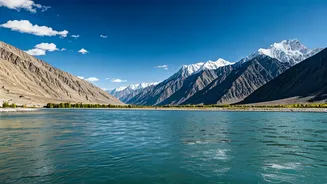


A Symphony on the Riverbank
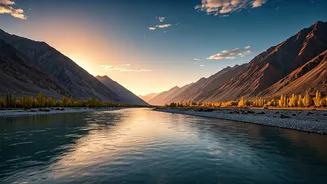
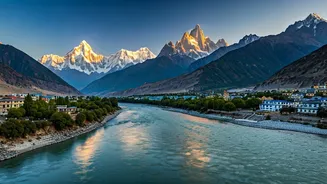
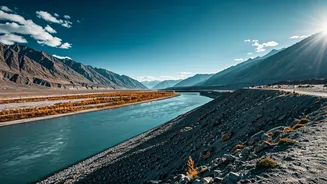
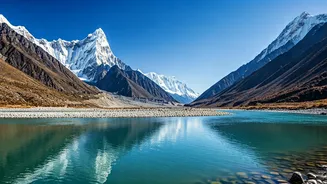
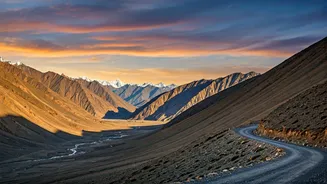
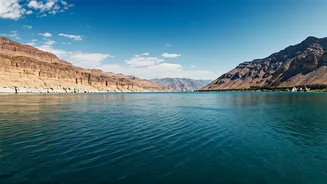
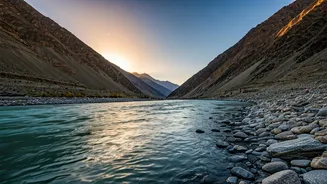
Imagine a place where stark, brown mountains kiss a piercingly blue sky. This is Ladakh, India's remote Himalayan region, often called “Little Tibet.” Here, along the banks of the Indus River near the town of Leh, a vibrant scene unfolds each June. The
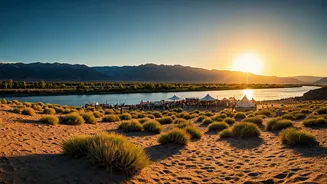
air, thin and crisp, carries the resonant hum of Buddhist mantras and the melodic cadence of Sanskrit hymns. Hundreds of people from across India, dressed in a kaleidoscope of regional attire, gather at the water’s edge. Prayer flags in five sacred colors flutter violently in the wind, sending blessings across the valley. This is the Sindhu Darshan Festival, a three-day event where the river itself is the guest of honor. It’s a sensory feast: the scent of incense mixes with the earthy smell of the river, while the sounds of drums, conch shells, and collective prayer create a powerful, almost tangible energy.
The River of Ancient Memory
For millennia, the Indus—or Sindhu, as it’s known in ancient Sanskrit texts—has been more than just a river. It is the cradle of one of the world's oldest civilizations and is revered as one of the seven sacred rivers in Hinduism. Its waters, born from the holy Mount Kailash in Tibet, are believed to possess purifying powers. While this reverence is ancient, the festival itself is a modern phenomenon with deep roots. It was inaugurated in 1997 as a celebration of the river as a symbol of India's cultural unity and communal harmony. The event was conceived to honor the soldiers who protect the nation's borders in this rugged, strategic landscape and to foster a deeper connection among Indians to this foundational waterway, which gave the country its name.
A Chorus of Sacred Rituals
The heart of the festival lies in its rituals, which blend traditions from across the subcontinent. The first day begins with a reception for the participants, who bring water from their home rivers in earthen pots. In a deeply symbolic ceremony, this water is mingled with the waters of the Indus. The act represents the meeting of India’s diverse cultures and their merging into a single, unified identity, much like tributaries feeding a great river. A delegation of fifty lamas, or senior Buddhist monks, leads prayers on the riverbank. At the same time, Hindu priests conduct their own rites, chanting Vedic hymns that have echoed through these lands for thousands of years. The result is a unique spiritual symphony, a dialogue of faith traditions honoring a shared natural wonder. The festival also features vibrant cultural programs, with folk artists from different Indian states performing traditional music and dance, turning the riverbank into a living museum of the nation's heritage.
More Than a Festival, A Statement
In a region as politically and culturally complex as Ladakh—which sits at the crossroads of India, Pakistan, and China—the Sindhu Darshan Festival carries significant weight. It is an assertion of national identity and a call for unity in diversity. By bringing people from the plains of Tamil Nadu to the coasts of Gujarat to this remote Himalayan frontier, the event reinforces a shared sense of belonging centered on a common natural heritage. It serves as a reminder that the Indus, while a source of geopolitical tension in other parts of its course, can also be a powerful symbol of peace and integration. For the visitors, it's a pilgrimage—not just to a holy river, but to an idea of India itself, one that is ancient, diverse, and resilient.