


The Real Reason for the Charts
Let’s get the hard part out of the way: America has an epidemic of portly pets. According to the most recent data from the Association for Pet Obesity Prevention, a staggering 60% of dogs in the United States are classified as overweight or obese. That’s
not just a little “extra fluff” from winter. It’s a genuine health crisis linked to a higher risk of arthritis, diabetes, kidney disease, high blood pressure, and even some forms of cancer. It can shorten a dog's life by up to two and a half years. So when you hear the term “diet chart,” don’t picture a miniature Weight Watchers plan. Think of it as a vet-approved tool to combat a serious, widespread medical issue that's been quietly normalized by our love of seeing our pets happy and well-fed.
What a 'Diet Chart' Actually Is
The good news is, you don’t need a spreadsheet. For veterinarians, a “diet chart” usually refers to a Body Condition Score (BCS) chart. This is a simple, visual tool that ranks a dog’s physique on a scale of 1 (emaciated) to 9 (severely obese), with a score of 4 or 5 being ideal. These charts show you what to look for—not on a scale, but on your actual dog. Can you feel the ribs without pressing hard? Does your dog have a visible waist when viewed from above? Is there an abdominal tuck where their belly slopes up from the rib cage to the hind legs? These are the key indicators. The “chart” is just a standardized way to assess these physical traits, giving you and your vet a common language to talk about your dog's weight.
Your 30-Second Home Assessment
You can perform a simplified BCS check right now. It’s easier than getting your dog to pose for a picture. 1. **The Rib Check:** Gently run your fingers over your dog's side. On a healthy-weight dog, you should be able to feel the individual ribs easily, with just a thin layer of fat, sort of like feeling the knuckles on the back of your hand. If you have to press hard to find them, or can’t feel them at all, your dog is likely overweight. If the ribs are sharply visible, they may be underweight. 2. **The Overhead View:** Look down at your dog from above while they are standing. You should see a gentle, hourglass-like curve inward after the rib cage—a definite waist. If your dog’s body is a straight line or, worse, bulges outward, that’s a clear sign of excess weight. 3. **The Side View:** Look at your dog from the side. The belly should tuck up from the ribs to the groin. A dog whose belly line runs straight across or hangs down has lost this tuck and is carrying extra pounds.
Defeating the 'Good Boy' Tax
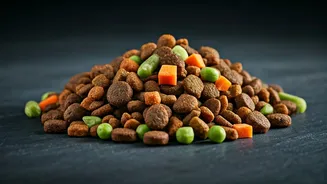
The single biggest culprit in canine weight gain isn't the main meal—it's the extras. Those little crusts of toast, the piece of cheese dropped during dinner prep, and the endless “good boy” treats all add up. This is where portion control becomes non-negotiable. First, use a proper measuring cup for their kibble, not a coffee mug or the scoop that came with the bin. The feeding guidelines on the bag are just a starting point; active dogs may need more, while couch potatoes need significantly less. Second, account for treats. Vets often recommend that treats make up no more than 10% of a dog's daily caloric intake. For a small dog, a single dental chew can be a huge portion of their daily allowance. Consider swapping high-calorie biscuits for low-calorie options like green beans, baby carrots, or small pieces of apple.