

A Spoonful of Nostalgia
There are certain foods that taste like a memory. For millions of Americans, fruit custard is one of them. It’s the flavor of a grandparent’s kitchen, a church basement social, or a Fourth of July barbecue where the kids ran wild in the yard until dusk.
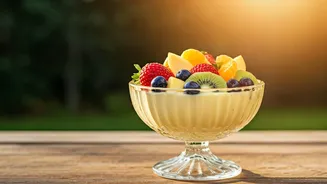
The simple combination of creamy, sweet custard and soft chunks of fruit—often a technicolor mix of canned fruit cocktail, mandarin oranges, and maybe some fresh banana or grapes—doesn't aim for culinary awards. It aims for comfort. This isn't a dish designed to challenge the palate; it’s designed to soothe the soul. Its power lies not in complex flavor profiles but in its unwavering consistency. The fruit custard you eat today is almost certainly identical to the one your aunt made in 1985, and that’s precisely the point. It’s a delicious form of time travel, connecting us directly to gatherings and people we hold dear.
The Perfect Potluck Player
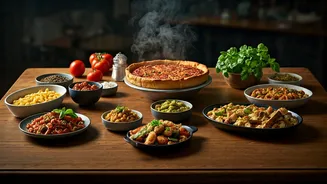
In the unwritten rules of potluck contributions, fruit custard holds a special status. It’s the ultimate team player. It’s inexpensive to make, requires no special culinary skills, and can be scaled up easily to feed a crowd. It travels well in a sealed container, needs no reheating, and sits happily on a buffet table for an hour or two without complaint. Unlike a fussy, temperature-sensitive dish, fruit custard is low-maintenance. It doesn’t demand the spotlight like an elaborate layer cake, nor does it carry the divisive nature of, say, a gelatin mold with suspended vegetables. It’s a universally understood offering of goodwill—a sweet, simple, and safe bet that will please picky kids and nostalgic adults alike. By bringing a fruit custard, you’re not trying to be a star; you’re showing you understand the assignment is about community and sharing, not culinary one-upmanship.
An Antidote to Foodie Culture
In an era of deconstructed desserts, artisanal everything, and single-origin ingredients, fruit custard feels like a gentle rebellion. It’s profoundly unpretentious. Its core components often celebrate the mid-century miracle of the American pantry: canned fruit, instant pudding mix, and whipped topping from a tub. While a modern foodie might scoff, they’d be missing the point. The appeal of fruit custard is its rejection of complexity. It doesn't require a trip to a specialty store or a precise understanding of French pastry techniques. It’s a testament to a time when deliciousness was measured in smiles, not Michelin stars. This simplicity is what makes it feel so classic and comforting. It’s a culinary anchor in a sea of fleeting food trends, reminding us that sometimes, the best things are straightforward, sweet, and shared.
The Taste of Mid-Century Americana
To understand why fruit custard feels “classic,” look to its roots in post-war American life. As suburbs expanded and casual home entertaining became a cornerstone of social life, dishes that were easy, affordable, and crowd-pleasing reigned supreme. Fruit custard, and its close cousins like Ambrosia salad, fit the bill perfectly. They were products of a new age of convenience, leveraging canned goods and packaged mixes that freed hosts from hours of kitchen labor. This dish is more than just a dessert; it’s an artifact of the American Dream, circa 1965. It represents an era of backyard barbecues, Tupperware parties, and a belief in simple, communal abundance. Every spoonful carries a faint echo of that optimistic, un-ironic period, making it a tangible piece of cultural history that we can still taste today.