



What Is a Planetary Conjunction?
In simple terms, a conjunction is a cosmic illusion. It happens when two or more celestial objects, like planets, appear to be very close to one another in the sky from our vantage point on Earth. It’s important to remember they aren’t actually close to colliding.
In reality, they remain hundreds of millions of miles apart, traveling in their own distinct orbits around the sun. Think of it like seeing two distant ships on the ocean horizon that look like they're side-by-side; from your perspective they are together, but a vast expanse of water still separates them. During a Venus-Jupiter conjunction, the two planets follow a similar line of sight from Earth, creating a beautiful, temporary pairing in our night sky. This alignment is a regular but always captivating part of the celestial mechanics of our solar system.
The Celestial Heavyweights: Venus and Jupiter
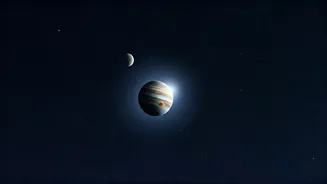
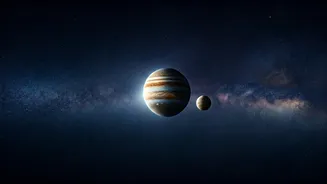
This isn’t just any pairing; it’s a meeting of the two undisputed champions of planetary brightness. Venus, often called the “Evening Star” or “Morning Star,” is the second planet from the sun and is shrouded in highly reflective clouds. This makes it the brightest object in our sky after the sun and moon. It’s so brilliant that it doesn’t twinkle like a star; it shines with a steady, silvery light. Jupiter, the fifth planet, is the largest in our solar system—a gas giant so massive that all other planets could fit inside it. Despite its vast distance from us, its sheer size makes it the second-brightest planet we can see. When these two powerhouses appear to draw near each other, their combined brilliance easily outshines every star in the sky, creating a spectacle that demands attention even from brightly lit cities.
How to See the Show
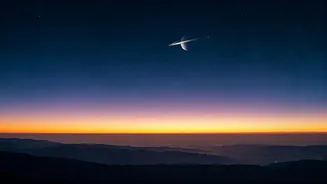
The best part about a Venus-Jupiter conjunction is its accessibility. You don’t need a fancy telescope or special equipment to enjoy it. The duo is bright enough to be seen with the naked eye, even from areas with significant light pollution. The key is knowing when and where to look. Conjunctions like this typically take place in the evening sky just after sunset or in the morning sky just before sunrise. To spot them, find a location with a clear, unobstructed view of the horizon—think a park, a field, or even a west-facing window on an upper floor. After the sun dips below the horizon, scan the twilight glow. The two planets will appear as two distinct, incredibly bright “stars” that are noticeably close together. Their brightness is your biggest clue; they will be far more intense than anything else in that patch of sky.
Tips for the Best Viewing Experience
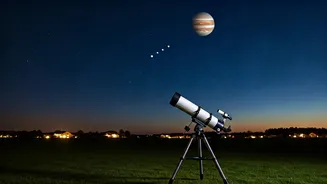
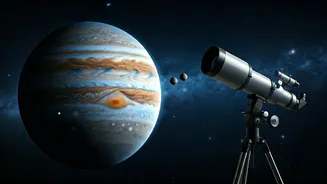
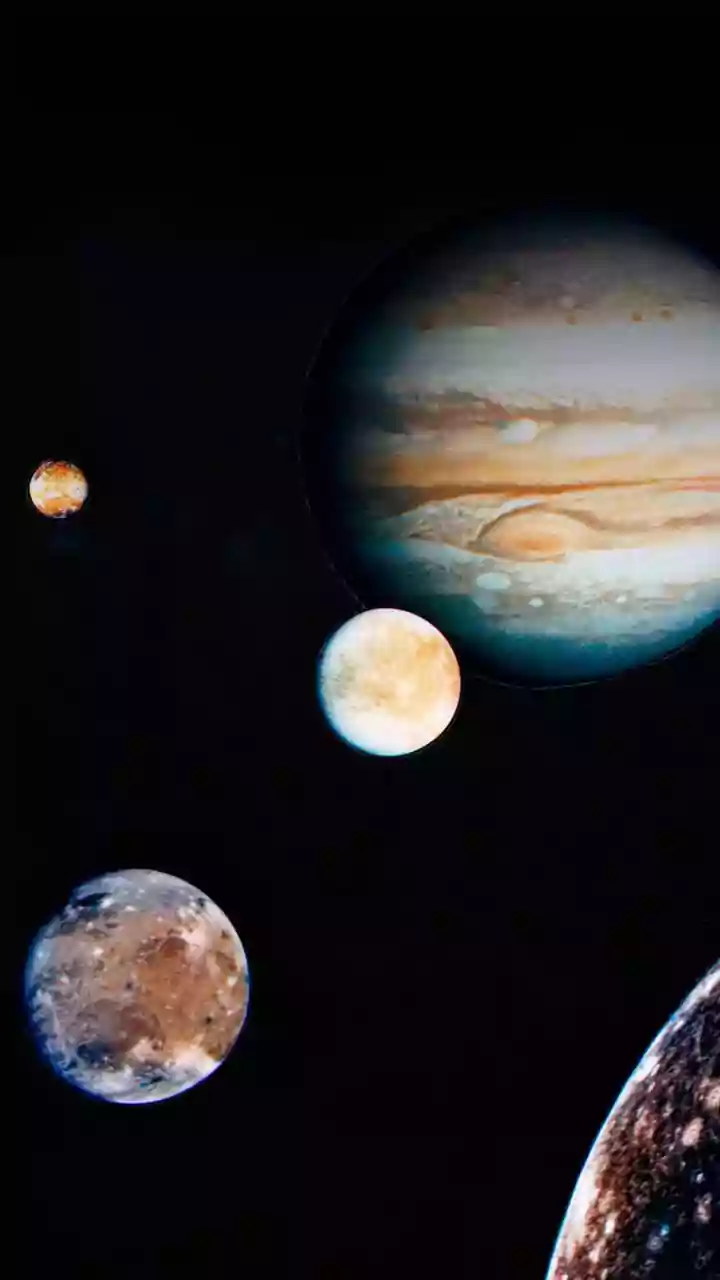
While you can enjoy the view with just your eyes, a little preparation can make it even more memorable. First, give your eyes about 15-20 minutes to adjust to the darkness; this will help you see more subtle details. While a telescope isn't necessary, a pair of standard binoculars will dramatically enhance the view. Through binoculars, you’ll not only see Venus and Jupiter more clearly, but you might also be able to spot Jupiter’s four largest moons—Io, Europa, Ganymede, and Callisto—appearing as tiny pinpricks of light in a neat line around the giant planet. For help in identifying planets and constellations, consider using a stargazing app on your smartphone. Apps like SkyView, Star Walk, or Stellarium use your phone’s camera and GPS to create an augmented-reality map of the sky, making it easy to confirm you’re looking at the right celestial bodies.