







Why This Pruning Window Matters
For gardeners in the American Southwest, the period between the intense heat of early summer and the arrival of the first monsoon rains is a golden opportunity. This isn't the deep, structural pruning you might do in the dead of winter; this is a strategic
trim with specific goals. The monsoon season brings a dramatic shift in weather: high humidity, heavy downpours, and strong winds. Without a proper haircut, your beloved roses and jasmine can become vulnerable. Dense, untrimmed foliage traps moisture, creating a perfect breeding ground for fungal diseases like powdery mildew and black spot. Furthermore, long, weak canes can easily snap under the weight of rain or be thrashed by wind. A pre-monsoon trim is proactive plant healthcare. It improves air circulation, strengthens the plant’s structure, and encourages a burst of fresh, resilient growth that will be ready to thrive on the coming moisture, rewarding you with lush foliage and a second wave of stunning blooms.
Gather Your Essential Tools
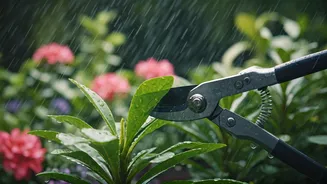
You don't need a professional landscaper's truck, but the right tools make all the difference. Quality and cleanliness are paramount. Start with a pair of sharp, clean bypass pruners. Bypass pruners work like scissors, making a clean cut that heals quickly, unlike anvil pruners which can crush stems. For branches thicker than a half-inch, you’ll want a pair of loppers for better leverage. A small pruning saw can be useful for removing any thick, dead wood from the base of older plants. Invest in a good pair of thick gardening gloves, especially for roses, to protect your hands and arms from thorns. Finally, have a small bucket of diluted bleach solution (one part bleach to ten parts water) or rubbing alcohol on hand. Wiping your blades clean between plants, or even after cutting off a diseased branch on the same plant, is the single best way to prevent the spread of disease through your garden.
The Right Cut for Your Roses
The goal for pre-monsoon rose pruning is to open up the plant and encourage new flowering wood. Start by removing the “three Ds”: any wood that is dead, damaged, or diseased. Dead wood will be brown and brittle, while healthy canes are green. Cut these back to the base or to a healthy, outward-facing bud. Next, look at the overall shape. Are branches crossing over each other and rubbing? If so, remove the weaker of the two. Your aim is to create a vase-like shape with an open center, which allows air to flow freely through the plant. Finally, trim the remaining healthy canes back by about one-third of their length, making each cut at a 45-degree angle about a quarter-inch above an outward-facing bud. This encourages the new shoot to grow away from the center of the plant, further improving its open structure. Don't forget to deadhead any spent blooms to redirect the plant's energy into new growth.
Taming and Training Your Jasmine
Jasmine, especially the vining varieties popular in Southwestern gardens, can quickly become an overgrown tangle if left unchecked. A pre-monsoon trim helps manage its size and encourages the vigorous new growth that produces those intoxicatingly fragrant flowers. For vining jasmine, like Star Jasmine (Trachelospermum jasminoides), focus on controlling its spread. Cut back any long, unruly tendrils that are heading in the wrong direction or encroaching on windows and walkways. Thin out the plant by selectively removing some of the older, woodier stems from the base. This allows more light and air to reach the interior and stimulates new, more flexible shoots. If your jasmine is growing on a trellis or fence, use this opportunity to retrain and tie up any loose vines, securing them for the coming winds. For shrub-type jasmines, the approach is similar to roses: remove dead or weak branches and lightly shape the plant to maintain a desirable size and encourage bushiness.