



The Journey to the Roof of the World
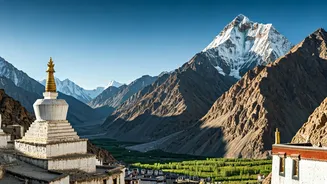
Getting to Hemis is an adventure in itself. Ladakh, often called "Little Tibet" or "The Land of High Passes," is a starkly beautiful high-altitude desert in northern India. The landscape is a dramatic canvas of barren mountains, deep blue skies, and startlingly
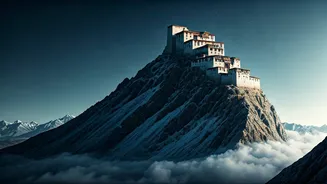
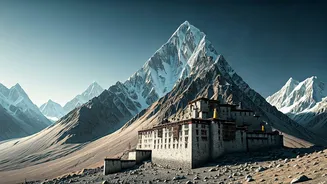
green valleys carved by the Indus River. Flying into the capital, Leh, is a breathtaking experience, with the jagged peaks of the Himalayas stretching out below. From there, a drive takes you through winding roads, past fluttering prayer flags and whitewashed stupas, until you reach a hidden valley. Nestled against a cliffside, the Hemis Monastery complex doesn't immediately reveal its grandeur, its buildings blending into the ochre-and-gray rock. It feels less like arriving at a tourist site and more like stumbling upon a secret sanctuary that has been guarding its treasures for centuries.
A Fortress of Faith
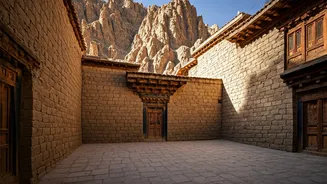
Founded in the 17th century, Hemis is the wealthiest and most important monastery of the Drukpa lineage, or "Dragon School," of Tibetan Buddhism in the region. Its strategic location, hidden from the main river valley, helped it evade the plunder that befell other monasteries over the centuries. This seclusion has been the key to its remarkable state of preservation. As you step through the main gate, you leave the stark mountain silence and enter a courtyard buzzing with spiritual energy. The architecture is a formidable yet beautiful blend of Tibetan and Indian influences, with intricately carved wooden balconies, brightly painted window frames, and massive prayer wheels spun by devoted pilgrims. The air smells of juniper incense and melting yak butter, a scent that has permeated these stones for nearly 400 years.
The Unfurling of a Giant
The most legendary of Hemis's hidden treasures is one that most visitors will never see. Every 12 years, coinciding with the Year of the Monkey in the Tibetan calendar, the monastery hosts the Hemis Festival. Its centerpiece is the unfurling of a gigantic thangka—a sacred painting on silk appliqué—depicting Guru Padmasambhava, the 8th-century sage credited with bringing Buddhism to Tibet. This colossal masterpiece, several stories high, is slowly unrolled down the monastery's main facade, blessing the vast crowd of devotees and onlookers who have traveled from around the world. Its vibrant colors and divine imagery are a fleeting spectacle, a powerful reminder that some beauty is made more precious by its rarity. This is the monastery’s greatest secret, revealed only to a patient few.
Murals That Breathe and Teach
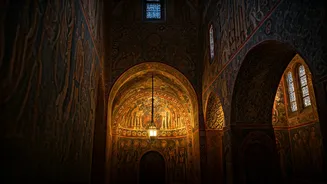
While the giant thangka remains hidden, other artistic wonders are available to the persistent visitor. The monastery's prayer halls and temples are covered in ancient murals, their colors still astonishingly vibrant. These are not mere decorations; they are complex visual encyclopedias of Buddhist philosophy. The walls depict wrathful protector deities with fearsome expressions, serene Buddhas in states of blissful meditation, and intricate mandalas that serve as cosmic maps for the mind. In the dim light of the halls, illuminated by flickering butter lamps, these figures seem to come alive. You'll see the Kalachakra, or "Wheel of Time," a complex diagram representing the universe, and frescoes illustrating the lives of saints and scholars. For the monks and practitioners, these paintings are tools for visualization and a constant source of spiritual instruction.
A Living Museum of the Spirit
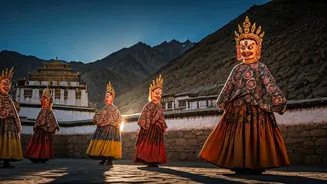
Beyond the paintings and statues, Hemis houses an incredible museum filled with artifacts that tell the story of Tibetan Buddhism. Here, you'll find ceremonial masks used in sacred Cham dances, ancient manuscripts, and ritual instruments. The masks, in particular, are captivating works of art—elaborate, often terrifying visages that represent gods and demons, worn by monks during festival performances to enact ancient morality plays. Seeing them up close, you understand that the art of Hemis is not a relic of the past. It is an active, essential part of a living faith. The monastery is not just preserving art; it is preserving a way of seeing the world, a spiritual technology designed to awaken the human heart.