





The Pre-Dawn Journey
The escape begins in the dark. Long before the first street vendors set up their chai stalls, an alarm clock chirps. In a city of over 20 million, this is the hour of stillness. The journey out of the city’s dense residential colonies and towards its
green fringes is a trip through a different Delhi. The roads, usually choked with auto-rickshaws and cars, are clear. The air, while still carrying the city's faint, dusty perfume, feels cooler, fresher. You’re not just driving to a destination; you're traveling back in time to an ecosystem that predates the sprawling metropolis. Your gear is simple: a pair of binoculars, a field guide, and perhaps a thermos of hot tea. The anticipation is not for a spectacle, but for its opposite: a profound and welcome quiet.
An Oasis on the River
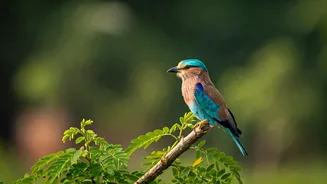
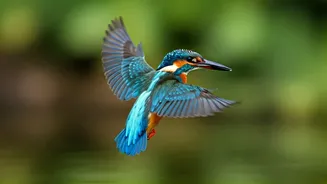
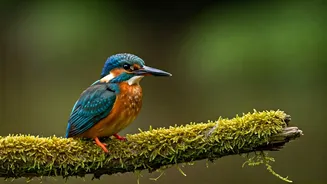
Arriving at a place like the Okhla Bird Sanctuary, situated on the Yamuna River, the transition is immediate and startling. You leave the concrete world behind a simple gate, and suddenly the soundtrack changes. The distant hum of the city is replaced by a symphony of chirps, whistles, and fluttering wings. The air smells of damp earth and river water. Here, the gray urban sprawl gives way to marshlands and acacia trees. A flash of iridescent blue reveals a white-throated kingfisher perched on a reed, utterly indifferent to the megacity just a few miles away. Ducks dabble in the shallows, and a massive flock of northern shovelers might take flight in a coordinated, breathtaking swirl. It feels less like a park within a city and more like a portal to another dimension.
A Global Flyway Stopover
This isn't just casual nature appreciation; it's witnessing a global phenomenon. Delhi sits on the Central Asian Flyway, a critical migration route for birds traveling from as far as Siberia and Europe to escape the harsh winters. From October to March, the city's wetlands become a crucial pit stop for thousands of migratory birds. Seeing a bar-headed goose, a bird that flies over the Himalayas to get here, foraging peacefully in a Delhi marsh is a humbling experience. It reframes the city not as an isolated urban island, but as a vital node in a planetary network. Sanctuaries like Okhla, Sultanpur National Park just outside the city, and the Asola Bhatti Wildlife Sanctuary are not just beautiful; they are essential ecological lungs, providing refuge for wildlife and a buffer against unchecked urbanization.
The Community of Quiet
You are rarely alone on these excursions, but the company is part of the appeal. You’ll find seasoned birders with telephoto lenses the size of small cannons, patiently waiting for the perfect shot of a rare raptor. You’ll see families quietly pointing out Indian peafowl to their children, and university students sketching in notebooks. There’s an unspoken code of conduct: speak in hushed tones, move slowly, and share in the collective awe. A fellow birder might silently point you towards a spotted owlet hiding in the hollow of a tree, a small gesture of shared passion that transcends language. It’s a community built not on conversation, but on a shared, silent reverence for the natural world that persists against all odds.