




What Exactly Is the New Rule?
To be clear, this isn't a brand-new law but rather a strict enforcement of an existing one. India's Bureau of Civil Aviation Security (BCAS) recently issued a circular reminding all airport operators and security agencies to enforce the long-standing
prohibition on unauthorized photography and videography within airport terminals. For years, the rule was often overlooked, allowing travelers and content creators to film with relative freedom. That has now changed. The Central Industrial Security Force (CISF), which manages security at most major Indian airports, has been instructed to actively stop and penalize individuals filming without explicit permission, particularly in sterile and security-hold areas. This move transforms a loosely-held guideline into a firm on-the-ground reality that travelers will notice immediately.
Why the Sudden Crackdown?
The primary driver behind this renewed enforcement is the explosion of social media content creation. The rise of Instagram Reels, YouTube Shorts, and TikTok has turned airport terminals into popular backdrops for influencers, vloggers, and aspiring creators. Authorities have noted a significant increase in people creating dance videos, skits, and detailed vlogs inside airports. This behavior raises two major concerns. First is security: filming near check-in counters, security screening checkpoints, and boarding gates can inadvertently capture sensitive information or security protocols. Second is passenger disruption. Elaborate filming can obstruct passenger flow, create noise, and interfere with the duties of airport and airline staff, leading to delays and general chaos in an environment that prizes efficiency and order.
Who Is This Really Aimed At?
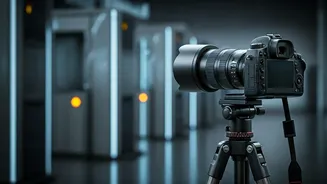
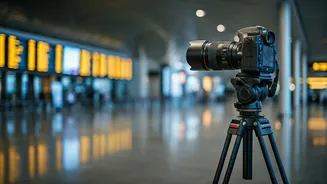
If you’re worried about taking a quick selfie with your family or snapping a picture of your plane from the window, you can likely relax. The crackdown is not aimed at the average tourist capturing a personal memory. Instead, its primary targets are social media influencers and content creators who are filming for public distribution. The distinction is in the intent and scale. Setting up a tripod, using external microphones, performing a choreographed dance, or vlogging your entire journey through the security line are the kinds of activities that will attract negative attention. Security officials are trained to spot the difference between a passenger taking a discreet photo and someone clearly producing content for an audience. The goal is to curb filming that looks and feels like a commercial or public production, not to ban personal photography altogether.
What Are the Potential Consequences?
Getting caught filming against the rules in an Indian airport is unlikely to land you in a jail cell, but it can certainly ruin your day and disrupt your travel plans. The most common outcome is being approached by a CISF officer and ordered to stop filming and delete the footage from your device. In some cases, officers may demand to review your entire camera roll to ensure all offending content is removed. Refusing to comply or arguing can escalate the situation, potentially leading to being detained for questioning, missing your flight, or even facing a fine. In very rare and extreme cases involving filming in highly sensitive restricted areas, more formal legal action could be pursued. For the vast majority of travelers, the biggest risk is embarrassment, lost time, and the stress of a confrontation with security personnel.
How to Fly Right and Avoid Trouble
Navigating these rules is straightforward if you remain mindful of your surroundings. The simplest advice is to keep your phone or camera packed away when you are anywhere near a security checkpoint, customs, or immigration counter. These are absolute no-go zones for filming. In the general concourse or departure lounge, be discreet. If you want to take a photo, make it quick and avoid including airport staff, security personnel, or other passengers without their consent. Before you start recording any video, ask yourself: 'Does this look like I'm making a TV show?' If the answer is yes, don't do it. Save your vlogging and content creation for when you've left the airport terminal. Your social media feed can wait; your flight won't.