








Why Trimming Before the Storm Matters
It might seem counterintuitive to cut back a healthy, full tree just as it’s hitting its summer peak. But for homeowners in America’s monsoon belt, this proactive measure is the single best defense against storm damage. The principle is simple: wind dynamics.
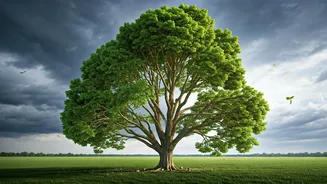
A tree with a dense, thick canopy of leaves acts like a giant sail on a boat. When a powerful monsoon gust, known as a microburst, hits that “sail,” the force it exerts on the trunk and branches can be immense. This is what leads to snapped limbs, uprooted trees, and costly damage to roofs, cars, and power lines. Strategic trimming, specifically thinning the canopy, allows wind to pass through the tree rather than push against it. This drastically reduces the load on the entire structure, preserving the tree’s integrity and protecting your property.
The 'When' and 'Why' of June Pruning
Timing is everything. Pruning too early in the spring, before the tree has fully leafed out, makes it difficult to judge how dense the canopy will become. Pruning too late, once the storms have already begun, is a reactive and often dangerous task. June hits the sweet spot. By early summer, your trees and large shrubs have produced their full foliage for the year, giving you a clear picture of their density. This allows you to make informed decisions about where to thin. This pre-monsoon trim gives the tree’s small cuts time to heal before the season’s heavy moisture arrives, which can help prevent fungal growth and disease. By tackling this task before the first thunderheads appear on the horizon, you’re not just cleaning up the yard; you’re implementing a critical safety strategy when the weather is still calm and predictable.
What to Trim (and What to Leave Alone)
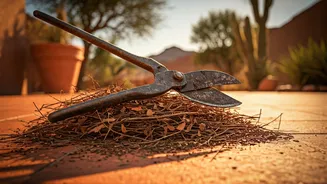
The goal of monsoon pruning is thinning, not topping. “Topping,” or indiscriminately shearing off the top of a tree, is an outdated and harmful practice that weakens the tree and encourages weak, fast-growing shoots that are even more susceptible to wind damage. Instead, focus on selectively removing specific branches. Start by identifying and removing any dead, damaged, or diseased wood—these are the first to fail in a storm. Next, look for branches that are crossing or rubbing against each other, which can create weak spots. Finally, thin the canopy by removing some of the smaller, interior branches to improve airflow. For desert species like Palo Verde and Mesquite, this is particularly effective. A good rule of thumb from arborists is to thin the canopy just enough so that you can see pockets of daylight through it. Never remove more than 25% of the tree's living canopy in a single year.
When to Call in a Professional
While trimming smaller shrubs and low-hanging branches is a manageable DIY project for many homeowners, knowing your limits is crucial for safety. If the job requires a ladder, involves branches near power lines, or concerns a large, mature tree, it’s time to call a certified arborist. Professionals have the training, insurance, and specialized equipment to safely prune large trees. They can properly assess a tree's structure and health, identifying potential weaknesses you might miss. An arborist can perform a “canopy reduction” or “crown thinning” that respects the natural shape and health of the tree while making it significantly more storm-resistant. Investing in professional help for your largest trees is an investment in the long-term health of your landscape and the safety of your home.