







The Star of the Show: Rangoon Creeper
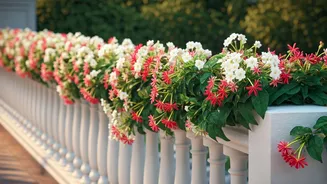
The plant behind this magic is the Rangoon Creeper (Combretum indicum), also known by its beautiful Hindi name, Madhumalti, which translates to “honey-nectar vine.” In many parts of Asia, particularly India, it’s the go-to choice for covering railings,
trellises, and pergolas with a profusion of lush foliage and stunning flowers. It’s a fast-growing, woody vine that transforms mundane structures into living walls of color and fragrance. More than just a plant, it’s a piece of the cultural landscape, synonymous with domestic beauty and the sensory pleasure of a home garden. Its ability to thrive in tropical heat and provide dense, beautiful cover makes it a beloved fixture on countless urban terraces and in sprawling country gardens alike.
A Flower That Changes with the Day
What truly sets the Rangoon Creeper apart is its theatrical display of color. The flowers, which grow in heavy, pendulous clusters, don't just stick to one hue. They emerge pure white, then deepen to a soft pink over the course of a day, and finally mature into a rich, dramatic red by their third day. This means a single vine can display a tri-color palette of white, pink, and red blooms all at once. But the show doesn't end there. As dusk falls, the flowers release an exceptionally fragrant, fruity-sweet scent that fills the evening air, attracting moths and delighting anyone sitting nearby. It’s this combination of visual drama and captivating perfume that makes it an unforgettable garden centerpiece.
Bringing It Home: Growing in the U.S.
So, can you capture this Indian garden magic in the United States? Absolutely, if you live in the right climate. The Rangoon Creeper is a tropical plant that thrives in warm, humid conditions. It is best suited for outdoor, in-ground planting in USDA Hardiness Zones 9b through 11. This includes large parts of Florida, the Gulf Coast of Texas and Louisiana, and coastal Southern California. In these regions, the vine will grow vigorously, potentially reaching 20-30 feet, and will flower profusely for much of the year. If you have a boring fence, a sun-drenched porch railing, or a sturdy pergola in one of these zones, this vine is an incredible choice for adding rapid, jaw-dropping beauty.
Your Guide to a Thriving Vine
Despite its exotic appearance, Rangoon Creeper is surprisingly low-maintenance once established. The key is to give it what it wants from the start. Plant it in a location that receives full sun—at least six hours a day is ideal for maximum flowering. It prefers fertile, well-draining soil and appreciates regular watering, especially during hot, dry spells. The most crucial requirement is a strong support structure. This is not a delicate, dainty vine; it’s a robust climber that needs a heavy-duty trellis, arbor, or sturdy railing to cling to. Don't plant it against a weak structure it could easily overwhelm. A light pruning after a flowering cycle can help maintain its shape and encourage even more blooms.
No Balmy Climate? No Problem.
If you don't live in zones 9-11, don't despair. You can still enjoy the Rangoon Creeper by growing it in a large container. Choose the biggest pot you can manage (a 15-gallon container or half-whiskey barrel is a good start) and provide it with a small trellis. This allows you to enjoy its spectacular flowers and fragrance on your patio or deck throughout the summer. Before the first frost hits your area in the fall, you'll need to protect it. You can either prune it back hard and store the dormant plant in a cool, dark garage or basement, or, if you have a bright sunroom or greenhouse, bring it indoors to overwinter as a houseplant. It may not reach the epic proportions of an in-ground vine, but a container-grown Madhumalti will still give you a glorious taste of the tropics.