




Beyond Naan and Tikka Masala
For many Americans, Indian food brings to mind a familiar, delicious rotation of creamy tikka masala, buttery naan, and fragrant basmati rice. While beloved, this represents just a sliver of the subcontinent's vast culinary landscape. The 'heritage diet'
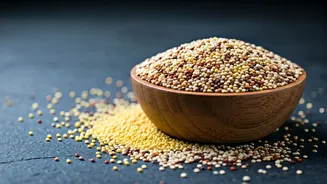
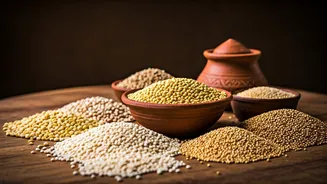
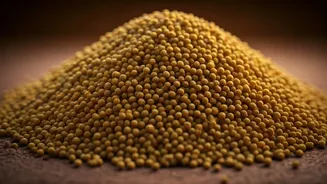
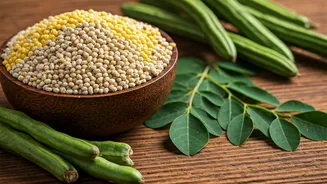
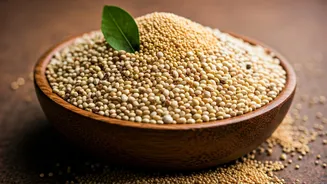
now capturing imaginations across India is a return to a more diverse, regional, and seasonal way of eating that existed for centuries before mass agriculture homogenized the national plate. At its heart, this approach champions variety. It’s about rediscovering the staggering array of ingredients that were once staples: countless varieties of lentils, indigenous vegetables, and, most importantly, a family of ancient grains known as millets. Instead of relying solely on wheat and polished rice—the dominant crops of the last half-century—this movement reintroduces the nutty, earthy flavors of grains like sorghum (jowar), pearl millet (bajra), and finger millet (ragi). It’s less a single diet and more of an ethos: eat local, eat seasonal, and eat what your ancestors ate.
How Millets Became Cool Again
Just a generation ago, millets were often dismissed. A consequence of India’s Green Revolution in the 1960s, which successfully boosted food security by prioritizing high-yield wheat and rice, was the marginalization of traditional crops. Millets, which had nourished Indians for millennia, were stigmatized as 'poor people's food' or 'birdseed'—something you ate when you couldn’t afford the refined alternatives. They vanished from many urban kitchens.
So, what changed? A perfect storm of factors. Health-conscious urbanites, grappling with rising rates of diabetes and lifestyle diseases, began seeking out low-glycemic, high-fiber, and naturally gluten-free alternatives to refined carbs. Millets fit the bill perfectly. Simultaneously, a climate crisis has made their agricultural benefits impossible to ignore. These 'miracle grains' are incredibly hardy, drought-resistant, and require far less water than rice or wheat, making them a crucial crop for a sustainable future. This comeback was cemented when the United Nations, at India’s suggestion, declared 2023 the 'International Year of Millets,' officially rebranding the humble grain from forgotten staple to global solution.
A Plateful of Identity
This revival is about more than just nutrition and sustainability; it's a profound act of cultural reclamation. For many, embracing the heritage diet is a way to connect with their roots and push back against a globalized food culture dominated by processed ingredients and fast food. It’s about rediscovering grandmother’s recipes for ragi porridge or the perfect jowar flatbread. This sentiment mirrors trends in the U.S., like the revival of heirloom vegetables or the artisanal sourdough craze, where authenticity and a connection to the past are prized.
In India, chefs at high-end restaurants are now putting millet risotto and sorghum bowls on their menus. Start-ups are selling millet-based pasta, cookies, and breakfast cereals, bridging the gap between traditional ingredients and modern convenience. It’s a celebration of identity, proving that the foods that sustained a civilization for thousands of years have a place not just in the past, but in the future.
The Trend Comes to America
This movement isn't confined to India. In the U.S., Indian-American food bloggers and influencers are popularizing these ancient grains for a new audience. On Instagram and TikTok, you’ll find vibrant recipes for millet salads, savory finger millet crepes (dosa), and fluffy sorghum pancakes. Specialty food stores and online retailers now stock a growing variety of millet flours and whole grains, once available only in Indian grocery stores.
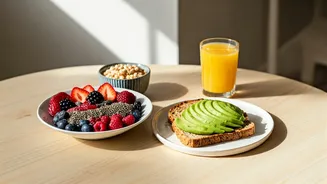
For Americans interested in diversifying their pantries, exploring India’s heritage diet offers a world of new flavors and textures. It’s a chance to move beyond the familiar and experiment with ingredients that are not only delicious but also packed with nutrients and good for the planet. It’s a delicious reminder that sometimes, the most exciting innovations are the ones that have been waiting patiently for us to rediscover them.