




First, Where Are the Western Ghats?
Think of the Western Ghats as the lush, tropical spine of southern India. This 1,000-mile-long mountain range, a UNESCO World Heritage Site, is older than the Himalayas and is one of the world's most critical biodiversity hotspots. Running parallel to
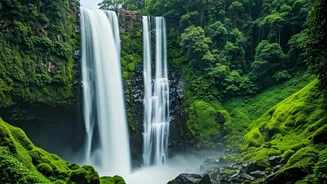
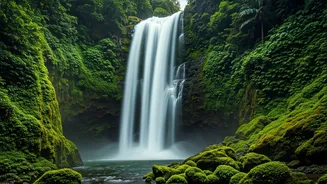
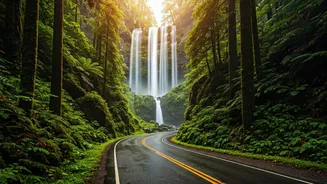
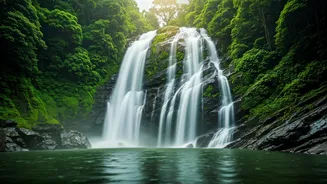
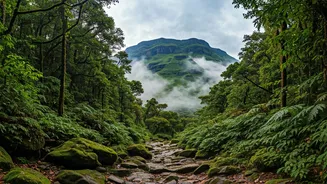
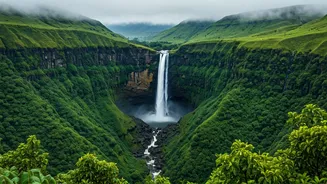
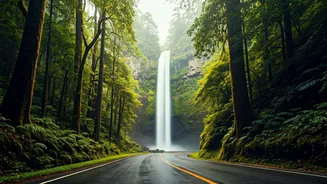
the western coast, it passes through the states of Kerala, Tamil Nadu, Karnataka, Goa, and Maharashtra. For an American traveler, it’s a landscape that feels both otherworldly and deeply elemental. During the monsoon season (roughly June to October), the entire region transforms. The dry, dusty hills of summer give way to a vibrant, mist-shrouded jungle, and hundreds of seasonal streams swell into thunderous, spectacular waterfalls.
The Route: Planning Your Drive
While you could spend months exploring the Ghats, a focused 7-to-10-day road trip offers an incredible taste. A popular and highly rewarding route connects the states of Goa and Karnataka. You can fly into Goa's Dabolim Airport (GOI), rent a vehicle, and begin your journey south. While self-driving is an option for the truly adventurous, hiring a car with a local driver is a common and highly recommended choice. Drivers are affordable by Western standards, navigate the often-chaotic traffic and tricky mountain roads with ease, and can double as informal guides, pointing out the best local eateries and hidden viewpoints along the way. This frees you up to simply soak in the breathtaking scenery without the stress of navigating unfamiliar territory.
Stop 1: The 'Sea of Milk' – Dudhsagar Falls
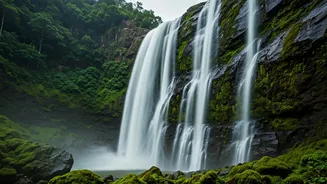
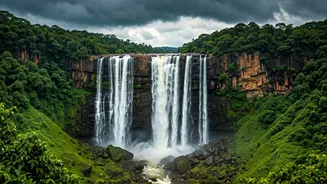
Your first major stop, located on the border of Goa and Karnataka, is the legendary Dudhsagar Falls. The name translates to "Sea of Milk," and during the monsoon, you’ll see why. The Mandovi River plummets over 1,000 feet in a series of four tiers, creating a powerful, white cascade that looks like milk pouring down the mountainside. A railway line dramatically crosses the falls midway, and seeing a train traverse the bridge is an iconic photo-op. Private vehicles can’t drive directly to the base. Instead, you’ll park at the village of Kulem and hire a registered 4x4 jeep for a bumpy, exhilarating one-hour ride through jungle streams and muddy tracks to reach the main viewpoint. It’s an adventure in itself.
Stop 2: The Plunging Giant – Jog Falls
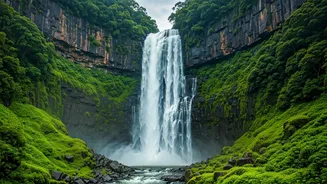
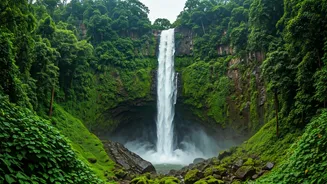
Driving deeper into Karnataka, your next destination is the majestic Jog Falls. Formed by the Sharavathi River, it’s not a tiered cascade like Dudhsagar but a staggering plunge waterfall, ranking as one of the highest in India. What makes it unique is that it’s actually a composite of four distinct falls: Raja, Rani, Roarer, and Rocket. During a heavy monsoon, these four merge into a single, thunderous wall of water. The government has built excellent viewing platforms on the opposite side of the gorge, allowing for panoramic views. For a different perspective, you can walk down the nearly 1,400 steps to the base—a strenuous but rewarding climb back up that offers a true sense of the falls’ immense scale and power.
Stop 3: The 'Niagara of India' – Athirappilly Falls
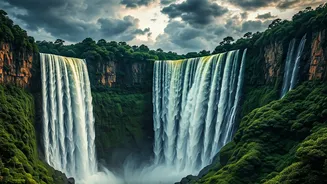
If you extend your trip further south into the state of Kerala, you’ll be rewarded with Athirappilly Falls. Often called the "Niagara of India," this waterfall is more about width and volume than sheer height. The Chalakudy River cascades down an 80-foot drop across a wide, 330-foot rocky facade, creating a scene of immense power that has been featured in numerous Indian films. Well-maintained paths lead to multiple viewpoints, including a main one at the top and a more rugged trail that takes you to the bottom of the falls, where you can feel the spray on your face. It's a fittingly grand finale to a Western Ghats tour, showcasing the sheer force of nature unleashed by the monsoon.