


Welcome to the Abode of Clouds
Tucked away in India's northeastern corner, bordering Bangladesh, lies a state whose name in Sanskrit translates to "the abode of clouds." It’s a name that couldn't be more fitting. For a few months each year, Meghalaya transforms into one of the most
ethereal and dramatic landscapes on Earth. The hills, cloaked in mist and dense subtropical forests, become a real-life version of the floating mountains of Pandora from *Avatar* or the verdant, mysterious jungles of *Jurassic Park*. This isn't just a place that gets a lot of rain; it's a place defined and sculpted by it. The monsoon isn't a weather event here; it's the artist that paints the entire scene, turning an already beautiful region into something profoundly cinematic.
The Science of the Downpour
So, why Meghalaya? Two villages, Mawsynram and Cherrapunji (also known as Sohra), routinely compete for the title of the wettest place on the planet. Mawsynram holds the Guinness World Record, receiving an average of 467 inches of rain annually. To put that in perspective, that’s nearly 40 feet of water—more rain than Seattle gets in a decade. This incredible deluge is a result of perfect geography. During the monsoon season (roughly June to September), moisture-laden winds from the Bay of Bengal travel north over the flat plains of Bangladesh. When they hit the steep slopes of the Khasi Hills in Meghalaya, they are forced to rise rapidly. This rapid ascent cools the air, causing the moisture to condense and dump its contents in a concentrated, relentless downpour that can last for weeks.
Bridges Grown From Life Itself
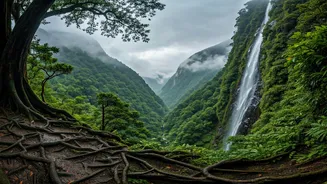
While the rain creates challenges, it has also spurred one of the world's most incredible examples of bio-engineering: the living root bridges. In a place where traditional wooden or bamboo bridges would quickly rot and be washed away by torrential rivers, the indigenous Khasi and Jaintia peoples developed a brilliant, patient solution. For centuries, they have been guiding the pliable aerial roots of the Ficus elastica (rubber fig) tree across rivers and streams. Using hollowed-out betel nut trunks as guides, they train the roots to grow towards the opposite bank. Over 15 to 30 years, the roots intertwine and graft together, forming a strong, living structure that only becomes more robust as it ages. Some of these bridges are over a hundred feet long and can support the weight of dozens of people, standing as a testament to a deep, symbiotic relationship between humanity and nature.
A World Washed Anew
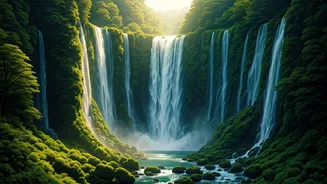
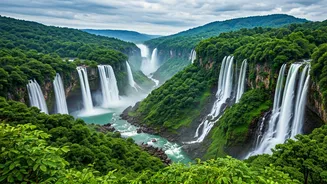
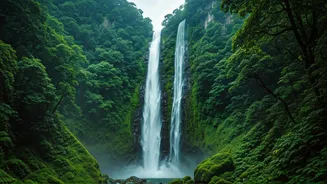
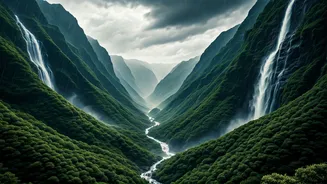
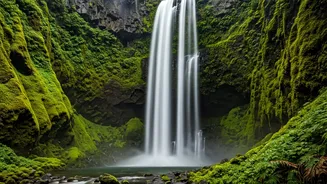
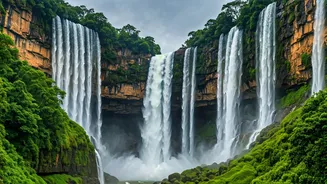
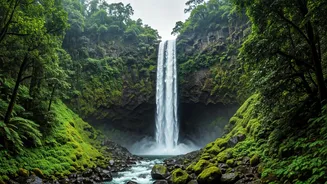
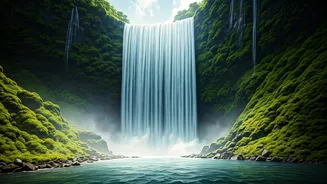
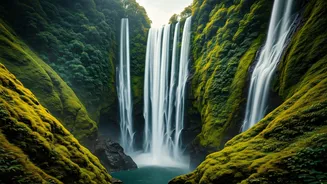
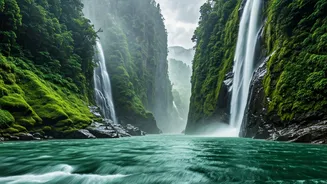
The rain's transformative power is visible everywhere. Hillsides that were merely green become saturated, with hundreds of temporary waterfalls gushing from every crevice. The most famous falls, like Nohkalikai and Seven Sisters, swell from graceful streams into roaring, thunderous cataracts that plunge thousands of feet into turquoise pools below. The constant moisture sustains an ecosystem of incredible biodiversity, covering the land in ferns, orchids, and mosses that seem to glow with an inner light. The air is thick with the scent of wet earth and blooming flora. Driving along the winding roads, you’re often literally inside a cloud, with visibility dropping to a few feet before the mist parts to reveal a breathtaking panorama of emerald valleys and cascading water. It's this sensory overload—the sound, the smell, the overwhelming greenness—that makes a visit during the monsoon an unforgettable, almost spiritual, experience.