








The Ultimate Pressure Cooker
To understand why AI tutors are exploding in India, you first have to understand the exams. We’re not talking about a simple final. We’re talking about nationwide competitive entrance exams like the Joint Entrance Examination (JEE) for engineering and the National
Eligibility cum Entrance Test (NEET) for medicine. Each year, millions of high school students stake their entire future on a single, three-hour multiple-choice test. In 2023, over 2 million students took the NEET for around 100,000 medical school seats. The odds are brutal. For decades, the path to success ran through a sprawling, billion-dollar industry of private “coaching centers.” These institutions drill students relentlessly, often in packed lecture halls. It’s a one-size-fits-all approach that’s expensive, exhausting, and geographically limited. For students in smaller towns or from less affluent families, this system was often out of reach, creating a massive, underserved market hungry for a better solution.
Enter the AI Tutor
This is where a new wave of educational technology (ed-tech) companies saw an opportunity. Platforms like Embibe, Byju's, and Doubtnut have integrated sophisticated AI to act as a personal tutor, available 24/7 on a student’s smartphone. These aren’t simple chatbots. They are complex systems designed to deconstruct the entire exam preparation process. A student can snap a photo of a math problem they’re stuck on, and an AI will not only provide the answer but also serve up video lessons explaining the underlying concepts. The platforms house vast libraries of practice questions, previous years’ papers, and mock tests that simulate the real exam environment down to the timer. The AI acts as an infinitely patient guide, breaking down complex topics into digestible pieces and providing instant feedback where a human teacher might be unavailable.
The ‘Personalized’ Promise
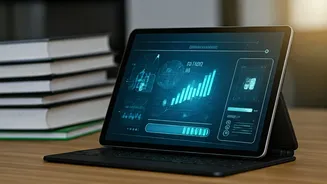
The real game-changer is the “personalization” engine. As a student takes practice tests, the AI isn’t just grading them; it’s analyzing them. It tracks everything: which topics the student struggles with, how long they spend on certain types of questions, and even where they get careless. The system then builds a unique profile of the student’s strengths and weaknesses. Based on this data, the AI generates a customized study plan. If you’re weak in organic chemistry but strong in physics, it will prioritize chemistry drills and assign fewer physics problems. It can predict what a student’s score will be if they take the test tomorrow and recommend the most efficient way to improve it. This adaptive learning model is the polar opposite of the static coaching center lecture. It turns studying from a brute-force marathon into a targeted, strategic exercise, promising to fix a student’s specific gaps in knowledge rather than re-teaching the entire syllabus.
An Edge, Not a Magic Wand
So, do these tools actually help students “crush” exams? The marketing hype is strong, but the reality is more nuanced. For many, the primary benefit is access and efficiency. These apps are significantly cheaper than residential coaching programs, democratizing high-quality prep materials. For a motivated student, the ability to instantly clarify doubts and practice weak areas on their own schedule is invaluable. However, critics point to potential downsides. There’s a risk of over-reliance on technology, diminishing foundational problem-solving skills. Furthermore, an equity gap remains; the most advanced AI features are often locked behind premium subscriptions, creating a new digital divide. And while AI can diagnose academic weaknesses, it can’t replicate the mentorship or manage the intense psychological stress that a good human teacher can. The AI is a powerful tool, but it's not a silver bullet. It’s an enhancement to, not a replacement for, discipline and hard work.