



A Landscape from Another World
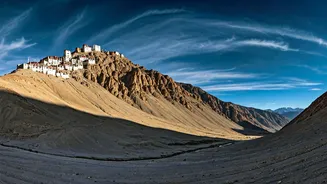
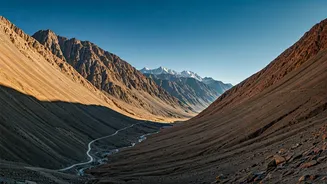
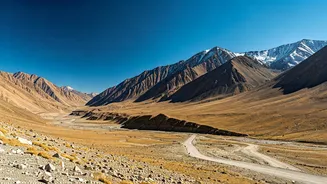
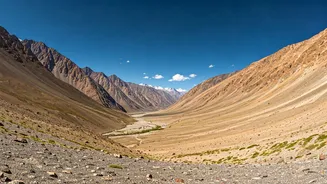
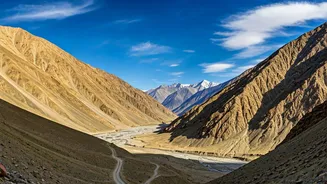
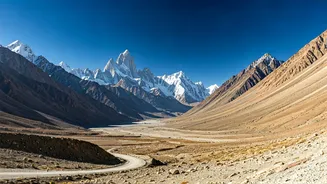
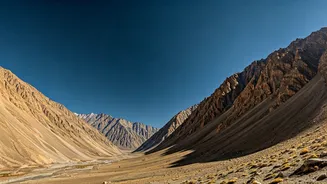
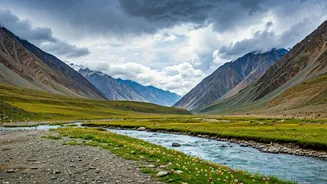
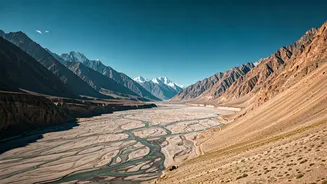
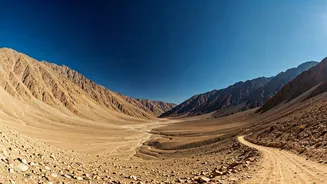
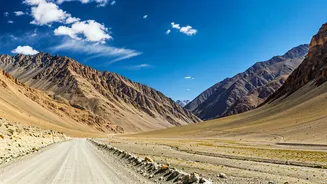
Before you can see the monastery, you must understand its stage: the Spiti Valley. Tucked away in the high-altitude desert of the Indian Himalayas, Spiti is a world of stark, elemental beauty. This isn't the lush, green India of postcards. It's a panorama
of brown, grey, and ochre mountains, their colossal forms carved by wind and time. The air is thin and brittle, and the sky is a piercing, impossible blue. The Spiti River, a ribbon of turquoise glacial melt, cuts through the valley floor. Driving here is an event in itself, a slow, winding journey on roads that cling precariously to canyon walls. It’s a landscape that humbles you with its scale, making you feel like a solitary character in a sweeping David Lean epic. The silence is profound, broken only by the whip of the wind and the crunch of gravel underfoot. It’s a setting that demands a dramatic focal point, and it does not disappoint.
The Fortress of Solitude
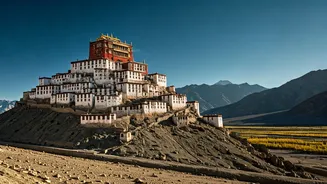
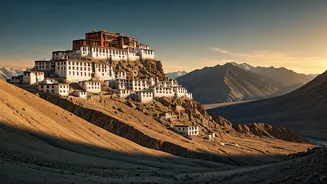
And then you see it. Key Monastery, or Ki Gompa, doesn't sit elegantly on the landscape; it commands it. From a distance, it looks like a fantastical beehive or a cubist painting brought to life. A chaotic, beautiful pile of white-washed rooms, prayer halls, and narrow corridors cascades down a 13,668-foot-high hill. It’s a fortress-monastery, and its defensive origins are written into its very architecture. There is no grand entrance, no single perfect facade. Instead, it’s an organic cluster of structures built over centuries, each generation adding another layer. The result is a place that feels ancient and alive, a stark white and red complex against the barren tans of the mountains behind it. This is the establishing shot, the moment the camera pans up to reveal the hero’s hidden lair or the mystical sanctuary the protagonist has been searching for. It’s a sight so visually arresting it feels meticulously designed for the big screen.
Life Within the Walls
If the exterior is the wide shot, the interior is a series of intimate close-ups. Step inside, and the cinematic experience deepens. The air grows thick with the scent of burning juniper incense and butter lamps. Sunlight struggles to pierce the narrow windows, leaving prayer halls in a sacred, atmospheric gloom. Your eyes adjust to find vibrant, thousand-year-old murals depicting Buddhist deities and mythical scenes, their colors still glowing in the dark. The soundtrack changes from wind to the low, resonant hum of monks chanting their morning prayers. You’ll see young novices in deep crimson robes chasing each other through labyrinthine passages, their laughter echoing off ancient stone walls. An elderly monk might offer you a cup of salty butter tea, his face a roadmap of wrinkles and wisdom. This is where the story gains its heart. It’s no longer just a set piece; it’s a living, breathing community, a pocket of unwavering tradition in a world obsessed with change.
Why It Feels Like a Film Set
So why the powerful feeling of being in a movie? It’s a combination of three key elements. First, the scale. The sheer size of the mountains and the relative smallness of the monastery create a natural drama of isolation and resilience. It evokes the feeling of fantasy worlds like Rohan in *Lord of the Rings* or the desert planet of Arrakis in *Dune*. Second, the light. The high-altitude sun is sharp and unforgiving, creating deep shadows and brilliant highlights that sculpt the landscape and the monastery’s textured walls. Every moment, from the golden glow of sunrise to the long shadows of late afternoon, feels like a perfectly lit scene. Finally, it’s the contrast. The vibrant life of the monks—their colorful robes, their timeless rituals—creates a powerful human story against a backdrop of geological indifference. It's a visual narrative of faith versus desolation, of warmth inside cold, of order atop chaos. It’s a place that doesn’t just offer a view; it tells a story.