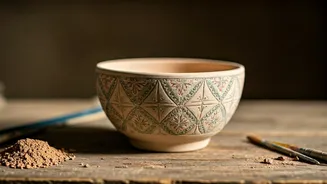







A Connection You Can Touch
Travel, at its best, is about connection. We seek to connect with a new landscape, a different culture, or a history that isn't our own. Yet, so much of modern tourism keeps us at a distance. We look at monuments from behind a rope, consume 'authentic'
food in restaurants designed for tourists, and buy mass-produced trinkets made thousands of miles away. Local craft cuts through that superficial layer. A hand-thrown pottery mug from the Blue Ridge Mountains or a woven blanket from a Navajo artisan in Arizona isn’t just an object; it’s a piece of the place itself. It holds the texture of the local clay, the colors of the desert landscape. You can feel the intention and skill in its form. This tangible connection offers a sensory anchor to your experience, a physical reminder that is far more potent than a fading digital photo.
Meeting the Storytellers
The most compelling reason craft enhances travel is the human element. When you buy directly from an artisan, you're not just completing a transaction; you're stepping into a narrative. You meet the person whose hands shaped the object you’ll take home. You might hear about how they learned their skill from a parent or grandparent, or how they’re putting a modern twist on a centuries-old tradition. These conversations are the real souvenirs. Learning why a glassblower in Seattle favors certain colors or how a woodworker in Vermont selects a piece of maple is to be given a small, intimate piece of their world. This interaction transforms a simple purchase into a meaningful exchange. The artisan is no longer an anonymous producer; they become a character in your travel story, and you, in a small way, become a patron of their art and livelihood.
History Through Your Hands
Many travelers visit museums to understand a region's history, but craft offers a different, more immersive path. It’s living history. Taking a half-day pottery class in Taos, New Mexico, or a sweetgrass basket-weaving workshop in Charleston, South Carolina, is more than a fun activity; it’s a kinetic history lesson. As you work the clay or weave the grass, you begin to understand the patience, skill, and resources involved. You feel the direct lineage of a practice that has sustained communities for generations. These traditions are often deeply tied to the geography and history of the area—the properties of the local soil, the plants available for dyes, the functional needs of the people who first developed the techniques. By engaging with craft, you’re not just looking at the past through glass; you’re participating in its continuation.
The Souvenir with a Soul
Think about the souvenirs you’ve discarded over the years. The plastic keychains, the novelty t-shirts, the snow globes. They are generic placeholders for memory, not vessels of it. A handcrafted object, by contrast, is imbued with meaning from its creation to its acquisition. It has a soul. When you see that hand-carved wooden bowl on your shelf, you won’t just remember the town you visited. You’ll remember the smell of the woodshop, the sound of the artisan’s voice, and the feel of the finished piece in your hands. It tells a specific story that is uniquely yours. This kind of object doesn't get relegated to a junk drawer. It earns a place of honor in your home because it represents a genuine moment of discovery and connection. It’s proof that you didn’t just see a place; you experienced it.