




Redefining a ‘Useful’ Garden Bed
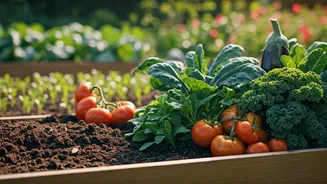
When we think of a useful garden bed, we usually picture neat rows of vegetables ready for harvest. But a truly useful bed is a healthy ecosystem. It’s a space where the soil is alive, pests are kept in check naturally, and the plants support each other.
This is where turmeric (Curcuma longa) comes in. While it’s not a “fast” crop in the way a radish is—it takes about 8 to 10 months to mature for a full harvest—it starts making your garden bed more useful almost immediately after it begins to grow. Its utility isn’t just in the final product you dig up, but in the work it does all season long. By adding turmeric, you’re not just planting another vegetable; you’re recruiting a helpful partner for your entire garden.
A Natural Pest Deterrent
One of turmeric’s greatest contributions to a mixed garden bed is its potential as a natural pest deterrent. The entire plant, from its leaves to its vibrant rhizomes, is rich in aromatic essential oils, including turmerone. Many common garden pests, particularly soil-borne ones like certain types of nematodes, find these compounds unpleasant and tend to steer clear. Planting turmeric among or around plants that are susceptible to root-knot nematodes, such as tomatoes, peppers, and squash, can create a protective barrier. While it's not a silver bullet, it’s a key component of an integrated pest management (IPM) strategy that reduces the need for chemical pesticides. This aromatic defense shield goes to work as soon as the plant establishes itself, making your bed a safer space for its neighbors.
A Living Soil Conditioner
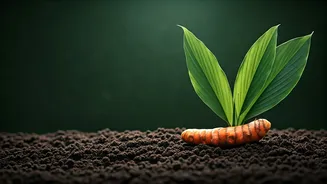
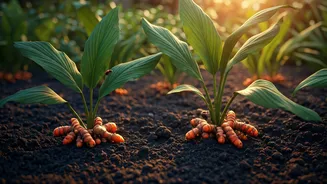
Turmeric’s growth habit is another one of its secret weapons. It grows from rhizomes, which are thick, fleshy underground stems that spread horizontally. As these rhizomes develop, they create a dense, fibrous network of roots that works wonders for soil structure. In heavy clay soils, this root system helps break up compaction, creating channels for air and water to penetrate more deeply. In sandy soils, the organic matter from the decaying roots and rhizomes helps improve moisture and nutrient retention. Essentially, turmeric acts as a living cover crop, aerating and enriching the soil while it grows. When you finally harvest the main rhizomes, you can leave some of the smaller roots and pieces behind to decompose, adding valuable organic material back into the bed.
How to Get Started with Turmeric
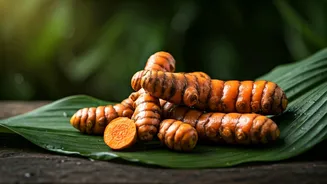
Growing turmeric is surprisingly straightforward, especially if you can give it the warm, humid conditions it loves. You can start with a fresh rhizome, often called a “hand,” from a grocery store or garden center. Look for one that is plump and has several small bumps or buds on it. You can plant the whole hand or cut it into 2-inch sections, ensuring each piece has at least one or two buds. Plant them about 2 inches deep in well-draining soil rich in organic matter. Turmeric thrives in full to partial sun. In USDA zones 8-11, you can plant it directly in your garden beds. In cooler climates, it’s an excellent candidate for container gardening. Plant it in a large pot in the spring and bring it indoors to a sunny spot before the first frost, allowing it to continue growing or go dormant over winter.
Patience, Water, and a Golden Harvest
Once planted, turmeric is relatively low-maintenance. Its primary need is consistent moisture; don’t let the soil dry out completely, especially during hot summer months. It doesn’t require heavy fertilization, but a top-dressing of compost mid-season will be appreciated. After 8 to 10 months, the leaves will begin to yellow and the stems will dry out. This is your signal that it’s time to harvest. Carefully dig around the base of the plant to lift the entire clump of rhizomes from the soil. You can then break off what you need for the kitchen—for fresh grating, drying into powder, or making teas and pastes—and save a few healthy pieces with buds to replant for the following season. It’s the plant that literally keeps on giving, both to your soil and to your spice cabinet.