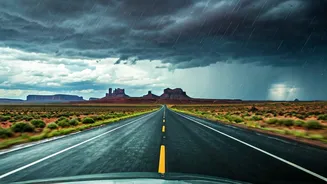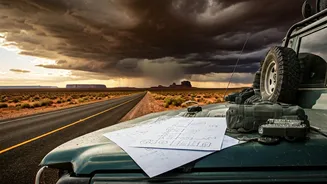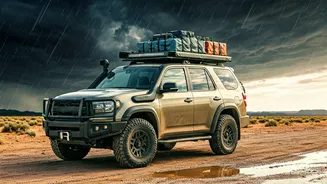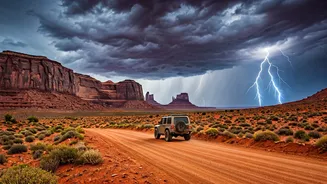







1. Give Your Vehicle a Health Check
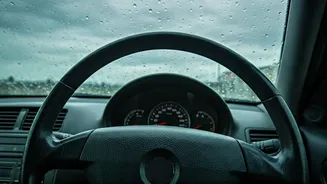
Your car is your first line of defense against monsoon weather. Before you even think about packing, give it a thorough inspection. Start with the basics: your tires. Hot asphalt followed by cool rain can be tough on rubber. Check your tire pressure and
ensure you have plenty of tread. Worn tires are a major hydroplaning risk on slick, rain-soaked roads. Next, inspect your windshield wipers. The intense sun in states like Arizona and New Mexico can bake the rubber, leaving them cracked and useless when you need them most. Replace them if they’re even slightly degraded. Finally, test your battery. The extreme heat of summer can shorten a battery's life, and you don't want to be stranded in a storm with a car that won't start. A quick stop at an auto parts store for a free battery check is a smart, preventative move.
2. Rethink Your Route and Timing
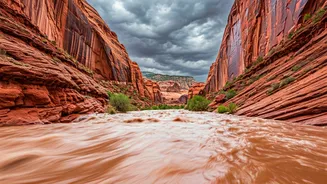
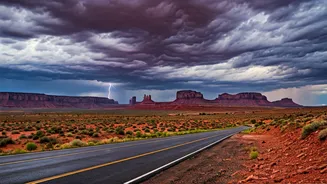
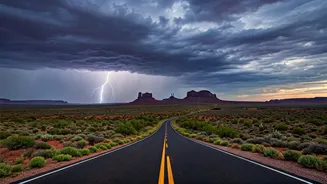
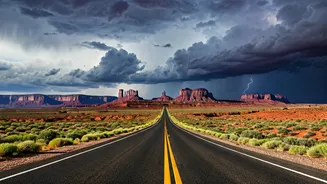
Spontaneity is great, but monsoon season demands a bit more planning. Storms typically build in the afternoon and unleash their fury in the late afternoon and evening. If possible, schedule the bulk of your driving for the morning hours when the weather is more likely to be calm and clear. Before you leave, check the forecast not just for your destination, but for the entire route. Use reliable weather apps and check the National Weather Service (NWS) for any active watches or warnings. Be aware of your geography. A route that takes you through low-lying areas, washes, or arroyos is significantly riskier. These dry riverbeds can become raging torrents in minutes during a downpour, even if the storm is miles away. If you have the option, choose a route that sticks to higher ground.
3. Pack a 'Just in Case' Kit
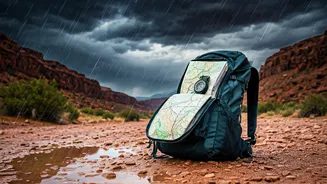
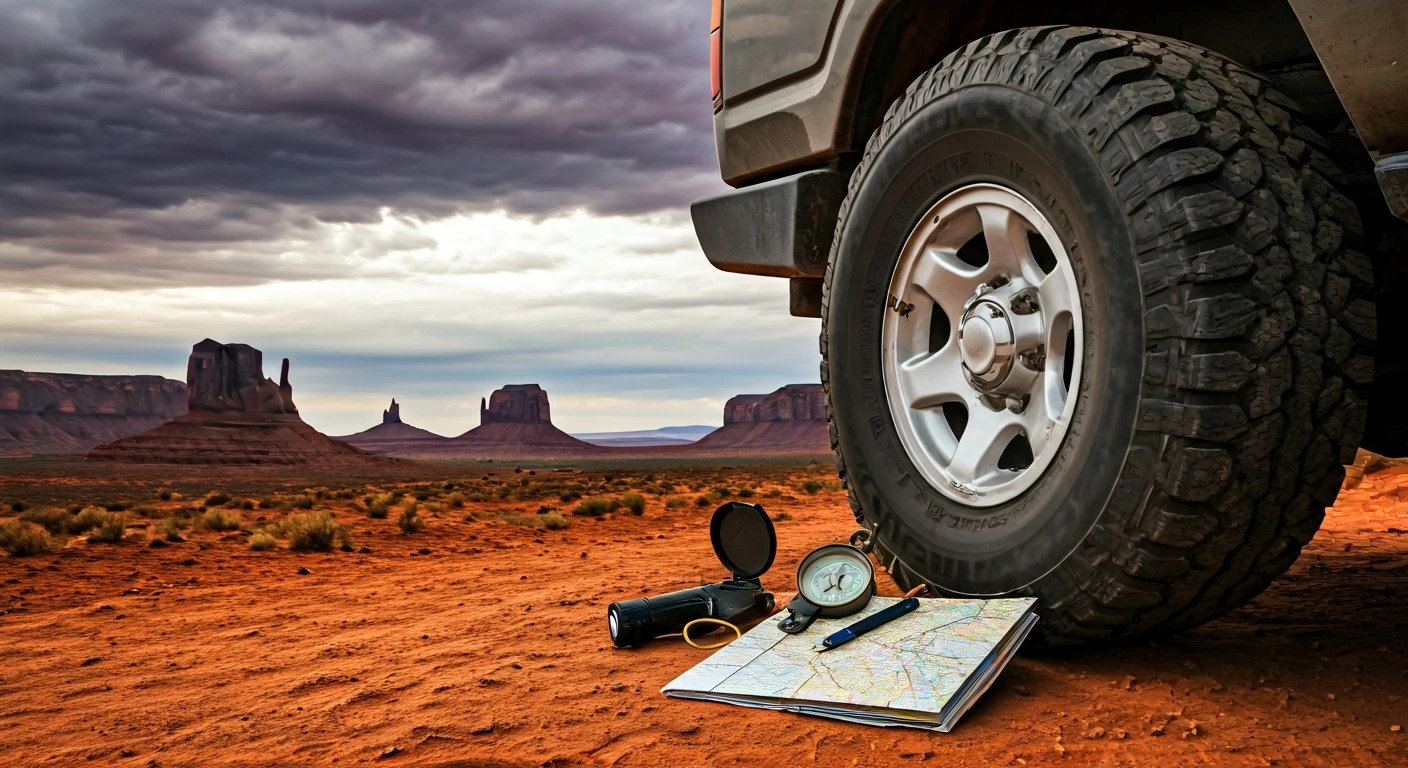
Your standard emergency kit needs a few monsoon-specific upgrades. Water is the absolute number one priority. You should have at least one gallon of water per person, per day. A sudden road closure due to flooding or a dust storm could leave you stranded for hours in the heat. Beyond water, pack non-perishable snacks, a flashlight with extra batteries, a first-aid kit, and a portable phone charger or power bank. Because cell service can be spotty in remote areas or during severe weather, it’s also wise to have a battery-powered or hand-crank weather radio to receive emergency alerts. Blankets and extra layers might seem counterintuitive in the summer heat, but a sudden downpour can cause temperatures to drop unexpectedly.
4. Master the Flash Flood Rule
If you remember only one thing, make it this: Turn Around, Don’t Drown. This isn't just a catchy slogan from the NWS; it's a life-saving directive. It can be impossible to tell how deep moving water is, and it takes less than a foot of water to float many vehicles. Just six inches can knock an adult off their feet. Never, ever attempt to drive through a flooded roadway or wash. The road beneath the water could be washed out entirely. Be especially cautious at night when visibility is poor. If you encounter a flooded area, your only safe move is to reverse and find an alternate route. It’s an inconvenience that could save your life.
5. Know the Dust Storm (Haboob) Protocol
One of the most dramatic monsoon events is the haboob—a massive wall of dust that can engulf the landscape, reducing visibility to zero in an instant. If you see one approaching on the highway, do not try to outrun it. Instead, follow the advice from the Arizona Department of Transportation: Pull Aside, Stay Alive. Immediately check for traffic around you, signal, and pull your vehicle as far off the pavement as possible. Turn off all of your lights, including your headlights and brake lights. This is critical because other drivers might instinctively follow your lights and crash into your parked car. Set the emergency brake, take your foot off the brake pedal, and wait for the storm to pass. Stay in your vehicle with your seatbelt on and listen to your radio for updates.
6. Stay Connected and Informed on the Go
Your smartphone is a powerful tool for staying safe, provided you use it correctly. Before you lose service in a remote area, download offline maps of your route. Enable Wireless Emergency Alerts (WEA) on your phone, which can deliver critical warnings about flash floods and severe thunderstorms from the NWS. Many state transportation departments also have their own apps or active social media accounts (like ADOT's X/Twitter feed) that provide real-time updates on road closures and hazards. Designate a passenger as the navigator and information officer so the driver can focus solely on the road and changing conditions.