







Farming Without the Farm
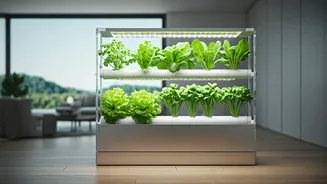
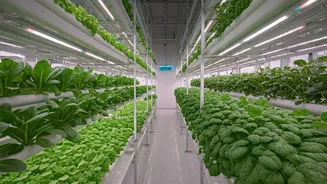
Imagine a farm. You’re probably picturing rolling fields, tractors, and plenty of dirt. Now, erase that image and replace it with a climate-controlled room filled with vertical towers of leafy greens, their roots dangling in nutrient-rich water or mist.
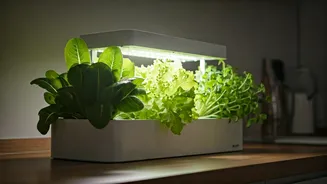
This is the world of vertical farming, a method of growing crops indoors in stacked layers. Instead of soil, these high-tech farms use hydroponics (water-based) or aeroponics (mist-based) systems to deliver a perfect diet of minerals and hydration directly to the plants. LED lights are programmed to mimic ideal sunlight, creating a perfect growing day, every day. The 'no mud' aspect is literal. By eliminating soil, these farms also eliminate soil-borne pests and diseases, which in turn dramatically reduces or completely removes the need for pesticides and herbicides. The result is produce that is often cleaner and ready to eat right out of the package.
The End of Weather Worries
Traditional agriculture is a constant battle against the elements. A single hailstorm, an unexpected frost, a prolonged drought, or a pest infestation can wipe out an entire season’s crop. This volatility creates financial risk for farmers and supply chain instability for consumers. Vertical farming sidesteps this drama entirely. Inside a controlled environment, there is no weather. The temperature, humidity, and 'sunlight' are all optimized and constant. This means harvests are not just reliable but predictable down to the day. For a grocery chain or restaurant, this is a game-changer. They can count on a steady supply of fresh, local produce 365 days a year, regardless of whether it’s snowing in January or scorching in July. This reliability smooths out the peaks and valleys of seasonal availability, making it possible to get fresh basil or tender butter lettuce year-round, grown just a few miles from the store.
A Greener Shade of Green
While the technology is futuristic, the core appeal of vertical farming is deeply rooted in sustainability. First, there’s the water. These closed-loop systems are astonishingly efficient, using up to 95% less water than traditional field farming, where much of the water evaporates or runs off. In an era of increasing water scarcity, especially in states like California and Arizona, this is a massive advantage. Then there’s the land. By growing upward instead of outward, a small warehouse can produce the equivalent of hundreds of acres of conventional farmland. This frees up land for rewilding or other uses and reduces the pressure to convert natural habitats into agricultural fields. Finally, because these farms can be built in or near urban centers, they slash transportation distances. That head of lettuce doesn’t have to travel 2,000 miles on a refrigerated truck; it might come from a facility just across town, reducing food miles, fuel consumption, and carbon emissions.
The Energy Question
Of course, there’s no perfect solution, and vertical farming has one significant challenge: energy. Recreating perfect sunlight with thousands of powerful LED lights and maintaining a precise climate around the clock consumes a substantial amount of electricity. This has been the primary critique of the industry and a major operational cost. However, the sector is innovating rapidly. As LED technology becomes more efficient, energy costs are dropping. Many vertical farms are also strategically locating themselves near renewable energy sources or installing their own solar panels to power their operations. They're also using sophisticated AI to optimize lighting schedules, ensuring plants get exactly what they need without wasting a single watt. The goal is to reach a point where the energy cost is more than offset by the savings in water, land, and transportation, creating a comprehensively sustainable system.