




What Is the Festival of Chariots?
Rath Yatra, which translates to “chariot journey,” is one of the world's oldest and largest religious processions. Held annually in the coastal city of Puri in Odisha, it typically falls around June or July, aligning with the Hindu lunar calendar. The
festival honors Lord Jagannath, a form of the deity Vishnu, along with his elder brother Balabhadra and younger sister Subhadra. For nine days, the city of Puri transforms into an open-air theater of faith, as the deities leave their home in the revered Jagannath Temple for a short trip to the Gundicha Temple, said to be their aunt’s garden house.
The Living Gods on Wheels
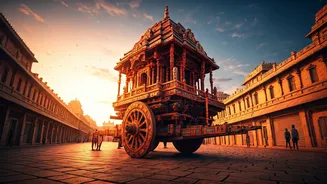
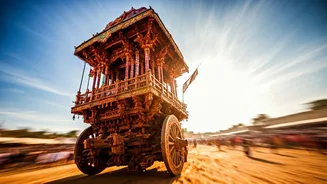
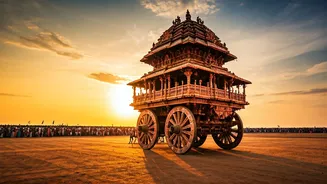
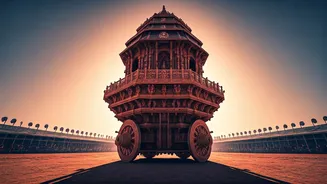
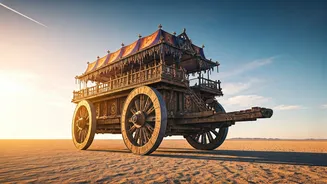
The centerpiece of Rath Yatra is the three massive chariots, which are breathtaking feats of engineering and artistry. Constructed anew each year from specified types of wood, these are not mere parade floats. They are considered mobile temples. Lord Jagannath’s chariot, Nandighosha, stands about 45 feet tall and rolls on 16 wheels, each seven feet in diameter. It’s draped in vibrant red and yellow fabrics. His siblings’ chariots are similarly grand, though slightly smaller. The construction process itself is a sacred ritual, performed by generations of artisan families who hold hereditary rights to the task. When these structures finally begin to move, pulled by thousands of devotees using thick coconut fiber ropes, the spectacle is one of raw, collective energy.
A Journey Powered by Faith
The main event is the two-mile procession from the main temple to the Gundicha Temple. What makes this journey so profound is its egalitarian spirit. During Rath Yatra, the deities, who are normally accessible only to Hindus inside the temple complex, come out into the open for everyone to see, regardless of caste or creed. This powerful symbolism draws millions of people—from devout pilgrims to curious international travelers—to the streets of Puri. The air fills with the sounds of gongs, conch shells, and ecstatic chants. The belief is that even touching the ropes used to pull the chariots can grant salvation, turning the procession into a deeply personal and spiritual experience for the vast crowd.
Beyond the Main Procession
While the chariot journey is the main draw, the entire nine-day festival is a rich cultural immersion. The city buzzes with activity. Traditional Odishan music and dance performances, including the classical Odissi dance, are staged throughout Puri. Local markets overflow with religious paraphernalia, handcrafted souvenirs, and delicious local food, especially the temple cuisine known as Mahaprasad. The festival also includes a return journey, known as Bahuda Yatra, when the deities travel back to their main temple. This entire period offers a window into the deep-seated traditions and communal spirit that define this region of India, making it a compelling destination for anyone seeking an authentic, unforgettable cultural experience.