


What Exactly Is Walking Yoga?
Forget power-walking with ankle weights or simply strolling to your next yoga class. Walking yoga is a contemplative practice that turns the simple act of walking into a form of moving meditation. At its core, it involves synchronizing your breath with your steps
while maintaining a state of mindful awareness. Instead of zoning out with a podcast or getting lost in your thoughts, you actively pay attention to the physical sensations of your body and the rhythm of your breathing. The goal isn’t speed or distance, but presence. Think of it as the opposite of a mindless commute; it’s a deliberate effort to connect your inner world with your physical movement through the outer world. Practitioners focus on posture, the feeling of their feet connecting with the ground, and a steady, conscious breath pattern, transforming a mundane activity into a restorative ritual.
More Than Just a Mindful Stroll
The appeal of walking yoga lies in its dual benefits for mind and body, making it a highly efficient wellness practice. Mentally, it offers many of the same rewards as traditional seated meditation: reduced stress, lower anxiety, and an enhanced ability to stay in the present moment. For those who find it difficult to sit still and quiet the mind, the gentle, repetitive motion of walking can be a gateway to mindfulness, providing a physical anchor for wandering thoughts. Physically, it’s a fantastic low-impact exercise. It gently improves cardiovascular health, promotes better balance and coordination, and can help correct postural imbalances caused by long hours of sitting. It engages the core for stability and encourages a more natural, aligned gait. This combination makes it an accessible option for people of all fitness levels, including those recovering from injury or seeking a gentler alternative to high-impact workouts.
The Ancient Roots of a Modern Trend
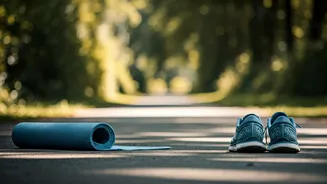
While walking yoga may seem like a new trend packaged for a wellness-hungry Western audience, its principles are ancient and deeply rooted in Indian yogic and spiritual traditions. The practice echoes concepts like *pradakshina*, the ritual of circumambulating sacred sites in a meditative state, which has been practiced for centuries in Hinduism and Buddhism. Many yogic lineages have long incorporated walking meditations as a way to cultivate awareness and connect with nature. What modern teachers and studios—many inspired by these Indian traditions—are doing is adapting and systematizing these concepts for contemporary life. They are framing it as a practical solution for the time-crunched, screen-fatigued individual who needs to unplug. By offering guided audio, structured classes, and simple-to-follow techniques, they are making this profound, ancient practice accessible to anyone with a pair of sneakers and a few minutes to spare.
How to Try Walking Yoga Yourself
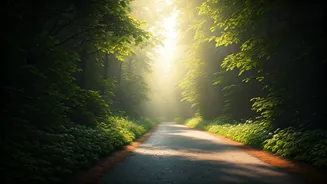
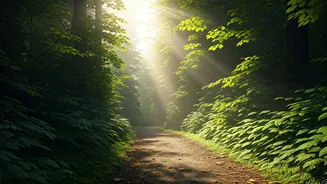
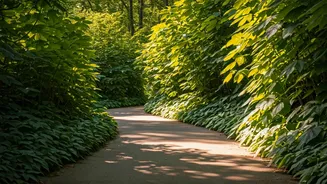
You don’t need a special studio or guru to begin. The beauty of walking yoga is its simplicity and adaptability. Here’s a basic way to start: 1. **Find Your Space:** Choose a safe, relatively quiet place where you can walk without too many distractions, like a park path, a quiet neighborhood street, or even a backyard. 2. **Check Your Posture:** Stand tall before you begin. Lengthen your spine, relax your shoulders away from your ears, and let your arms hang naturally at your sides. 3. **Start with Breath:** Take a few deep, stationary breaths to center yourself. Notice the air entering and leaving your body. 4. **Synchronize Breath and Movement:** Begin walking at a slow, natural pace. Start to coordinate your breath with your steps. A common pattern is to inhale for three or four steps, and then exhale for three or four steps. Find a rhythm that feels comfortable, not forced. 5. **Focus Your Awareness:** Direct your attention to the physical sensations of walking. Feel the soles of your feet making contact with the ground—heel, ball, toes. Notice the gentle swing of your arms and the rhythm of your hips. When your mind wanders (which it will), gently guide it back to the feeling of your breath and your steps. Start with just five or ten minutes and build from there.