


The Reigning King: Alphonso
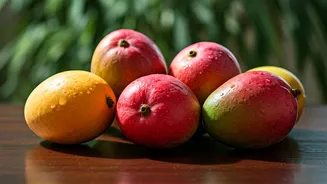
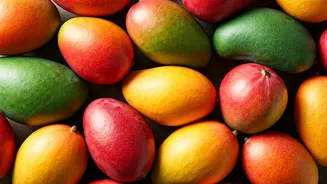
Let’s start with the one you’ve probably heard of, and for good reason. The Alphonso, or ‘Hapus’ as it’s known in western India, is the undisputed international benchmark. Grown primarily in the coastal Konkan region of Maharashtra, it’s a temperamental
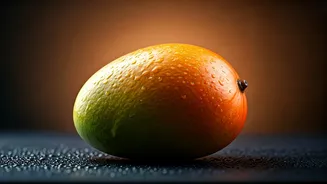
fruit that commands a premium price. What makes it so special? The texture is its first calling card: completely non-fibrous, it has a firm, buttery, melt-in-your-mouth consistency unlike any other. The flavor is a complex symphony of sweet, rich, and slightly tangy notes, with an intense saffron-colored pulp that perfumes the entire room. The Alphonso isn't just a fruit; it's an event. Its arrival signals the true start of summer, and its short season (typically April to early June) creates a nationwide frenzy. For its perfect balance and unparalleled texture, it remains the gold standard.
The Challenger from Gujarat: Kesar
If Alphonso is the king, then Kesar is the undisputed queen. Hailing from the foothills of Girnar in Gujarat, the Kesar mango is a formidable rival. Its name, which means “saffron” in Hindi, hints at its defining characteristics: a vibrant, saffron-orange pulp and a distinctly sweet, almost honeyed aroma. While the Alphonso is known for its creamy texture, the Kesar is prized for its intensely sweet, smooth pulp, making it the preferred choice for ‘aamras,’ a thick mango nectar that is a staple of Gujarati cuisine. It’s slightly more fibrous than an Alphonso, but what it lacks in buttery smoothness, it makes up for with a pure, unadulterated sweetness and a fragrance that can fill a house. For many in western India, the choice between Alphonso and Kesar is a matter of lifelong family allegiance.
The Pride of the North: Dasheri
Travel north to the mango belts of Uttar Pradesh, and the conversation shifts entirely. Here, the Dasheri reigns supreme. A smaller, more elongated mango with a greenish-yellow skin, the Dasheri is the people’s mango of North India. It’s incredibly sweet, with a flavor profile that’s less complex than the Alphonso but deeply satisfying. Unlike the buttery Alphonso, the Dasheri has a pleasant fibrousness, making it a joy to eat in the traditional style: squeezed until the pulp is liquefied inside the skin, then nicking off the top to drink the nectar straight from the fruit. Originating from a single mother tree in the village of Dasheri near Lucknow, which is over 200 years old and still bears fruit, this mango carries a rich history and is a nostalgic favorite for millions.
The Tangy Contender: Langra
Don’t let its appearance fool you. The Langra mango, a specialty of Varanasi and other parts of eastern and northern India, often retains a greenish tint even when perfectly ripe. To the uninitiated, it looks unripe, but locals know this is its signature trait. The Langra, which translates to “lame” and is named after the farmer who supposedly first cultivated it, is famous for its unique flavor profile. It delivers a brilliant balance of sweetness and a distinct citrusy, almost pine-like tang. It’s significantly more fibrous than an Alphonso, but its die-hard fans love it for this very reason. The flavor is sharp, memorable, and refreshingly different from its sweeter cousins, making it a palate-cleansing and utterly addictive experience.
The Southern Giant: Banganpalli
Down south, in the states of Andhra Pradesh and Telangana, the Banganpalli (also known as Benishan) is the star of the show. This is a large, beautiful mango, with a characteristically oblong shape and a bright, unblemished yellow skin. It’s one of the most widely cultivated and consumed varieties in India. Its major selling point is its mild, clean sweetness and very thin, edible skin. With minimal fiber and a pleasant, but not overpowering, flavor, the Banganpalli is an excellent all-rounder. It's perfect for slicing into cubes for salads, dicing for desserts, or simply eating plain without the flavor intensity of an Alphonso or Kesar overwhelming a dish.