


Maximalism in Miniature
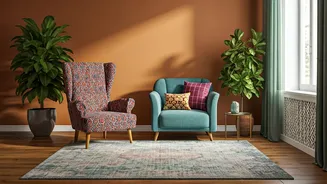
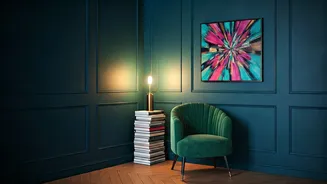
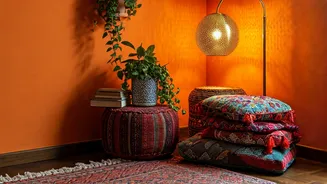
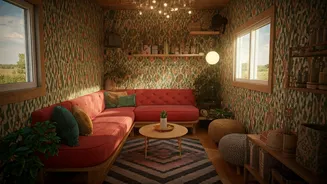
Forget the all-white, Scandinavian-inspired box. The new rule in tiny living is that there are no rules. Homeowners are embracing a “more is more” philosophy, but with a strategic twist. Think deep jewel tones on an accent wall, a dramatic floral wallpaper
in a sleeping loft, or a collection of vibrant, mismatched throw pillows. The key isn't to create chaos, but to choose bold elements that reflect personal taste. By concentrating high-impact design in a small area, you create a focal point that feels expansive and intentional, proving that a tiny footprint can handle a huge dose of drama.
Going Vertical with Greenery and Art
When floor space is at a premium, the only way to go is up. Tiny homeowners are transforming their walls into functional and beautiful displays. This goes beyond a single floating shelf. We’re seeing full-scale gallery walls with art of varying sizes, creating a dynamic visual that draws the eye upward and makes ceilings feel higher. Living walls, with pockets for succulents and air plants, act as both natural air purifiers and living sculptures. Even bookshelves are being rethought as architectural features, with ladders that add a touch of library chic while providing access to high storage.
Statement Lighting as Functional Sculpture
Builder-grade flush mounts are out. In their place, tiny dwellers are installing lighting that doubles as art. A striking mid-century modern chandelier over a small dining table or a pair of ornate, vintage-inspired sconces flanking a bed can completely redefine a space. Because every square inch counts, making a utility item like a light fixture a central part of the decor is a masterclass in efficiency. It adds personality without taking up any floor or surface area, providing both necessary illumination and a powerful style statement.
The Power of Rich Textures
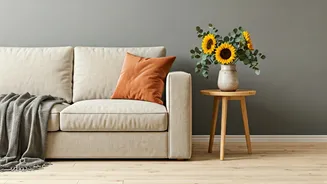
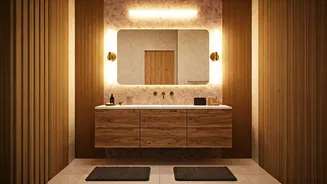
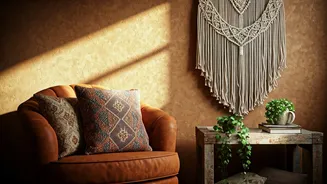
In a space that could easily feel sterile or cramped, texture is the secret weapon for creating warmth and depth. It’s about engaging the sense of touch as much as sight. Think a plush velvet cushion on a built-in bench, a chunky wool throw draped over a chair, a sheepskin rug on the floor, or ribbed wood paneling on a wall. Layering these different materials breaks up monolithic surfaces and adds a cozy, lived-in feeling that makes a house a home. This tactile approach makes the small space feel more luxurious and inviting, a place you want to settle into rather than just pass through.
Curated Collections on Display
The early ethos of tiny living often involved ruthless decluttering, hiding away almost all personal belongings. The new wave argues that the things that tell your story deserve to be seen. Instead of “clutter,” think “curated collection.” A narrow ledge displaying a row of antique cameras, a set of open shelves holding a beloved collection of ceramic mugs, or a magnetic strip showcasing heirloom kitchen knives can add immense character. It’s a shift from hiding your life away to integrating it beautifully into your home. The trick is containment and careful editing—displaying the best of your collection, not all of it.
Multi-Functional Furniture with Flair
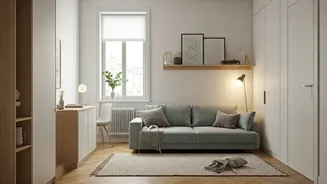
Multi-functional furniture has always been a cornerstone of tiny living, but today’s pieces are as much about form as they are about function. The utilitarian, purely practical designs are being swapped for furniture with genuine design chops. A storage ottoman might be upholstered in a bold, graphic print. A convertible sofa-bed might feature elegant, tapered legs and a sleek silhouette. A drop-leaf table might be crafted from a stunning piece of live-edge wood. These pieces prove that you don’t have to sacrifice style for smarts; you can have a home that works hard and looks great doing it.