
Beyond the Culinary Monolith
For decades, the American approach to international cuisine has involved a great deal of simplification. We fell in love with “Italian food” as a single entity, a glorious monolith of red sauce, pasta, and garlic bread. We embraced “Mexican food,” often
a cheesy, comforting blend of Tex-Mex traditions. But a delicious culinary reckoning is underway. The most exciting trend in American dining isn't about inventing new dishes, but about rediscovering the old ones with newfound specificity. Welcome to the era of multi-regional dining, where cuisines are no longer treated as uniform national products but as a rich tapestry of distinct local traditions. It’s the difference between saying you like “American music” and knowing you’re specifically in the mood for New Orleans jazz, Nashville country, or Detroit soul. This shift is about trading broad generalizations for delicious, granular truths.
A Revolution Wrapped in a Tortilla
Nowhere is this trend more vibrant than in the world of Mexican cuisine. For years, the American understanding was largely limited to the admittedly wonderful fare of the borderlands. But pioneering chefs and curious diners have pushed the conversation forward, introducing the United States to the staggering diversity south of the border. Restaurants are now proudly advertising their regional focus. You don’t just go for “tacos”; you seek out the slow-roasted cochinita pibil of the Yucatán, wrapped in banana leaves and bright with citrus. You hunt down the complex, smoky, and deeply historic moles of Oaxaca, a state with seven distinct mole varieties. You discover the fresh seafood tostadas of Baja California and the hearty, meat-centric dishes of Monterrey. This isn't a rejection of the familiar; it’s an expansion of it. It’s a recognition that Mexico’s culinary landscape is as varied and complex as its geography.
From Sichuan Spice to Roman Simplicity
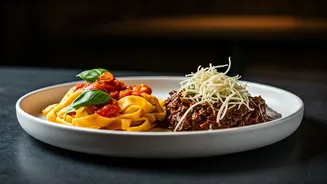
This movement extends across the globe. Think of “Chinese food.” The sweet and savory dishes of American-Chinese takeout have their own beloved history, but they represent a tiny fraction of the country’s culinary output. Now, diners are seeking out the bold, numbing spice of Sichuan peppercorns, the hand-pulled noodles and lamb skewers of Xi'an, and the delicate, subtle art of Cantonese dim sum. Similarly, the concept of “Italian food” is being beautifully fractured into its core components. Diners are learning that the food of Sicily, with its North African and Arab influences, is worlds away from the butter- and cheese-laden dishes of Emilia-Romagna, the birthplace of Parmesan and prosciutto. A menu that focuses solely on the simple, four-ingredient pastas of Rome—like cacio e pepe or carbonara—is making a statement. It’s declaring that specificity is its own form of excellence.
Why This, and Why Now?
Several forces are driving this delicious fragmentation. First, we have a generation of chefs, often second- or third-generation immigrants, who are using food as a way to connect with and express their specific heritage. They aren’t just cooking “their grandmother’s food”; they’re cooking the food of their grandmother’s specific village. Second, diners have become more adventurous. Thanks to travel, food television, and the internet, our collective palate is more curious than ever. We’re no longer content with the introduction; we want the deep dive. Finally, there’s a powerful desire for authenticity. In a world of globalized supply chains and generic experiences, a meal that tells a specific story—of a place, a history, and a people—feels incredibly fresh, vital, and real. It’s a connection to something tangible.