
The Post-Breakfast Slump Is Real
Let’s be honest about the classic diner-style breakfast. While delicious, it’s often a masterclass in heavy fats and simple carbohydrates. A plate loaded with bacon, sausage, fried potatoes, and buttered toast can deliver a huge, immediate caloric payload.
Your body works overtime to process all that fat and oil, diverting energy to digestion and leaving you feeling sluggish and ready for a nap by 10 a.m. This isn’t a moral failing; it’s a biological response. This style of eating treats breakfast as the heaviest, most indulgent meal of the day, a tradition rooted in an era of manual labor that most of us no longer perform. For the modern desk worker, it’s a recipe for a productivity crash before the day has even truly begun.
So, What on Earth is Dhokla?
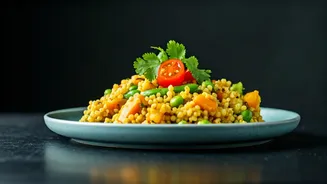
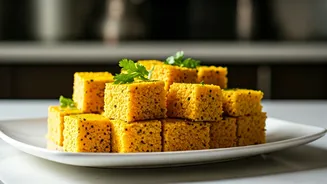
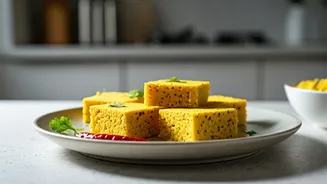
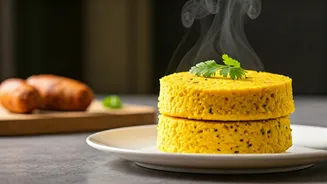
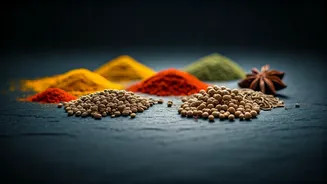
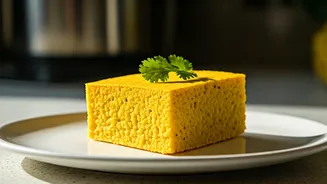
Enter dhokla. If you’ve never heard of it, you’re not alone. Dhokla is a savory, feather-light, and spongy cake hailing from the state of Gujarat in western India. Its primary ingredient is gram flour (made from chickpeas), which is mixed with water, yogurt, and spices to form a batter. Here’s the crucial part: the batter is left to ferment for several hours before being steamed, not fried. The result is a bright yellow, porous cake that’s airy, moist, and tangy. It’s often topped with a 'tadka'—a light tempering of mustard seeds, sesame seeds, and curry leaves sizzled in a minimal amount of oil and then drizzled over the top for flavor. Think of it as the antithesis of a heavy, greasy meal: it’s built for lift-off, not lockdown.
Unlocking 'Dhokla Energy'
The magic of dhokla—and the “energy” it provides—comes from its composition and preparation. First, being chickpea-based, it delivers a solid dose of plant-based protein and complex carbohydrates, which provide slow-release, sustained energy rather than a quick sugar spike and crash. Second, the fermentation process makes it easier to digest. The beneficial bacteria predigest some of the starches and proteins, making the nutrients more bioavailable while being gentle on your stomach. Finally, steaming is the key. By avoiding the deep fryer or a pan full of oil, you get a satisfying meal that doesn't weigh you down. It fills you up without filling you out, leaving you feeling light, focused, and ready to tackle your day. This is 'Dhokla Energy': a clean, vibrant fuel that powers you forward instead of holding you back.
It's Not Just About Dhokla, It's the Idea
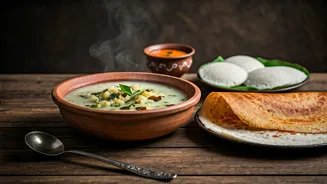
This isn't a demand to replace every pancake with a plate of dhokla. The real takeaway is to borrow the philosophy behind it. We should ask more from our breakfast. Instead of viewing it as a comforting indulgence that requires a recovery period, we can see it as the strategic launchpad for the day. The goal is to find foods that are energizing, not enervating. This might mean exploring other steamed breakfast foods from around the world, like Chinese bao buns or Vietnamese bánh bò. It could be as simple as choosing oatmeal with nuts and fruit, a protein-rich smoothie, or a bowl of Greek yogurt. The principle remains the same: prioritize lean protein, complex carbs, and cooking methods that don’t drench your food in oil. Start your day with food that respects your morning.