
The Magic of Soilless Gardening
When you hear “soil-free,” you might picture a futuristic lab, but the concept is surprisingly simple and accessible. Soilless growing, also known as hydroponics or semi-hydroponics, is the practice of raising plants in a medium other than soil. Instead
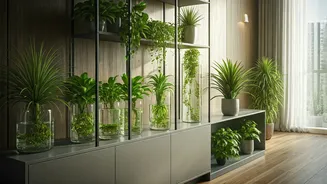
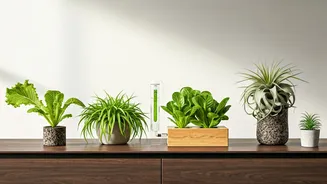
of dirt, plants are supported by inert materials like clay pebbles, perlite, or even just water, receiving their nutrients from a specially formulated solution. For the urban dweller, the benefits are immediate: no more tracking dirt across your floor, a dramatic reduction in common soil-borne pests like fungus gnats, and a much more forgiving watering routine. It’s a cleaner, simpler, and often more efficient way to bring nature indoors.
Method 1: The LECA System
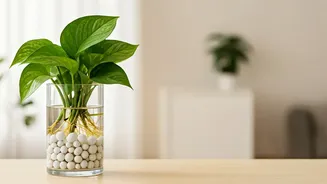
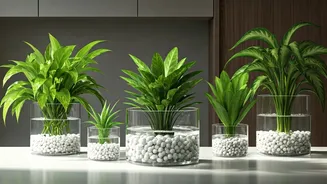
One of the most popular entry points into the soil-free world is using LECA, which stands for Lightweight Expanded Clay Aggregate. These small, porous clay balls look like terracotta-colored cereal puffs and are a fantastic replacement for potting soil. You place your plant’s roots in a pot filled with LECA and set it inside a larger, non-draining container that acts as a water reservoir. The clay balls wick moisture up to the roots as needed. For busy people, this is a game-changer. You can often go a week or more between waterings, and because the reservoir is often clear, you can see exactly when it’s time for a refill—no more guesswork. It takes the most common plant-killer, overwatering, almost completely out of the equation.
Best Starter Plants for LECA
Not all plants take to LECA immediately, but many common houseplants thrive in it. When you’re starting out, stick with hardy, resilient varieties. The Snake Plant (Dracaena trifasciata) is a top contender; its tolerance for a wide range of conditions makes it very forgiving during the transition from soil. Pothos (Epipremnum aureum) is another star, as its fast-growing roots adapt quickly to the semi-hydroponic environment. Finally, the ZZ Plant (Zamioculcas zamiifolia) is practically built for this system. It stores water in its underground rhizomes, making it incredibly drought-tolerant and a perfect match for the less-frequent watering schedule of a LECA setup.
Method 2: The Ultimate Minimalist Air Plants
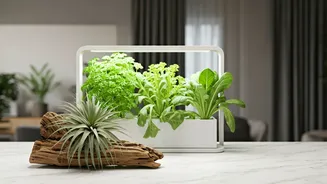
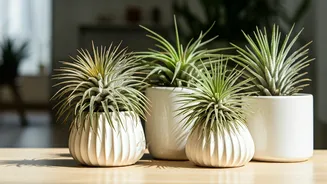
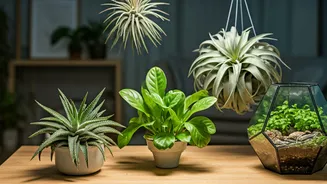
If even a pot of clay balls sounds like too much commitment, meet your new best friend: the air plant. These members of the Tillandsia genus are epiphytes, meaning in their native habitat, they grow on other plants or rocks, not in soil. They absorb all the water and nutrients they need through specialized scales on their leaves. This makes them the ultimate minimalist houseplant. They require no pot and no planting medium whatsoever. You can tuck them into decorative holders, mount them on a piece of driftwood, or simply let them sit on a shelf. Their sculptural, otherworldly forms add an instant touch of modern style to any small space.
Easy-Care Air Plants to Start With
Caring for air plants is incredibly simple. About once a week, give them a thorough soak in a bowl of room-temperature water for 20-30 minutes. Afterward, shake off the excess water and let them dry upside down in a spot with good air circulation to prevent rot. For beginners, Tillandsia ionantha is a great choice. It's small, hardy, and blushes a beautiful red or pink before it blooms. For a larger statement piece, the majestic Tillandsia xerographica, with its silvery, curling leaves, is surprisingly low-maintenance and only needs a good soak every couple of weeks.
Method 3: Just Add Water
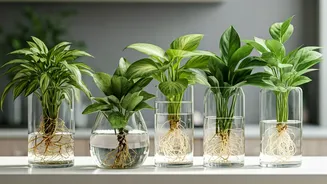
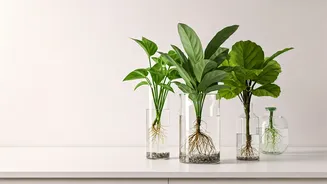
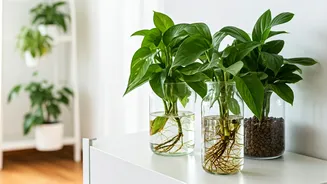
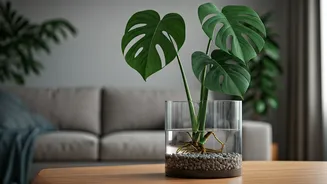
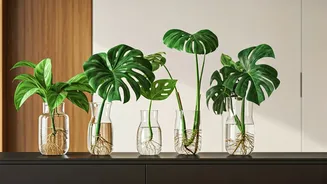
The simplest form of hydroponics has been happening on windowsills for decades: growing plant cuttings in a vase of water. Many vining plants, like Pothos, Philodendron, and English Ivy, will happily live their entire lives in water. Just place a healthy cutting in a clear glass vessel, ensuring at least one node (the little bump on the stem where leaves grow) is submerged. The roots will sprout from there. Change the water every week or two to keep it fresh and oxygenated, and add a drop of liquid houseplant fertilizer once a month to provide nutrients. It’s a beautiful, low-effort way to create a living art piece and watch a plant’s root system develop.