


The New Definition of 'Green' Living
For years, the gold standard for luxury amenities revolved around leisure and convenience: state-of-the-art gyms, infinity pools, 24-hour concierges. But a new expectation has taken root, quite literally. High-end residential developments are increasingly
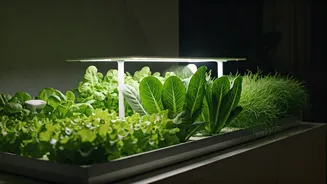
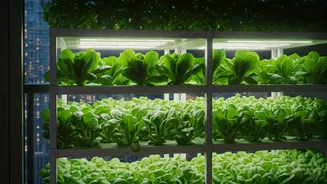
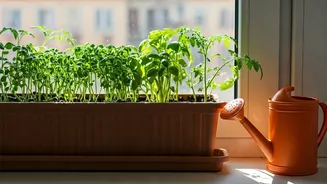
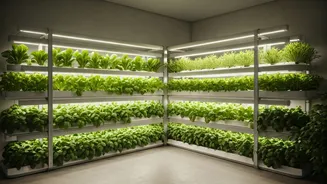
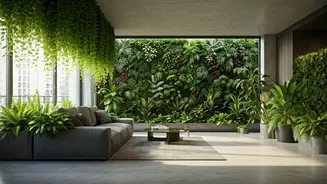
integrating sophisticated indoor farms, and not just as a decorative feature. These are fully managed hydroponic systems, often called 'agri-hoods' or 'vertical farms,' that provide residents with access to ultra-fresh produce grown just steps from their front door. A 'hydroponic maintenance network' isn't just a company that installs a few planters. It’s a complete service ecosystem. These firms design, install, and—most importantly—manage the entire growing process. They handle everything from seeding and nutrient balancing to harvesting and resident distribution, transforming a complex agricultural process into a seamless, hands-off amenity.
Why Luxury Estates Became the Perfect Market
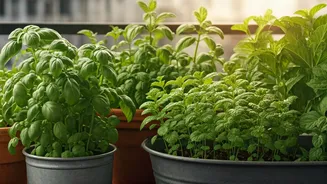
The success of this model hinges on its perfect alignment with the values of the modern luxury consumer. First, there's the wellness factor. Residents in these properties are often health-conscious and place a high value on organic, pesticide-free, and nutrient-dense food. The ability to get basil or butter lettuce that was harvested minutes ago is a powerful draw. Second is the appeal of sustainability. For environmentally-minded buyers, a building that reduces food miles to mere feet and uses significantly less water than traditional agriculture is a major selling point. Developers leverage this heavily in their marketing, branding their properties as forward-thinking and eco-conscious. Finally, there's the element of novelty and status. Just as a Sub-Zero fridge signals a high-end kitchen, a living wall of produce has become a visual shorthand for a premium, cutting-edge living experience. It’s a conversation starter and a tangible daily benefit that differentiates a property in a crowded market.
The 'Farming-as-a-Service' Business Model
So, how did these services scale from one-off installations to entire networks? The key was shifting to a 'Farming-as-a-Service' (FaaS) model. Instead of selling a complex piece of equipment directly to a resident, these companies partner with the property developers or management firms. The hydroponics company typically charges an initial installation fee and then an ongoing subscription for maintenance, supplies, and expert oversight. This B2B approach is far more efficient. The developer treats it as a capital expense and an operational cost, much like landscaping or pool maintenance. For residents, it’s a frictionless amenity, sometimes included in HOA fees or offered as an add-on subscription for a weekly box of produce. The 'network' aspect is crucial for scalability. A single team of technicians, supported by remote monitoring technology that tracks nutrient levels, pH, and light cycles, can efficiently manage systems across multiple buildings in a city. This creates economies of scale, making the business profitable and the service reliable.
More Than Just a Salad Bar
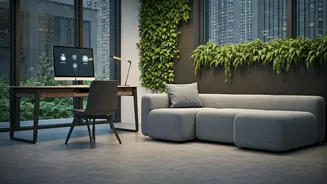
The most successful implementations understand that the value isn't just the produce itself. It’s about building a community and an experience. These indoor farms become a social hub. Property managers organize cooking classes with the on-site harvest, led by local chefs. They create children’s programs where kids can learn about where their food comes from. Some buildings have resident 'garden clubs' that work alongside the professional technicians. This transforms the amenity from a passive feature into an active, engaging part of residential life. It strengthens the community, provides educational value, and deepens the residents' connection to their home—making them more likely to renew their lease. The aesthetic benefit is also undeniable. A beautifully designed, well-lit wall of living plants adds a biophilic element to common areas, which studies show can improve mood and reduce stress.