



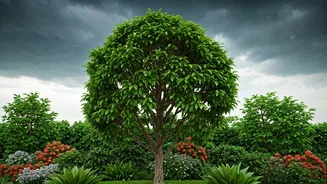


Why Pruning Before the Storm Matters
Think of pre-monsoon pruning as preventative maintenance. In the American Southwest, where this weather pattern defines the summer, plants often grow vigorously in anticipation of the rains. Without intervention, this new growth can become a liability.
The combination of intense downpours and high winds puts enormous stress on trees and shrubs. The rain soaks the leaves and soil, adding significant weight, while strong gusts can catch overgrown canopies like a sail, leading to snapped limbs and uprooted plants. By selectively thinning your plants, you’re not just tidying up; you are increasing their resilience. A properly pruned tree allows wind to pass through its canopy rather than pushing against it. It also reduces the risk of “limb failure”—large branches breaking off and potentially damaging your home, car, or fence. This isn't about giving your plants a severe haircut, but rather a strategic thinning that protects both the plant and your property.
The Right Time to Make the Cut
Timing is everything. The ideal window for monsoon-prep pruning is in late spring or early summer, typically May through June, before the storms begin in earnest. Pruning during this dry, warm period gives the plant ample time to heal its wounds before the humidity and moisture of the monsoon season set in. Cutting into a plant when the air is consistently damp creates an open invitation for fungal diseases and pests to attack the vulnerable tissue.
Avoid the temptation to do major pruning once the rains have started. If a branch is damaged during a storm, it should be removed promptly and correctly to prevent further tearing. But for your primary, preventative pruning, aim to be finished before the first thunderclouds roll in. This proactive approach sets your garden up for success and saves you from doing reactive damage control in the middle of a downpour.
What to Prune (and What to Leave Alone)
Focus your attention on fast-growing, brittle, or top-heavy plants that are most susceptible to monsoon damage. In the Southwest, this list is often topped by native trees like Palo Verde and Mesquite, which can put on a lot of growth quickly. Their branches can become overly long and heavy, making them prime candidates for thinning.
Large shrubs like bougainvillea, oleander, and Texas sage also benefit from being thinned out to reduce their mass. The goal is to create a more open structure. However, be cautious with certain plants. Avoid heavily pruning citrus trees, as their dense canopy is crucial for protecting the trunk and branches from the intense summer sun. A sudden, severe pruning can lead to sunscald, which severely damages the tree. Similarly, slow-growing cacti and succulents rarely need this kind of intervention. Know your plants and prioritize those most at risk.
The Art of the 'Monsoon Cut'
The most common mistake gardeners make is “topping”—indiscriminately shearing off the top of a tree or shrub. This practice is harmful, encouraging a weak explosion of chaotic new growth and making the plant more vulnerable in the long run. Instead, focus on thinning cuts. Your goal is to remove specific branches to improve the plant’s overall structure.
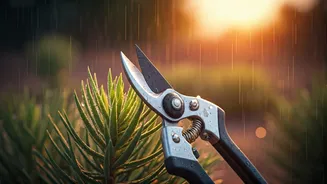
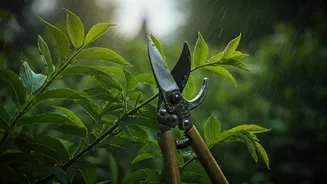
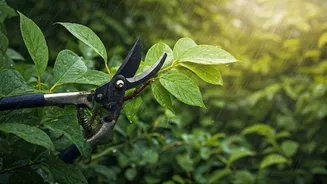
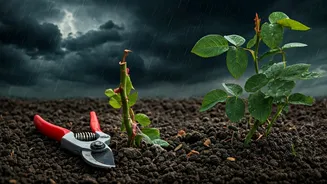
Start by identifying and removing any dead, diseased, or broken branches. Next, look for branches that are crossing over or rubbing against each other, as this creates weak points. Finally, selectively thin the canopy by removing entire branches back to their point of origin on a larger limb or the main trunk. Use a sharp, clean saw or loppers to make cuts just outside the “branch collar”—the slightly raised area where the branch joins the trunk. This technique promotes faster healing and maintains the plant's natural form, keeping it healthy, safe, and anything but chaotic.