




The Promise of Peak Convenience
At its core, the one-pot meal’s appeal is elegantly simple: less work. In an era where everyone feels pressed for time, the idea of sidestepping a mountain of dishes is revolutionary. Traditional cooking often involves a frustrating relay of pots, pans,
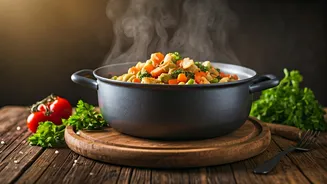
cutting boards, and bowls. A one-pot recipe collapses that entire process. Everything—from searing the protein to wilting the spinach and cooking the starch—happens in a single vessel. This isn't just about saving 15 minutes on cleanup; it's about lowering the mental barrier to cooking a homemade meal. When you know the entire operation is contained, the decision to cook instead of order takeout becomes infinitely easier. It transforms dinner from a multi-stage project into a streamlined, manageable task.
An Antidote to Kitchen Fatigue
Remember the great sourdough boom? For many, the early pandemic turned the kitchen into a creative sanctuary filled with ambitious baking projects and complex new recipes. But that enthusiasm has a shelf life. We are now deep into a period of collective kitchen fatigue. The novelty of cooking every single meal has worn off, replaced by a desire for nourishing, delicious food that doesn’t require a huge effort. One-pot meals are the perfect antidote. They deliver the satisfaction of a home-cooked meal without the elaborate performance. They acknowledge that while we still want to eat well and feel resourceful, we’re also tired. It’s a return to practical, comforting food that serves our lives, rather than demanding our lives revolve around it.
An Answer to Rising Grocery Bills
It’s impossible to talk about modern cooking trends without mentioning the economy. With grocery prices remaining stubbornly high, households are looking for ways to make their food budgets stretch. One-pot meals are an economic powerhouse. They are brilliant vehicles for using up what you have, preventing food waste. That half-wilted bunch of kale, the last few carrots in the crisper, and that lonely can of chickpeas can all find a home in a skillet with some rice or pasta. Furthermore, this style of cooking is ideal for stretching more expensive ingredients. A small amount of sausage or chicken can flavor an entire pot of beans and greens, making a little protein go a long way. It’s a frugal strategy that feels abundant rather than restrictive.
Perfectly Designed for Social Media
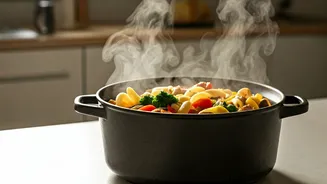
There's a reason these meals are 'viral.' They are visually mesmerizing and perfectly suited to the short-form video format of TikTok and Instagram Reels. The process is a simple, satisfying narrative: ingredients are added one by one into a pan, liquid is poured in, and after a quick stir and a covered simmer, the lid is lifted to reveal a complete, vibrant meal. This 'before and after' is pure dopamine. The format is easy for creators to film and for viewers to understand instantly. There’s no complex knife work or obscure techniques to explain. It’s just simple, satisfying transformation. The final overhead shot of the colorful, bubbling pan is the money shot—an image that screams 'delicious' and, just as importantly, 'achievable.'
A Template for Endless Creativity
While 'simple' is the main selling point, one-pot cooking isn't boring. Think of it less as a rigid recipe and more as a flexible formula. Once you understand the basic principles—like when to add hearty vegetables versus delicate ones, or how much liquid your starch will absorb—the possibilities are endless. You can swap out chicken for chickpeas, orzo for rice, and kale for spinach. It’s a gateway to intuitive cooking. This framework encourages experimentation with different flavor profiles, from a Tuscan-inspired dish with white beans and sun-dried tomatoes to a Thai-style coconut curry with noodles. It empowers home cooks to move beyond just following instructions and start creating dishes based on their own tastes and the contents of their fridge.