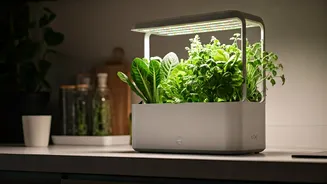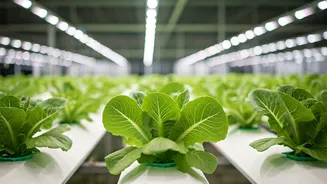





The Old Way: A Delicate Balancing Act
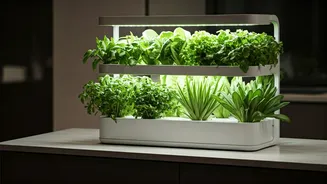
For decades, hydroponics—the art of growing plants in a nutrient-rich water solution instead of soil—has promised a more efficient way to farm. But it’s always been a high-wire act. Success depended on a technician's intuition, experience, and a grueling
routine of manual checks. They’d dip testers into vats to measure pH and nutrient levels (known as Electrical Conductivity or EC), eyeball the plants for signs of stress, and make adjustments based on what amounted to a highly educated guess. A small miscalculation, a missed reading, or a sudden change in temperature could send an entire crop into a death spiral. One bad day could wipe out weeks of work and thousands of dollars in potential revenue. The system worked, but it was fragile, labor-intensive, and difficult to scale without introducing more room for human error.
Enter the Farm's New Nervous System
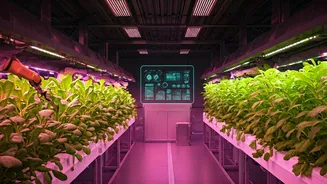
This is where the Internet of Things (IoT) changes the game. In simple terms, IoT refers to a network of physical devices—in this case, sensors—embedded with software that allows them to connect and exchange data over the internet. For a hydroponic farm, this network acts like a digital nervous system, giving technicians superhuman senses. Tiny, waterproof sensors are placed throughout the growing environment. They constantly monitor the vital signs of the operation: the pH balance of the water, the precise concentration of nutrients, water and air temperature, ambient humidity, and even the intensity and spectrum of the LED grow lights. Instead of a single snapshot taken once or twice a day, technicians get a continuous, 24/7 video feed of their farm’s health, streamed directly to a dashboard on a computer or smartphone.
From Data Points to Smarter Decisions
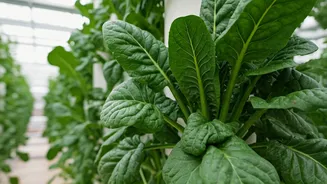
Collecting data is one thing; making it useful is another. The real leverage comes from how technicians use this constant flow of information. Sophisticated software analyzes the incoming data, spots trends, and flags anomalies long before they would be visible to the naked eye. For example, if the pH level begins to drift outside the optimal range for lettuce, the system can send an immediate alert to the technician's phone. In more advanced setups, it can even trigger an automated response, activating a dosing pump to release a tiny, precise amount of a pH-adjusting solution into the system, correcting the problem before it ever affects the plants. This proactive approach transforms the technician’s job from a reactive firefighter to a proactive systems manager. They’re no longer just guessing; they’re making targeted interventions based on real-time, empirical evidence.
The Payoff: More Than Just a Bigger Harvest
Leveraging IoT data delivers the headline promise: better yields. By keeping every variable in the perfect sweet spot, plants grow faster, healthier, and more consistently, leading to more harvest cycles per year. But the benefits ripple out much further. Precision is efficiency. Automated nutrient dosing means not a single drop of expensive fertilizer is wasted. Optimizing water temperature and circulation reduces energy costs. Because the system is so tightly controlled, water usage in IoT-enabled hydroponic farms can be up to 90% lower than traditional soil-based agriculture. Furthermore, this level of control creates a predictable, replicable product. A restaurant or grocery chain can count on getting the exact same quality of basil or kale week after week, a level of consistency that builds commercial trust and value. It turns a volatile agricultural process into a predictable manufacturing one.