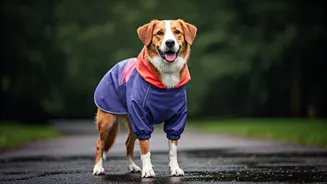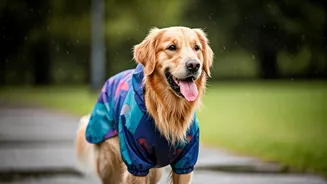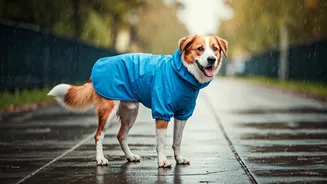




1. It’s All About the Material
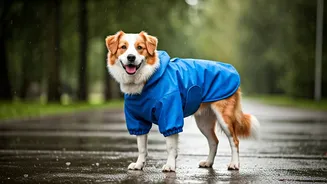
Not all raincoats are created equal, and microfibre is the superstar fabric for a reason. Unlike bulky, stiff vinyl or rubber, microfibre is incredibly lightweight and soft, meaning your dog is more likely to wear it without protest. More importantly,
it’s highly water-resistant yet breathable, preventing your dog from getting clammy and overheated underneath. The biggest win? Microfibre dries in a fraction of the time. Instead of a soggy, dripping coat hanging by the door for hours, a quick shake and a short hang-dry are all it takes before it’s ready for the next walk.
2. Say Goodbye to the “Wet Dog” Smell
The infamous “wet dog” smell isn't just from water; it’s the odor released by microorganisms like yeast and bacteria that live on your dog’s coat when they get damp. A good microfibre raincoat acts as a shield, drastically reducing how much of your dog's fur gets soaked in the first place. By keeping their back, chest, and underbelly dry, you’re not just preventing a mess—you’re stopping that pungent, musty aroma from ever taking hold. It contains the problem at the source, meaning your dog, your car, and your living room stay fresh even after a rainy adventure.
3. Cleanup Becomes Almost Effortless
Think of a pet raincoat as a full-body bib for mud and grime. A walk in the rain often means your dog’s underside and legs get caked in splash-back from puddles and wet pavement. This turns your entryway into a disaster zone requiring a fleet of old towels and a full-scale bath operation. With a well-designed coat that offers good belly coverage, all that mud and street dirt gets trapped on the machine-washable fabric, not on your dog’s fur. The post-walk routine transforms from a 20-minute cleanup ordeal into a simple paw wipe and coat removal.
4. Safety Gets a Serious Boost
Rainy days often mean low visibility, turning walks along roads or in busy parks into a slightly nerve-wracking experience. Many modern pet raincoats are designed with safety as a top priority. Look for models with built-in reflective piping or bright, high-visibility colors like yellow, orange, or neon green. These features make your dog significantly more visible to drivers, cyclists, and other pedestrians during dreary, overcast conditions or on evening walks. It’s a simple feature that provides invaluable peace of mind when you’re navigating the neighborhood in less-than-ideal weather.
5. Comfort Is No Longer an Issue
Some dogs despise wearing apparel, and a poorly fitting coat is usually the culprit. They’ll freeze, refuse to walk, or spend the whole time trying to wriggle out of it. Microfibre raincoats, however, are often designed with canine comfort in mind. They are flexible, don't make loud crinkling noises, and feature multiple points of adjustment—typically Velcro straps around the neck and chest—to ensure a snug but unrestrictive fit. A proper fit prevents chafing and allows for a full range of motion, so your dog can walk, run, and do their business without feeling constrained. Happy dog, happy life.
What to Look For in a Great Coat
When you're ready to buy, keep a few key features in mind. First, measure your dog correctly—check the manufacturer’s guide for measuring chest girth, neck, and back length. Look for a design with a leash access hole or slot near the collar or harness D-ring. Full belly coverage is non-negotiable for maximum cleanliness. Finally, consider extras like a hood (some dogs tolerate them, some don't) and leg straps for a more secure fit on windy days. Investing in a quality coat means you’re not just buying a product; you’re buying back your time and sanity.