




The Myth of the Flawless Sunset
Somewhere along the way, we decided that a 'perfect' sunset required an empty sky. It’s the image plastered on postcards and travel brochures: a clean, unobstructed view of the sun dipping below the horizon, painting the sky in neat, predictable gradients
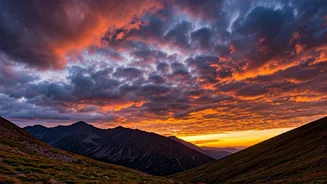
of orange and pink. It’s beautiful, sure, but it’s also a little sterile. This sanitized version of nature’s daily farewell misses the point entirely. A clear-sky sunset is a monologue; a cloudy sunset is a conversation. The real show, the one with depth and character, needs texture. It needs drama. It needs clouds. They are not imperfections ruining the view; they are the canvas on which the day’s last light performs its most spectacular work. And there is no better place to witness this truth than in the Aravalli Range of Rajasthan, at the state’s only hill station.
Mount Abu’s Atmospheric Masterpiece
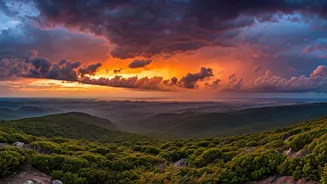
Mount Abu is an anomaly—a cool, lush oasis rising from the arid plains of western India. As evening approaches, visitors flock to Sunset Point, a popular overlook that promises a grand view. On a clear day, it’s lovely. But when the monsoon season’s lingering clouds hang in the air, it becomes transcendent. Instead of one predictable ball of fire, you get a sprawling, dynamic performance.
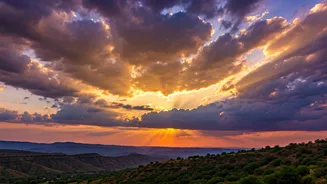
The sun doesn’t just set; it interacts. It plays hide-and-seek behind dense cloud banks, its light bursting through in what are known as crepuscular rays—those glorious, god-like beams that seem to pour from the heavens. The clouds themselves transform from mundane puffs of white and gray into three-dimensional sculptures of burning gold, deep magenta, and bruised violet. Each layer catches the light differently, creating a sense of depth and movement that a flat, clear sky can never replicate. One moment, the underside of a cloud is glowing like a hot coal; the next, its edges are traced in incandescent silver.
The Science of a Superior Sky
This isn't just romanticism; it's physics. A sunset’s color comes from a phenomenon called Rayleigh scattering, where shorter-wavelength light (blues and greens) is scattered away by the atmosphere, leaving the longer-wavelength reds and oranges to reach our eyes. On a clear day, this process is uniform and predictable.
But add clouds, and you introduce a new, more complex variable: Mie scattering. Water droplets in the clouds scatter all wavelengths of light more or less equally. This allows clouds to act as a giant, textured projection screen. They catch the direct, warm light from the setting sun and reflect it back down, illuminating the sky from within. Low clouds glow with intense, fiery oranges, while higher, wispy cirrus clouds catch the faintest, highest-altitude light, often appearing in delicate shades of pink and purple long after the sun has disappeared. The result is a richer, more varied, and longer-lasting color palette.
An Experience Grounded in Place
What makes the cloudy sunsets of Mount Abu so special isn’t just the visual splendor; it’s the entire sensory experience. The air here is different—cooler, laced with the scent of pine and damp earth. As the light fades, the sounds of the bustling town below soften into a distant hum. You’re sharing the moment with families, couples, and vendors selling roasted corn, all gathered for the daily ritual.
A clear sunset can feel distant and impersonal, an astronomical event observed from afar. But a cloudy sunset in Mount Abu feels intimate and immersive. The atmosphere is literally all around you. Sometimes, a low-slung cloud will drift right over the viewpoint, momentarily enveloping everyone in a soft, diffused glow before passing to reveal the colored sky beyond. It connects you to the weather, the landscape, and the very character of this unique hill station, which owes its existence to the very moisture that forms those magnificent clouds.