


First, A Thali Refresher
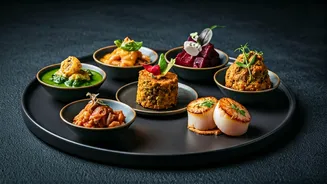
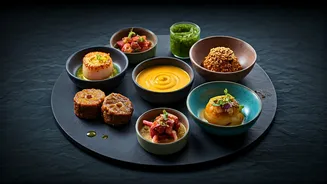
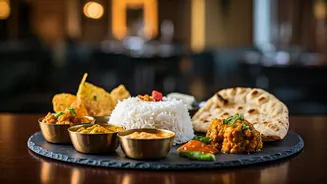
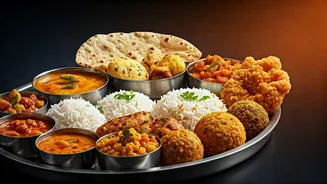
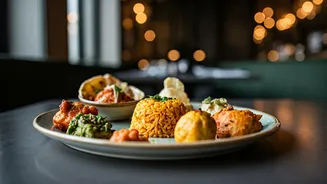
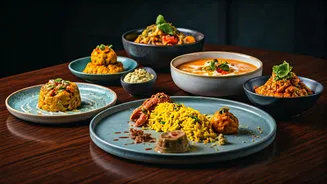
Before we get to the fusion, let's talk about the foundation. A traditional thali is the original tasting menu. It's a round platter holding a constellation of small bowls, called katoris, each filled with a different component of a complete meal. There’s
no single thali; they vary dramatically by region in India. A Rajasthani thali might feature dal baati churma (a lentil and bread dish), while a South Indian version could center on sambar, rasam, and rice. But the philosophy is universal: balance. The goal is to hit all six tastes—sweet, salty, sour, bitter, spicy, and astringent—in one sitting. You might have a lentil dal, a vegetable curry, a cooling yogurt raita, a tangy pickle, a crispy papadum, and a sweet dessert, all arranged around a heap of rice or a stack of flatbreads. It’s a holistic, satisfying, and deeply traditional way of eating that has nourished millions for centuries.
The Rules Are Out the Window
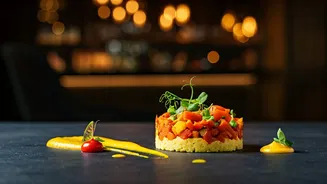
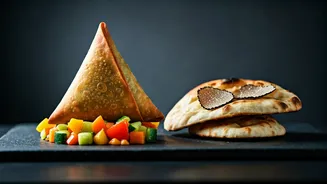
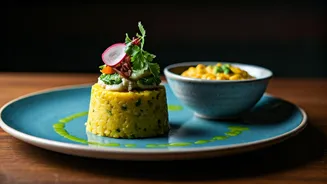
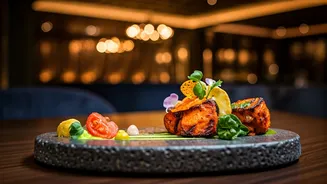
Now, take that beautiful, time-honored concept and hand it to a new generation of chefs who grew up with global palates. That’s where the fusion thali is born. The platter and the principle of variety remain, but the contents are thrillingly unpredictable. Imagine a thali where the traditional potato sabzi is replaced with spicy masala fries. Instead of a simple lentil dal, you find a creamy dal makhani risotto. The familiar chicken curry might be a butter chicken empanada, and the cooling raita could be a cucumber-mint tzatziki. Some chefs are creating thematic thalis that break all geographical rules. Think of a “Taco Thali” with small bowls of carnitas, pico de gallo, guacamole, and queso, served with mini tortillas instead of roti. Or a “BBQ Thali” with smoked brisket, cornbread, mac and cheese, and collard greens, all served in those familiar katoris. It’s not about replacing tradition, but using its beloved format as a canvas for entirely new ideas.
So Why Is This Happening Now?
This trend isn't just about throwing random foods on a platter. It’s a perfect storm of cultural and culinary shifts. First, it’s a response to the way we eat now: we love variety, small plates, and shareable experiences. A thali is a personal grazing board, perfectly suited for the Instagram age. Each little bowl is a pop of color and texture, making the whole platter incredibly photogenic. Second, it’s driven by a new wave of diaspora chefs. These are culinary artists who are fluent in global techniques learned in kitchens from Paris to New York, but who also have a deep connection to their heritage flavors. For them, the fusion thali isn't a gimmick; it’s a form of self-expression. It’s a way to put their own story on a plate, reconciling different parts of their identity—the Indian home cooking they grew up with and the wider culinary world they inhabit. It's a delicious answer to the question, "Where are you from?"
The '2026 Energy' Explained
The phrase “2026 energy” evokes a feeling of forward momentum, of building towards something exciting and new, much like the hype for the next World Cup. The fusion thali has that same vibe. It’s not stuck in debates about “authenticity,” which can often be a creative straitjacket. Instead, it’s playfully looking toward the future. It suggests that cuisines aren't static museum pieces but living, breathing things that evolve. This trend respects the past—the thali format is, after all, a tribute to the original—but isn’t afraid to remix it for a new audience. It’s a confident, creative, and optimistic vision of what food can be: a conversation between cultures, not a monologue.