
The End of the Straight Line
If the dominant aesthetic of the last decade could be summarized, it might be the right angle. Think of the sharp corners of mid-century modern credenzas, the spare geometry of industrial-chic lofts, and the rigid perfection of Scandinavian minimalism.
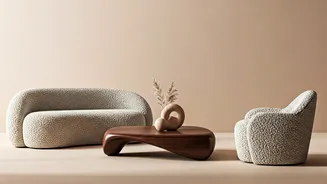
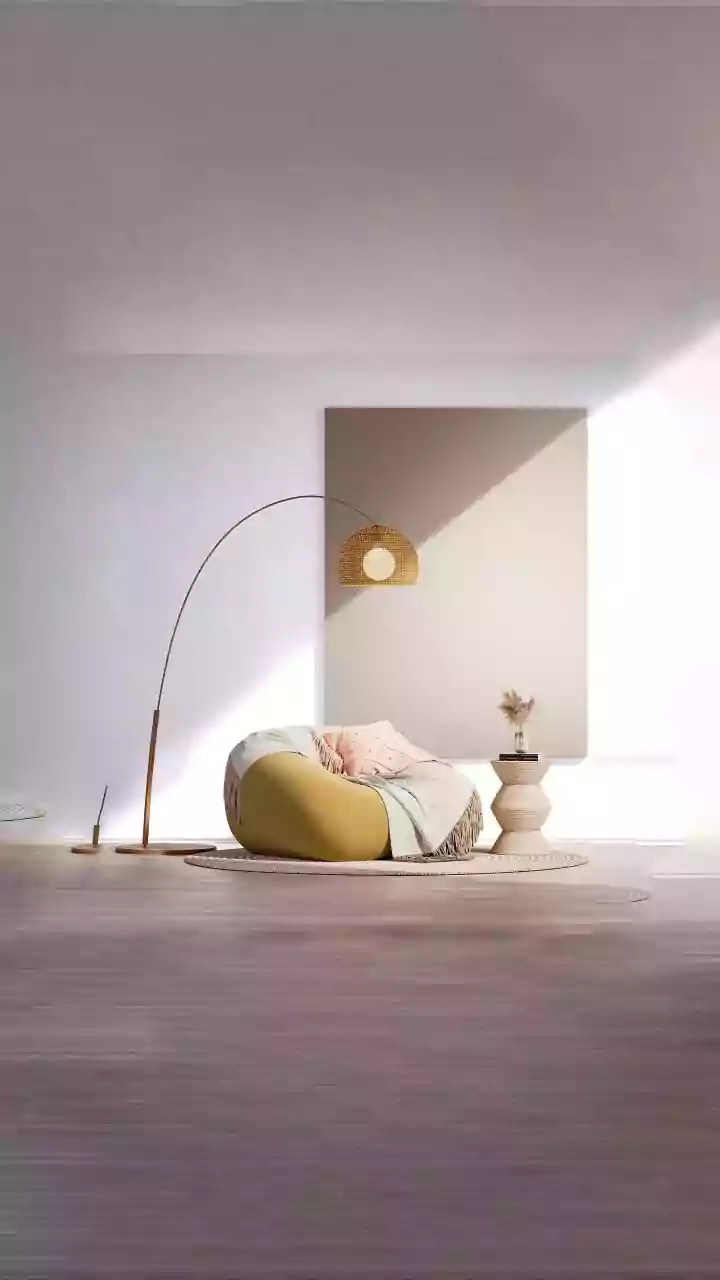
It was a design language of control, order, and curated restraint. Now, that visual vocabulary is being joyfully disrupted by a school of design that favors the wiggle, the blob, and the curve. Walk into any trendy home goods store or scroll through your favorite design feeds, and you’ll see it: mirrors that ripple like water, sofas that look like a collection of perfectly smooth stones, and tables with chubby, rounded legs. This isn't just about adding a few circular pillows. It's a fundamental shift toward biomorphic, organic, and sculptural forms that feel more human and less machine-made. The new ideal isn’t perfection; it’s personality. The straight line is making way for shapes that undulate, swell, and invite you to touch them.
A Dose of 'Dopamine Decor'
So, why are we suddenly craving curves? The trend is deeply connected to a broader cultural movement often dubbed 'dopamine decorating'—the idea of filling our spaces with things that genuinely make us happy. After years of global uncertainty and stress, many are looking to their homes as sanctuaries of comfort, joy, and emotional safety. Straight lines and hard edges can feel severe and demanding, while soft, rounded shapes are psychologically associated with comfort, nature, and gentleness. Think of a hug, a smooth pebble, or the rolling hills of a landscape; these are the feelings that blobby sofas and wavy vases evoke. Design experts see this as a direct reaction against the cold, impersonal feel of hyper-minimalist spaces. Instead of a home that looks like a pristine gallery, people want a home that feels like a refuge. These fun shapes are an easy, accessible way to inject a sense of playfulness and optimism into a room, triggering a small but welcome burst of happiness every time you see them.
From Wavy Mirrors to Cloud Couches
The trend manifests across every category of decor. Perhaps the most ubiquitous example is the wavy or irregularly shaped mirror, a statement piece that turns a functional object into wall art. Ettore Sottsass’s iconic pink “Ultrafragola” mirror from 1970 has seen a massive resurgence, inspiring countless more accessible versions. In seating, 'cloud couches' and modular sofas with low, rounded profiles have become the new status symbols of comfort. Brands are offering sectionals that look less like furniture and more like a collection of oversized, plush cushions you can sink into. Lighting has also gone sculptural, with mushroom-shaped lamps and fixtures that resemble clusters of glowing orbs. Even small accessories are getting in on the act. You can find squiggly candlestick holders, doughnut-shaped vases, and side tables with thick, cartoonish legs. It's a design movement that's both high-end and highly democratized, visible in collector's items and mass-market decor alike.
How to Bring the Vibe Home
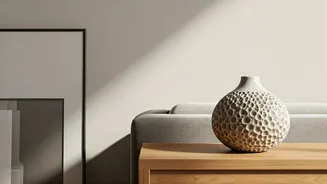
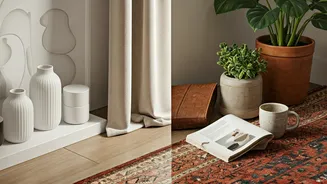
Embracing this mood-boosting trend doesn't require a gut renovation or a five-figure budget. The beauty of these fun shapes is that even a small dose can have a big impact. If you're not ready to commit to a major piece like a sofa, start with accessories. A single, interestingly shaped vase on a bookshelf can break up the monotony of straight lines. A small, round-legged side table can add a touch of whimsy to a living room. Look for textiles with abstract, curved patterns, or add a few round throw pillows to your existing couch. The key is to think of these items as bits of functional sculpture. The goal isn’t to create a room full of blobs, but to use these playful forms to soften edges, add personality, and create a space that feels more like a warm embrace than a sterile showroom. It's about choosing items that spark a little bit of joy and make your home feel uniquely, comfortably yours.