






Why Now Is the Perfect Time
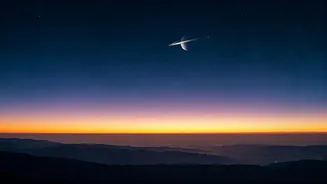
If you’ve tried to spot Saturn recently and found it stubbornly low on the horizon, you’re in for a treat. The planet is currently in a prime viewing window that’s only getting better. This celestial motion isn’t random; it’s a result of the cosmic dance
between our planet and Saturn. As Earth, on its faster inner track, begins to catch up to Saturn in its orbit around the Sun, Saturn appears to rise a little earlier each day. For us on the ground, this means the planet has more time to ascend into a darker, higher part of the sky before the sun’s glare washes it out. This makes it easier to spot, clearer to observe, and an altogether more rewarding sight for anyone willing to set an early alarm.
When and Where to Look
Timing is everything in amateur astronomy. For the best view of Saturn, you’ll want to head outside about 90 to 60 minutes before your local sunrise. This gives you a dark enough sky to see the planet clearly, but not so early that it’s still hugging the horizon. Your target direction is the southeastern sky. Saturn will be ascending from this direction, appearing as a moderately bright point of light. The exact position will shift slightly depending on your location and the specific date, so using a free stargazing app on your phone (like SkyView Lite, Stellarium, or Star Walk) is highly recommended. Simply point your phone at the sky, and the app will identify Saturn for you, eliminating any guesswork.
Naked Eye, Binoculars, or Telescope?
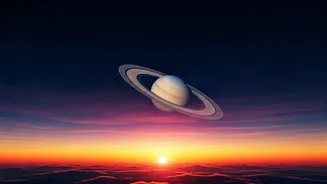
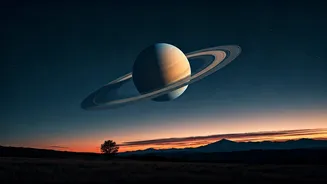
The great thing about this celestial event is its accessibility. You don’t need expensive equipment to enjoy it. To the naked eye, Saturn won't look like the stunning, ringed jewel you see in NASA photos. Instead, you’re looking for a point of light with a distinct, steady glow. Unlike stars, which twinkle due to atmospheric turbulence, planets shine with a more constant, unwavering light. Saturn’s light is often described as a pale, yellowish-white. If you have a pair of binoculars, even a standard set, use them. While you won’t resolve the rings, they will gather more light, making Saturn appear brighter and more disc-like. A small telescope, however, is where the magic happens. Even a basic starter telescope with 30x magnification or more can reveal Saturn’s most famous feature: its glorious rings. You might even glimpse its largest moon, Titan, as a tiny pinprick of light nearby.
Look for Its Planetary Neighbor
Saturn isn’t alone in the pre-dawn sky. Often, you’ll find Mars nearby, adding another splash of color to the celestial canvas. Mars is easy to distinguish thanks to its noticeable reddish-orange hue. Seeing the two planets in the same patch of sky is a great way to appreciate their different characteristics. On some mornings, you might also find a waning crescent Moon in the same vicinity, creating a beautiful celestial trio. These planetary get-togethers, or conjunctions, offer fantastic photo opportunities and make your early morning expedition even more memorable. Checking a sky chart or app beforehand will let you know if other celestial visitors will be joining the show.
Tips for a Great Viewing Experience
A little preparation goes a long way. First, check the weather forecast. Clouds are the number one enemy of stargazing, so aim for a clear or mostly clear night. Second, dress in layers. Pre-dawn hours can be surprisingly chilly, even in the summer. Third, give your eyes time to adjust. It takes about 15-20 minutes for your eyes to fully adapt to the darkness, so avoid looking at your bright phone screen. Most stargazing apps have a red-light mode to preserve your night vision. Finally, make it an occasion. Brew a thermos of coffee or hot chocolate. Bring a blanket or a comfortable chair. The goal isn’t just to tick a planet off your list, but to enjoy a quiet, awe-inspiring moment with the universe.