
A Journey Back in Time
In a world obsessed with speed and efficiency, the Kalka-Shimla Railway is a glorious rebellion. Affectionately known as the “toy train,” this narrow-gauge railway is a rolling, living museum. Its small, almost storybook-like coaches chug along at a leisurely
pace of about 15 miles per hour, covering the 60-mile journey from the town of Kalka to the popular hill station of Shimla in just over five hours. But no one is here to break a speed record. The point isn't to arrive quickly, but to travel beautifully. As the train climbs nearly 5,000 feet in altitude, passengers are gently rocked, leaving behind the heat and hustle of the Indian plains for the crisp, pine-scented air of the mountains. It’s an immersive experience in slow travel, forcing you to disconnect from your screen and connect with the breathtaking landscape unfolding just outside your window.
An Engineering Marvel Through the Himalayas
Built under British rule and completed in 1903, the railway was an audacious feat of engineering designed to connect the summer capital of British India, Shimla, with the rest of the country. Designated a UNESCO World Heritage site, the track is a testament to human ingenuity in the face of formidable terrain. The journey takes you through an astonishing 102 tunnels (down from the original 103, as one is no longer in use), across more than 800 bridges and viaducts, and around some 900 sharp curves. The longest tunnel, at Barog, stretches for over a kilometer and comes with its own haunting colonial-era ghost story. Each chug of the engine is a rhythm section for a visual symphony of deep valleys, terraced farms, and dense forests of rhododendron and oak. This isn't just a commute; it's a ride through history, with every clatter of the wheels echoing the ambitions and challenges of a bygone era.
The New Buzz: Glass Roofs and Panoramic Views
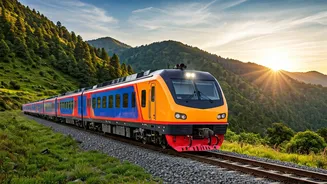
While its soul is vintage, the toy train is experiencing a thoroughly modern revival. The “exciting energy” buzzing around the railway today comes largely from the introduction of Vistadome coaches. These new carriages are a game-changer, featuring panoramic windows, rotating seats, and, most importantly, transparent glass roofs. Passengers are no longer just looking out; they are fully enveloped by the scenery. The sky, the mountains, and the towering pine trees become part of the cabin's interior. This upgrade has ignited a new wave of interest, drawing travelers from around the world and turning the historic ride into a must-have social media moment. The sight of mist rolling over the glass ceiling or sunshine filtering through the trees has made the journey more magical than ever, blending old-world charm with a 21st-century sense of wonder.
More Than a Tourist Ride
Though it's a star attraction for tourists, the Kalka-Shimla Railway is far from being just a theme park ride. It remains a vital lifeline for the small communities dotted along its route. The train makes brief stops at picturesque, sleepy stations like Dharampur, Barog, and Solan, where vendors hop on to sell steaming chai and local snacks. For residents of these remote villages, the train is a reliable link to work, school, and markets. Seeing children in school uniforms or locals carrying produce alongside wide-eyed travelers adds a layer of authenticity to the experience. It’s a reminder that this historical artifact is not frozen in time but is a dynamic, functioning part of everyday life in the Himalayas, its whistle a familiar and reassuring sound for generations.