


The Case Against Tap Water
The core of the pro-rainwater argument stems from a deep suspicion of tap water. And it’s not entirely unfounded. Depending on where you live in the U.S., your municipal tap water is treated with chemicals like chlorine or chloramine to make it safe for
human consumption. While essential for public health, these disinfectants can be harsh on certain sensitive plants. You might see this manifest as brown, crispy leaf tips on species like spider plants, prayer plants (Calatheas), or dracaena. Beyond chlorine, many regions have “hard” water, which is high in dissolved minerals like calcium and magnesium. Over time, these can build up in the soil, raising the pH and potentially interfering with nutrient absorption, leading to a less-than-thriving plant. Finally, there's fluoride, another common additive that some plants, particularly those in the lily and palm families, are known to dislike. The fear, in essence, is that the very water keeping us healthy might be subtly stressing our green friends.
The Promise of Rainwater
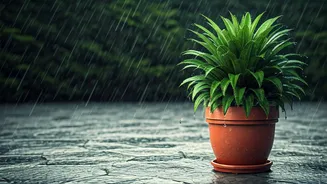
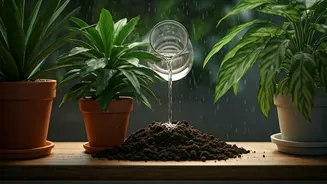
So, what makes rainwater the supposed holy grail? In a word: purity. Rainwater is naturally soft, meaning it’s free of the dissolved minerals that cause buildup. It's also slightly acidic, which just so happens to align perfectly with the preferred soil pH for a vast majority of common houseplants, which originally evolved in environments with acidic soil. Think of it as creating a more natural environment. And, of course, it contains no chlorine, chloramine, or fluoride. Proponents will tell you that switching to rainwater results in more vibrant foliage, faster growth, and healthier root systems. They’re not wrong—for specific plants, the difference can be dramatic. For a finicky Calathea that’s been struggling with crispy edges, a switch to rainwater can feel like a miracle cure, solving a problem that no amount of light or humidity adjustments could fix.
The Practical Reality Check
Before you rush outside with every bucket you own, let’s talk logistics. Collecting rainwater is an active chore. You need a clean collection system—a rain barrel connected to a downspout is ideal, but even buckets on a balcony require effort. The water must then be stored properly. An open container is a breeding ground for mosquitoes and can grow algae, which isn't great for your plants. You need a sealed container, and you need the space to keep it. Furthermore, rainwater isn't always pristine. In urban or industrial areas, it can pick up pollutants from the air. The first flush of rain after a dry spell can also wash contaminants off your roof, from bird droppings to asphalt shingle particles. While this is less of a concern for outdoor gardens, it’s something to be mindful of for your indoor collection. The effort-to-reward ratio is a personal calculation every plant parent has to make.
The Verdict: What Should You Do?
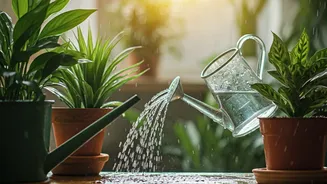
Here's the simple, reassuring truth: for most of your plants, tap water is fine. Hardy, common houseplants like pothos, snake plants, and ZZ plants are generally unfazed by it. If your plants are happy, there is no reason to introduce a new, labor-intensive watering routine. However, if you are growing notoriously “diva” plants known for their sensitivity (looking at you, Calatheas, carnivorous plants, and some orchids), or if you’ve noticed consistent issues like brown tips that can’t be explained by light or humidity, rainwater is absolutely worth trying. It could be the missing piece of your care puzzle. For a happy medium, try this: let your tap water sit in an open container for 24 hours. This allows much of the chlorine to evaporate (though it won't remove chloramine or fluoride). For a more robust solution, a simple carbon water filter, like the kind used in a pitcher, can remove many of the additives that upset sensitive plants. This gives you many of the benefits of rainwater without the hassle of collection and storage.