








The Hidden Danger in Dense Growth
Vigorous growth is what every gardener wants, but when it becomes too dense, it creates a micro-environment that can be surprisingly harmful. Think of a thick canopy of leaves as a damp blanket. It traps humidity, blocks sunlight from reaching the plant's
interior, and dramatically reduces air circulation. This stagnant, moist air is the perfect breeding ground for a host of fungal and bacterial diseases. Powdery mildew, downy mildew, and botrytis (gray mold) thrive in these exact conditions. You might notice a white, dusty film on your squash leaves or fuzzy gray mold on your tomato stems. These are not just cosmetic issues; they are diseases that sap a plant's energy, reduce its ability to photosynthesize, and can ultimately lead to rot, poor fruit production, and even plant death. What looks like a thriving jungle from afar is often a crowded, disease-prone slum at the leaf level.
Why Airflow Is Everything
The single best defense against these moisture-loving diseases is good airflow. When air can move freely around and through a plant’s foliage, it acts like a natural blow-dryer. It whisks away excess moisture from leaf surfaces after rain or morning dew, preventing fungal spores from gaining a foothold. A well-ventilated plant is a healthy plant. Achieving good airflow isn't about setting up fans in your garden; it’s about strategic pruning. The goal is to open up the plant’s structure so that a gentle breeze can pass through its core. By selectively removing some leaves and branches, you break up the dense canopy that traps moisture. This simple act of thinning is one of the most effective, organic, and cost-free methods of disease prevention available to a home gardener.
The Art of the 'Clean Cut'
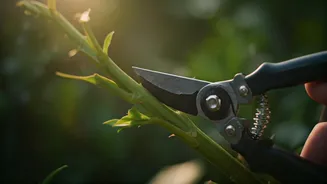
How you prune is just as important as what you prune. Grabbing a pair of dull, dirty scissors and hacking away will do more harm than good. Every cut you make is a wound, and just like a wound on your own skin, it’s an entry point for infection. A “clean cut” is essential for plant health. This means two things: sharp tools and sterile tools. A sharp pair of pruners, bypass loppers, or even a hori-hori knife will make a crisp, clean slice that the plant can seal over quickly. A dull blade, by contrast, will crush and tear the plant tissue, creating a ragged wound that heals slowly and is highly susceptible to disease. Furthermore, always sterilize your tools between plants, and especially after cutting any diseased material. A simple wipe with a cloth soaked in isopropyl alcohol or a 10% bleach solution is all it takes to prevent you from becoming the carrier, spreading disease from one plant to the next.
Putting It All into Practice
So, where do you start? Don your gardening gloves and approach your plants with a clear strategy. Your mission is to create space. Begin by removing any yellowing, diseased, or dead leaves and branches—these are doing the plant no good. Next, look for branches that are crossing over each other or growing inward toward the center of the plant. Remove the weaker of the two. For vining plants like tomatoes and cucumbers, selectively pruning some of the large, lower leaves that aren’t getting much sun can dramatically improve airflow around the base. For bushy plants like zinnias or basil, don't be afraid to thin out up to a third of the stems from the center to open up the structure. Your goal is not to scalp the plant, but to allow light and air to penetrate its core.