








The Festival of the Bleeding Goddess
Every June, the city of Guwahati in Assam, India, becomes the epicenter of a spiritual phenomenon. Hundreds of thousands of pilgrims, ascetics, and curious travelers descend upon the Kamakhya Temple for the Ambubachi Mela. Often called the “Mahakumbh
of the East,” it is one of the most important gatherings in Hindu Tantrism. But unlike most religious festivals, this one centers on a profoundly natural and often taboo subject: menstruation. The festival marks the annual menstruation of the goddess Kamakhya, who is believed to reside in the temple not as an idol, but as a yoni (vulva) shaped rock formation fed by a natural spring. For three days, the temple doors close as the goddess, and the earth she represents, is said to be menstruating. It’s a period of rest and reverence for the creative and nurturing power of the feminine.
A Radical Celebration of Fertility
In a world where menstruation has historically been shrouded in silence and stigma, the Ambubachi Mela is a powerful counter-narrative. The red-hued water that is said to emerge from the spring during this time is considered profoundly sacred. Small pieces of red cloth, supposedly moistened with the goddess’s menstrual fluid, are distributed to devotees as ‘prasad’ (a religious offering), believed to bring blessings and fertility. The atmosphere is not one of secrecy but of vibrant celebration. Saffron-clad holy men and women chant and perform rituals, the air is thick with incense, and the temple grounds are a sea of humanity. The festival is a powerful, living testament to a belief system that sees divine power in the female body’s cycles, equating them with the earth’s own capacity to create and sustain life.
Ancient Stories on a Modern Canvas
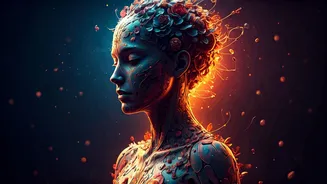
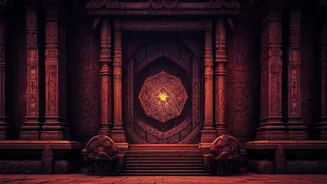
This deeply symbolic festival is now finding a powerful new voice through digital art. A new wave of regional artists, many from Assam itself, are turning to their tablets and screens to interpret the folklore of Ambubachi for a global audience. These illustrations are a feast for the eyes, bursting with the festival’s signature palette. Deep crimsons and fiery oranges dominate, symbolizing both the menstrual blood and the spiritual energy, or Shakti. Common motifs include stylized depictions of the goddess, the temple’s iconic dome, tantric symbols, and serene portraits of ascetics. The artists blend traditional Assamese artistic elements with modern graphic design sensibilities, creating pieces that feel both timeless and incredibly current. What was once confined to oral tradition and temple grounds now flows freely through Instagram feeds and digital portfolios.
Folklore for a Digital Generation
This digital renaissance is more than just an aesthetic trend; it’s a form of cultural preservation and reinterpretation. By translating these complex theological and cultural ideas into a visually compelling, shareable format, artists are making them accessible to a younger generation that might be disconnected from formal religious practice. The art acts as a bridge, sparking curiosity and conversation around topics of faith, feminism, and tradition. It allows young people in India and across the diaspora to connect with their heritage in a way that feels authentic to their digital-native lives. Furthermore, it presents a side of Hinduism that is often overlooked in mainstream Western portrayals—one that is earth-based, matriarchal, and body-positive. Each illustration becomes a miniature ambassador for a unique worldview.