



A Balcony to the Gods
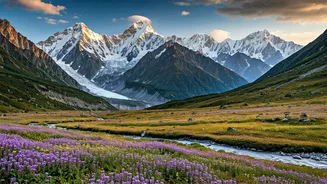
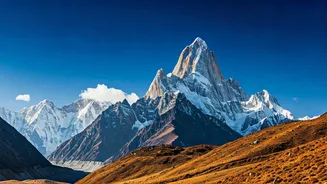
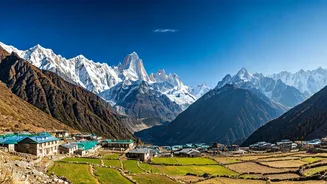
Perched at an elevation of over 7,200 feet in Uttarakhand, Munsiyari feels like the world’s most magnificent front porch. The town itself is a humble collection of houses and shops clinging to a hillside, but its reputation rests on the staggering, panoramic
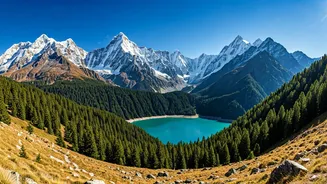
view it commands. Directly across the valley rises the Panchachuli massif, a group of five snow-crowned Himalayan peaks that legend says were the final cooking hearths of the epic Pandava brothers. At dawn and dusk, these peaks catch the light in a spectacle of pink, orange, and gold, drawing photographers, trekkers, and spiritual seekers who come simply to sit and stare. For years, Munsiyari was a restricted area due to its proximity to the Tibetan and Nepalese borders, a fact that has preserved its remote, untouched character. It's a place you come to breathe, to disconnect from the noise and reconnect with something ancient and immense.
The Roar of the White River
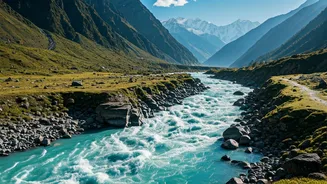
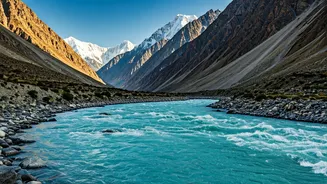
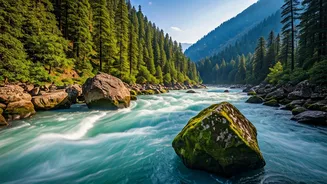
The source of Munsiyari’s underlying soundtrack is the Gori Ganga. Its name translates to “White River,” a fitting description for its churning, sediment-filled waters that appear milky and pale. Born from the Milam Glacier farther up the Johar Valley, the river carves a dramatic path through the Kumaon Himalayas. It isn’t a gentle, meandering stream; it’s a force of nature. From the vantage point of Munsiyari, the river looks like a silver ribbon twisting through the green valley floor. But as you descend the winding roads toward it, the visual spectacle gives way to an auditory one. The distant hum becomes a deafening roar, a visceral reminder of the power of glacial meltwater. This constant, powerful presence is a dramatic counterpoint to the silent, stoic peaks above. While the mountains represent stillness and permanence, the river embodies constant, chaotic motion.
Harnessing the Himalayan Power
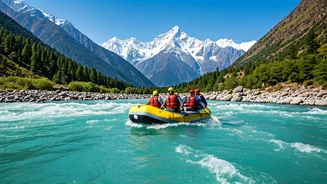
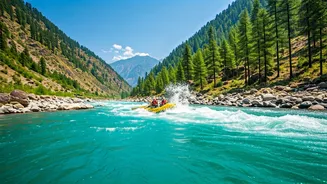
That “wild energy” isn’t just an atmospheric quality; it’s an invitation. For adventure junkies, the Gori Ganga offers some of the most challenging and exhilarating white-water rafting in India. Outfitters in the region guide thrill-seekers on multi-day expeditions down its formidable rapids, which are classified as Grade IV and V—a serious undertaking reserved for experienced rafters. The journey takes them through deep gorges, past remote villages, and into a wilderness accessible only by water. For those not quite ready to tackle the rapids, the river's edge provides a different kind of thrill. Simply standing on its banks, feeling the spray and hearing the thunder of water against rock, is an experience in itself. The river, in this sense, becomes the town's active, beating heart, attracting a different kind of visitor than the meditative peak-gazers who stay up in the town.
A Lifeline Through the Valley
Beyond tourism and adrenaline, the Gori Ganga is the lifeblood of the entire valley. It dictates the rhythm of life for the small communities that dot its banks, many of which are only reachable by foot. Historically, it was part of an ancient trade route to Tibet, with traders and their mule trains navigating the treacherous paths alongside it. Today, it irrigates terraced fields and serves as a fundamental geographical and cultural marker. The river is woven into local folklore and identity. It is both a provider and a formidable, sometimes destructive, neighbor, especially during the monsoon season when its volume swells dangerously. This duality—as both a beautiful spectacle and a powerful, unpredictable force—is what makes the Gori Ganga so central to the character of the region. It ensures that Munsiyari, for all its tranquility, never feels entirely tame.