


The Minimalist’s Dilemma
For years, the pinnacle of luxury design was a strict, almost severe minimalism. Inspired by Bauhaus purity and amplified by the tech industry’s love for clean interfaces, the ideal home was a gallery of sharp angles and empty space. Think of the sprawling,
all-white lofts in shows like *Succession* or the stark, glass-encased homes of Silicon Valley visionaries. While visually stunning from a distance, living in such spaces can feel like residing in a high-end laboratory. The echo is a little too loud, the surfaces a little too cold, and the overall effect can be more isolating than inviting. This created a fundamental tension: architects were building magnificent, hard-lined shells, but residents were craving the warmth and comfort of a sanctuary. The solution wasn't to abandon modernism, but to evolve it.
A Symphony of Tactile Materials
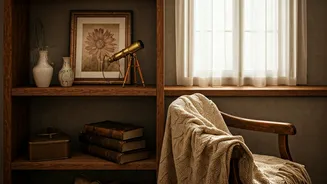
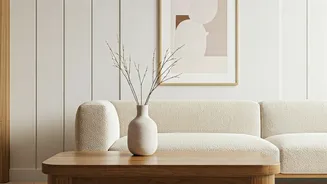
The most direct way designers counteract the coldness of glass and steel is by layering in a rich palette of tactile materials. This isn’t about clutter or maximalism; it's a curated approach to softness. The undisputed star of this movement is bouclé, the lumpy, fleecy fabric now blanketing everything from crescent-shaped sofas to accent chairs. Its nubby texture immediately signals comfort and invites you to touch it. Beyond bouclé, designers are using heavy, imperfect linens for drapery, chunky wool throws, and deep-pile rugs made from natural fibers like sisal or jute. Even hard surfaces are getting a textural makeover. Instead of slick, polished marble, the preference is for honed travertine or rugged, leathered granite, whose subtle imperfections and matte finish absorb light rather than reflecting it. The goal is to engage the senses, creating a space that feels as good as it looks.
Introducing the Curve
So much of modern architecture is built on a rigid grid of right angles. Breaking that grid is key to softening a space. Designers are increasingly turning to furniture with soft, organic, and rounded forms. Consider the rise of the curved sofa, which snakes gracefully through a living room, encouraging conversation and disrupting the boxiness of the floor plan. Circular coffee tables, kidney-bean-shaped desks, and chairs with rounded backs all work to break up the monotony of straight lines. This use of curvature isn’t just aesthetic; it’s psychological. Curves are perceived by the brain as safer, more natural, and more welcoming than sharp corners. By replacing a jagged landscape with a rolling one, designers can fundamentally change the emotional tenor of a room, making it feel more fluid and gentle.
The Beauty of Imperfection
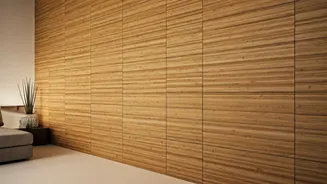
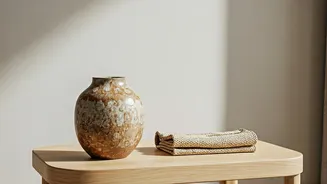
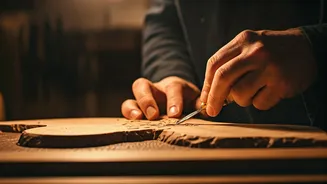
Underpinning this entire trend is a philosophical shift towards embracing imperfection, often drawing from ancient concepts like the Japanese philosophy of wabi-sabi. Instead of a flawless, factory-perfect finish, the new luxury celebrates the handmade and the natural. This is visible in the choice of raw, unstained woods that show their grain, or the application of lime wash and tadelakt plaster to walls. These finishes are applied by hand, and their subtle variations in color and texture give walls a depth and movement that flat paint can never achieve. It’s a quiet rebellion against the mass-produced, pixel-perfect world many tech leaders inhabit all day. By coming home to a space that celebrates natural flaws—a knot in a wooden beam, the trowel marks in plaster—they reconnect with something fundamentally human and analogue.