



Beyond the Boring Bowl
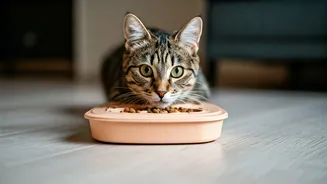
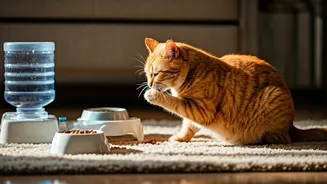
For thousands of years, the ancestors of our dogs and cats spent a significant portion of their day foraging, hunting, and working for their food. Today, most urban pets get their meals delivered twice a day in a bowl. The food appears, is devoured in 90
seconds, and then it’s back to waiting for their owner to come home. This efficiency robs them of a major source of mental and physical engagement. Animal behaviorists call the solution “enrichment,” and one of the easiest ways to provide it is by ditching the standard bowl. Activity-based feeding, also known as interactive feeding, requires your pet to solve a simple problem to get their kibble or treats. This small change transforms a mundane moment into a stimulating challenge, preventing boredom, reducing anxiety, and even helping to manage weight by slowing down fast eaters.
Start Simple with Puzzle Bowls
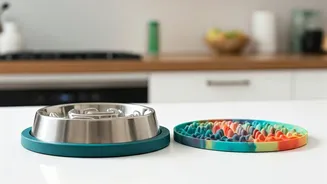
The gateway to activity feeding is the puzzle bowl, or slow feeder. Instead of a smooth, open surface, these bowls have molded obstacles, mazes, and ridges that force your pet to navigate around them to get to the food. This immediately slows down eating, which is great for dogs (and some cats) who inhale their meals and risk bloating or regurgitation. For the pet, it’s a low-stakes puzzle. They can see and smell the food, but they have to use their tongue, nose, and sometimes paws to maneuver the kibble out of the crevices. It’s the perfect first step for animals new to food puzzles, as the reward is constant and the frustration level is very low. They are widely available, durable, and an incredibly simple swap for a standard bowl.
Level Up with Treat-Dispensing Toys
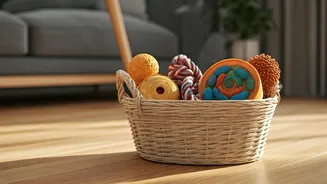
Once your pet has mastered the slow-feeder bowl, you can introduce toys that require more interaction. These are typically durable rubber or plastic objects that can be filled with kibble or small treats. The classic example is the KONG, which can be stuffed with everything from kibble to peanut butter. Other popular options include treat balls or cubes that the pet must roll and nudge in just the right way for pieces of food to fall out of a small hole. These toys encourage movement and problem-solving. Your dog isn’t just eating; they’re 'hunting' the toy around the room, using their nose and paws to manipulate it. It’s a fantastic way to keep a solo pet occupied while you’re on a work call or out for a few hours.
Engage Their Nose with Snuffle Mats
For dogs, one of the most powerful enrichment tools is a snuffle mat. These mats are made of fleece strips tied to a sturdy base, creating a dense, shag-rug-like surface where you can hide kibble. When you scatter your meal across the mat, your dog has to use its incredible sense of smell to sniff out and find every last piece. This directly mimics the foraging behavior of searching for food in grass and undergrowth. It’s a calming, self-soothing activity that can lower a dog’s arousal level and provide immense satisfaction. Snuffle mats are especially great for rainy days when a long walk isn’t possible, giving your dog a chance to do what they do best: use their nose.
Consider Lick Mats for Calming
Lick mats are a brilliant tool for both dogs and cats, particularly for delivering wet food, yogurt, or other spreadable treats. These are flat silicone mats with textured surfaces. You spread the food across the mat, and your pet has to lick repeatedly to get it all. The act of licking is inherently calming for many animals, releasing endorphins that can reduce stress and anxiety. This makes lick mats perfect for distracting a pet during grooming, thunderstorms, or when you have guests over. They turn a quick treat into a longer, more soothing experience, providing mental stimulation without high-energy activity.
DIY Enrichment on a Budget
You don't need to spend a lot of money to get started. Activity feeding can be as simple as scattering your dog's kibble in the grass in your (securely fenced) yard and letting them 'hunt' for it. Indoors, you can create your own puzzles. A standard muffin tin can become a puzzle bowl by placing a small amount of kibble in each cup. For a bigger challenge, place tennis balls or other toys on top of the food in some of the cups, forcing your pet to remove the obstacle first. You can also use a simple cardboard box: just toss in some kibble along with crumpled paper or non-toxic toys and let your pet dig through it to find their meal. Always supervise your pet with DIY toys to ensure they don't ingest cardboard or other materials.