






An Arrival, Not a Transaction
The journey to Nainital, a crescent-shaped lake town nestled in India’s Kumaon hills, has always been part of its charm. But the real magic begins when you bypass the modern hotels lining the main road and turn up a winding path to a place like Abbotsford.
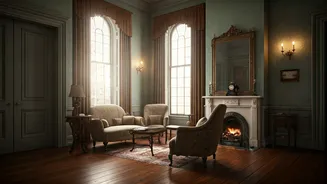
Here, there is no formal lobby. Instead of a bellhop, you might be greeted by the owner, a descendant of the original family, holding a warm cup of masala chai. Your check-in is a conversation in a sunlit drawing-room, surrounded by sepia-toned photographs and the faint scent of deodar pine drifting through an open window. This is the first clue you’ve arrived somewhere different. The ‘anti-hotel’ experience isn’t about forgoing luxury; it’s about redefining it. Luxury here is the absence of formality, the presence of genuine connection, and the immediate feeling that you are a guest in a home, not a number in a reservation system.
Sleeping in a Story
In a standard hotel, a room is a predictable, comfortable box. In a heritage home, a room is a chapter. Your key might be a heavy, ornate brass original. The floors, made of rich, dark wood, may creak with the weight of more than a century of footsteps. Instead of mass-produced art, the walls tell tales of the home’s past—perhaps a portrait of a British officer, a landscape painting of the Himalayas from a bygone era, or a curated collection of local artifacts. The furniture isn’t from a catalog; it’s an eclectic mix of antique four-poster beds, sturdy writing desks that have seen countless letters penned, and plush armchairs positioned perfectly by a working fireplace. Waking up here is an immersive act. You’re not just in a bed; you’re sleeping inside a story, a living museum where you’re encouraged to touch the exhibits and make yourself at home.
The Rhythm of the House
The daily pace at a place like this is dictated by nature and appetite, not by rigid schedules. Breakfast isn’t a chaotic buffet scramble but a leisurely affair, often featuring dishes made from family recipes with locally sourced ingredients. You might find yourself sharing the long wooden dining table with a couple from Australia or a writer from Mumbai, swapping stories as you pass the homemade marmalade. The day is yours to fill. There’s no pressure to *do* anything. The best activity might be finding a quiet nook in the sprawling garden with a book, watching the monkeys play in the trees, or simply staring at the shifting light over Naini Lake. The staff, often locals who have worked with the family for years, move with a quiet efficiency that feels more like household management than hotel service. Their recommendations for a walk or a local shop are personal, born from a lifetime of experience, not a corporate script.
More Than Just a Room
Ultimately, the power of the ‘anti-hotel’ lies in its ability to foster connection—to a place, its history, and its people. It strips away the transactional nature of modern travel and replaces it with something more meaningful. You leave not with a receipt and a handful of loyalty points, but with memories of conversations, the taste of a specific dish, and the feeling of having briefly belonged to a place. It’s an experience that caters to a growing desire among American travelers to slow down, disconnect from the noise, and find authenticity. The allure isn’t about thread counts or spa menus, though those can be excellent. It’s about the simple, profound luxury of feeling welcomed, not just processed. It’s the dream of finding a temporary home in a faraway land, and for a few precious days, being part of its ongoing story.